
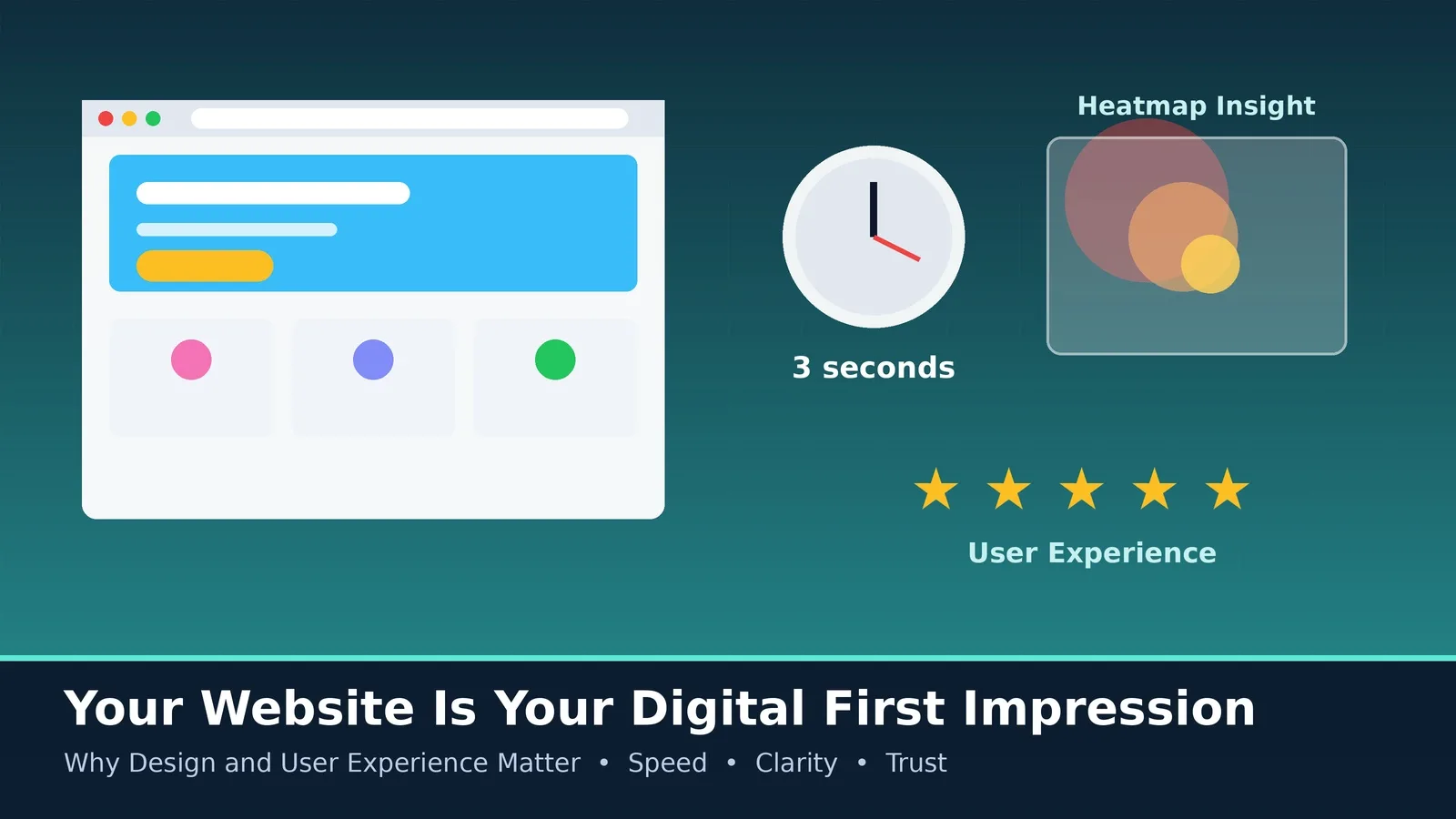
Before a customer calls you, visits your office or reads your brochure, they usually visit your website. That is why your website is your digital first impression, and why design and user experience matter so much for credibility and growth. In this article we explain how design and UX influence trust, engagement and conversions, and how to improve both.
First Impressions Happen Fast
Visitors judge a website in a few seconds. They notice the layout, the speed, the clarity of the message and whether the site works properly on their phone. If something feels slow, confusing or outdated, many will leave without a second thought.
Design vs User Experience
- Design is how your website looks: colours, fonts, images and layout.
- User experience (UX) is how it feels to use: navigation, speed, clarity and ease of completing tasks.
Great websites need both. A beautiful design that is difficult to use frustrates visitors, and a functional site that looks unprofessional fails to build trust.
What Makes a Strong First Impression?
- A clear headline that explains what you do and who you help.
- A clean, uncluttered layout with plenty of space.
- Consistent branding, including logo, colours and tone.
- High-quality images and honest photography.
- Visible contact details and an obvious next step.
- Quick loading on mobile and desktop.
UX Principles That Improve Results
Simple Navigation
Keep menus short and use clear labels. Visitors should find key pages in two or three clicks.
Mobile-First Thinking
Most visitors browse on phones. Buttons should be easy to tap, text should be readable and forms should be short and simple.
Speed and Performance
Compress images, use efficient code and reliable hosting. Faster pages keep visitors engaged and support search visibility.
Clear Calls to Action
Tell visitors exactly what to do next, such as Book a Call, Get a Quote or Shop Now, and make that action easy to find.
Accessibility
Good contrast, readable fonts, descriptive image text and keyboard-friendly navigation make your site usable for everyone and reflect well on your brand.
Trust Builders
- Customer reviews and case studies.
- Secure connection (HTTPS) and clear privacy information.
- Professional, error-free writing.
- About page that shows the people behind the business.
How to Check Your Own Website
- Ask someone unfamiliar with your business to find key information and note where they struggle.
- Test the site on different phones and browsers.
- Use analytics and heatmaps to see where visitors drop off.
- Review page speed with free testing tools.
Conclusion
Your website works for you around the clock, so its first impression should be strong. Investing in thoughtful design and user experience builds trust, encourages action and supports every marketing channel you use.