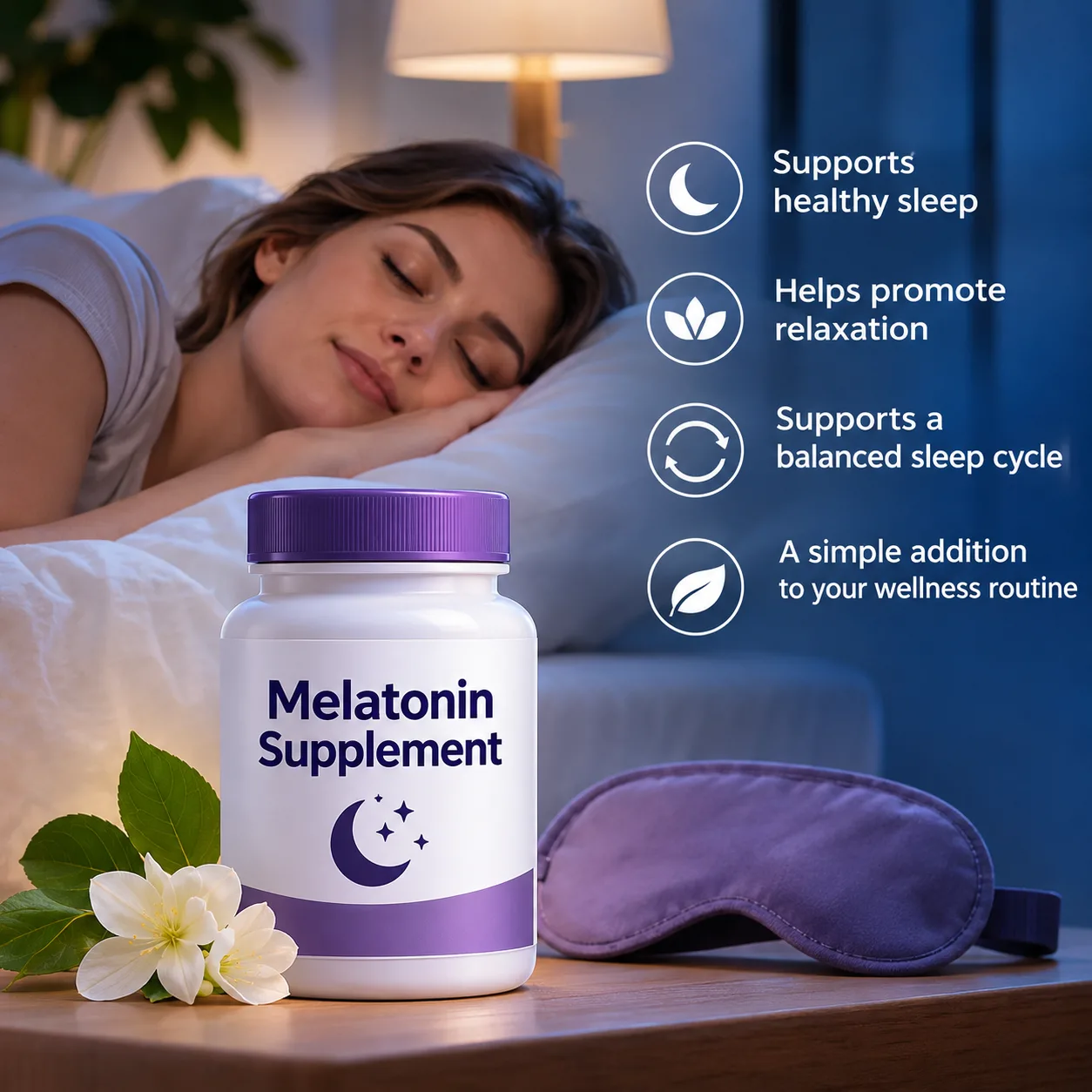
A good night's sleep is one of the most important parts of a healthy lifestyle. After a long and busy day, everyone wants to relax, close their eyes, and wake up feeling fresh. However, getting enough quality sleep is not always easy. Busy schedules, screen time, stress, and changing sleep routines can make it harder to fall asleep at the right time.
Many people are now exploring simple ways to improve their nighttime wellness. One option that has gained attention is melatonin. It is a natural hormone that helps control the body's sleep-wake cycle. Understanding how it works can help people make better choices about their sleep habits and overall wellness.
In this guide, we will explore what melatonin is, how supplements work, their possible benefits, and how to build a healthier bedtime routine.
What Is Melatonin and Why Does Your Body Need It?
Melatonin is a hormone made by a small gland in the brain. Its main job is to help your body understand when it is time to sleep and when it is time to wake up. Your body naturally makes more melatonin when it gets dark. During the day, production usually stays lower. This natural pattern helps your internal body clock follow a regular daily schedule.
However, modern lifestyles can sometimes affect this process. For example, staying up late, using phones at bedtime, or working night shifts may make it harder to follow a regular sleep schedule.
Some important facts about melatonin include:
- It helps control your natural sleep-wake cycle.
- Its levels usually rise in the evening.
- Light exposure can affect its production.
- It helps your body prepare for nighttime rest.
- It plays a role in maintaining a regular sleep schedule.
Understanding this natural process is the first step toward making better sleep choices.
How Does a Melatonin Supplement Work?
A melatonin supplement provides melatonin in a form that can be taken by mouth. People commonly use these products when they have trouble adjusting their sleep schedule or following a regular bedtime. Unlike some sleep medicines, melatonin is not designed to force the body into sleep. Instead, it works with the body's natural timing system.
For example, someone who regularly stays awake until very late may find it difficult to move their bedtime earlier. Melatonin may help support the adjustment of their sleep schedule when used at an appropriate time. It is important to remember that results can vary from person to person. Melatonin may be helpful for certain sleep-related concerns, but it is not a solution for every cause of poor sleep.
Potential Benefits of Melatonin for Nighttime Wellness
Healthy sleep supports many parts of everyday life. It helps the body recover, supports brain function, and plays an important role in emotional wellness. Melatonin may offer some benefits in specific situations.
Here are a few areas where it may help:
- Sleep schedule support: It may help people adjust to a different bedtime.
- Jet lag: It may help travelers adjust when crossing different time zones.
- Shift work: It may support people who need to sleep at unusual hours.
- Sleep timing: It may help certain people who have difficulty falling asleep at their desired time.
- Body clock support: It may help regulate sleep timing in some individuals.
Although these benefits are encouraging, melatonin does not replace healthy sleep habits. It is also important to understand the reason behind ongoing sleep problems.
Simple Ways to Build a Healthy Nighttime Routine
Taking care of your sleep does not always require major lifestyle changes. Small daily habits can make a meaningful difference over time. A relaxing bedtime routine tells your body that the day is coming to an end. It also creates a peaceful environment that supports better rest.
Try adding these simple habits to your evening:
- Follow a regular bedtime: Go to bed and wake up at similar times every day.
- Reduce screen time: Put away your phone, tablet, and computer before bedtime.
- Keep your bedroom comfortable: Choose a quiet, cool, and dark sleeping space.
- Avoid late caffeine: Coffee, tea, and energy drinks can make it harder to fall asleep.
- Enjoy a relaxing activity: Read a book, listen to calm music, or practice gentle breathing.
- Avoid heavy meals late at night: Give your body time to settle before going to bed.
- Get natural daylight: Spend some time outdoors during the day to support your body clock.
These habits are easy to follow and can help create a more consistent sleep routine.
What Should You Know Before Choosing a Melatonin Product?
Choosing a supplement should always involve careful research. Not every product is the same, and quality can vary between brands. Before purchasing a sleep support product, take time to understand its ingredients, serving instructions, and quality information.
Here are some useful things to check:
- Ingredient information: Read the label to understand what the product contains.
- Product quality: Look for clear manufacturing and quality information.
- Serving instructions: Follow the directions provided on the product label.
- Expiration date: Always check that the product is within its expiry period.
- Safety information: Review possible side effects and warnings.
- Professional advice: Speak with a healthcare professional before starting a new supplement.
It is also important to know that melatonin can cause side effects in some people. These may include headaches, dizziness, daytime sleepiness, or nausea. People who are pregnant, breastfeeding, taking medications, or managing health conditions should seek medical advice before using melatonin. It may also interact with certain medicines.
The Importance of Quality in Nutritional Supplements
When exploring products for everyday wellness, quality should always come first. A supplement should be selected based on its ingredients, safety information, and suitability for your needs.
The market for Canadian nutritional supplements includes many different wellness categories. These products may focus on nutrition, general health, and specific wellness goals.However, it is important not to choose a product simply because it has attractive packaging or popular advertising.
Consider these points when researching nutritional products:
- Read the full ingredient list.
- Check the product's recommended use.
- Look for clear manufacturer information.
- Compare product quality and labeling.
- Avoid products that promise unrealistic results.
- Choose products that match your personal wellness needs.
In Canada, natural health products are regulated by Health Canada. Consumers can look for a Natural Product Number (NPN) on applicable licensed products and check product information through official sources.
Remember that a licensed product is not automatically suitable for everyone. Individual needs and health conditions should always be considered.
Common Myths About Melatonin
There is a lot of information about sleep products online. Unfortunately, not all of it is correct. Understanding a few common myths can help you make smarter decisions.
Myth 1: Melatonin works like a sleeping pill.
Fact: Melatonin mainly helps regulate sleep timing. It does not work in the same way as traditional sleeping medicines.
Myth 2: More melatonin means better sleep.
Fact: Taking more does not guarantee better results. Always follow professional advice and product instructions.
Myth 3: Melatonin is right for everyone.
Fact: Individual needs are different. Some people may experience side effects or interactions with medications.
Myth 4: Supplements can replace healthy sleep habits.
Fact: A consistent bedtime, limited evening screen time, and a comfortable sleeping environment remain important.
Knowing the difference between facts and myths makes it easier to build a safe and balanced wellness routine.
When Should You Speak With a Healthcare Professional?
Occasional sleep problems can happen to anyone. However, regular sleep difficulties should not be ignored. If you often struggle to fall asleep, wake up several times during the night, or feel tired throughout the day, it may be helpful to speak with a healthcare professional.
They can help identify possible reasons behind your sleep problems and suggest suitable solutions. Consider getting professional advice if:
- You have trouble sleeping for several weeks.
- You feel tired even after spending enough time in bed.
- You experience frequent nighttime waking.
- You snore heavily or have breathing difficulties during sleep.
- You take medications that may affect your sleep.
- You are thinking about using melatonin regularly.
Good sleep is not just about the number of hours you spend in bed. It is also about understanding your body's needs and creating habits that support long-term wellness.
Final Thoughts: Make Better Sleep a Part of Your Wellness Journey
Quality sleep is an important part of feeling healthy, active, and refreshed. Understanding how melatonin works can help you make informed decisions about your nighttime routine. From following a regular bedtime to reducing screen time and choosing supplements carefully, small steps can make a positive difference.
Remember that supplements are only one part of a healthy lifestyle. A balanced routine, good nutrition, daily activity, and professional guidance all play important roles in supporting better sleep. Start with simple changes, listen to your body, and focus on habits that you can maintain. A healthier nighttime routine can be a valuable step toward better everyday wellness.