
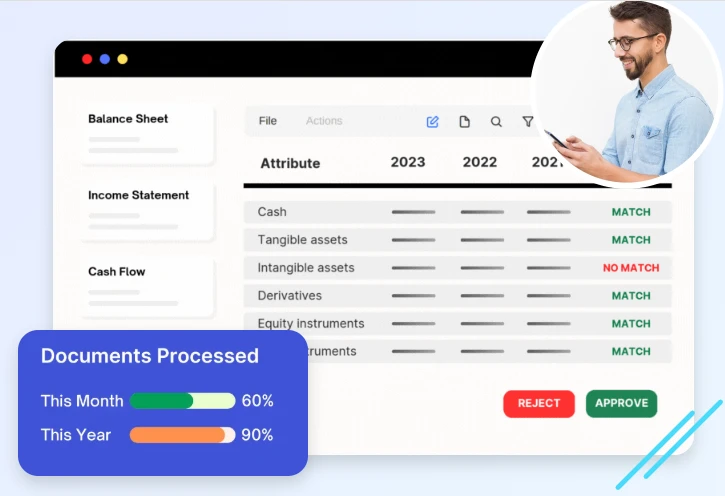
A long review cycle can slow down credit decisions and stretch your team thin. When numbers take too long to prepare, the entire analysis window shrinks, leaving you with less room to look deeper into a borrower’s real performance. Many teams experience this because their process grows messy over time with files piling up, templates drifting apart, and manual work adding pressure.
This blog walks you through simple ways to speed up financial reviews, why the process often stalls, and what you can do to keep things smooth. You’ll also see how financial statement spreading fits into a faster, more organized workflow.
Why Speed Matters in Statement Analysis
You rely on timely figures to make confident calls. When the financial statement spreading process drags, the delay affects everything downstream, from ratios to final assessments. A faster approach doesn’t mean cutting corners. It means building a process that works with you, not against you.
Challenges That Slow Down Financial Statement Spreading
Before looking at faster methods, it helps to understand the blockers that usually drag the process.
Disorganized Source Documents
When documents arrive in random formats, your work naturally slows down. You might get PDFs, spreadsheets, scanned pages, or screenshots, all for the same client. Each file might have missing labels or poorly formatted fields, forcing you to sort things out before you can even begin spreading the numbers.
This step alone can take more time than the actual analysis. You pause to confirm if a number belongs to the income statement or the balance sheet. You double-check dates or look for the right column. These small interruptions add up quickly and push the rest of your work back.
Manual Data Entry and Rechecking
Typing figures line by line leaves too much room for slips. Even if you try to stay focused, long tables make it easy to misplace a digit or choose the wrong row. When that happens, you spend more time correcting the data than preparing it.
Spreadsheets help you build structure, but they also come with their own limits. When formulas break or sheets lose their shape, you have to repair them before continuing. You end up checking the same fields multiple times, which slows down the entire day.
Unclear Internal Standards
Teams often spread statements in different ways without realizing how much variation slows things down. One person might group certain expenses together, while another keeps them separate. Some analysts use older templates, while others create their own formats.
When everyone uses a different structure, you lose consistency. Reviews become longer because you have to adjust to each person’s style. Over time, this inconsistency turns into friction in every step of the workflow.
Methods to Speed Up the Spreading Workflow
Once the main delays are clear, you can look at practical steps that tighten the process without adding pressure.
Build Cleaner Intake Processes
A cleaner intake flow may sound simple, but it does far more than you expect. Start by setting a preferred file format for incoming statements. Encourage your team or clients to share files in the same structure each time. You can also create a small checklist that clarifies what documents you need for each request.
Storing these files in predictable folders helps too. When everyone follows the same naming style, you waste less time searching for updated versions or hunting down missing pages. These small habits make the first stage of spreading smoother and quicker.
Use Smarter Templates and Consistent Layouts
Templates give your work a steady foundation. When your layout stays consistent, your eyes adjust naturally, and you can move through the numbers faster. Create templates for different types of statements for small businesses, large corporations, or specific industries.
Uniform templates help you focus on the content instead of formatting. You also reduce the time spent explaining your layout to others because everyone sees the same arrangement. The more predictable the structure, the easier it becomes to keep your pace.
Lean on Automation for Repetitive Work
Repetitive tasks like pulling totals or mapping common fields can drain your time. Automation helps you clear these tasks in seconds so you can pay more attention to the analysis itself.
Tools that read statements and fill basic fields remove much of the back-and-forth common in manual work. You still keep control of the final review, but the early steps become lighter. You also reduce the risk of typing errors, which saves even more time later.
Conclusion
As you refine your process, you’ll notice that small improvements compound over time. Cleaner files, steadier templates, and smarter tools help your team stay focused and keep the pace steady. The future of financial statement spreading will likely blend human judgment with more supportive systems, giving you more time to study the story behind the numbers.
Think about the steps that slow you down right now and start with the one that feels the most manageable.