A bedroom needs a floor that feels calm underfoot and looks considered, not chaotic. The right wood sets that tone with warmth, texture, and quiet confidence. Many bedrooms suffer from floors that feel flat or forgettable, too uniform, too cold, or lacking character, so the room never quite feels like the retreat it should be. Thoughtful selection of bedroom wooden flooring transforms the space entirely. Engineered wood flooring, with its stable core and natural top layer, offers the authenticity of timber with greater durability and comfort, making it ideal for creating that sense of quiet luxury. Carefully placed planks introduce movement without distraction. Finishes soften light instead of reflecting it harshly. Tones layer with your palette, turning the largest surface in the room into the anchor of the scheme. In the sections that follow, you will discover approaches from classic planks to intricate patterns, layered tones, accent zones, and finish choices, each demonstrating how engineered wood flooring can shape a bedroom that feels serene, grounded, and unmistakably personal.
Classic Wooden Planks for Timeless Appeal
Classic wooden planks provide a refined foundation that anchors any bedroom. Their simplicity allows the rest of the decor to shine while subtly influencing the room’s mood and spatial perception.
Consider these insights for a thoughtful bedroom floor design:
- Board Width and Proportion: Wider planks create a sense of expansiveness and calm, ideal for smaller rooms, while narrower boards introduce subtle movement that guides the eye along the floor.
- Natural Grain Variation: Embrace the unique knots and textures of wood to add character. Each plank becomes visually engaging without relying on additional patterns or colours.
- Directionality for Spatial Flow: Orient planks along the length of the room to elongate space visually, or toward a key architectural feature to naturally guide the gaze and define the room’s flow.
- Surface Texture: Matte or lightly brushed finishes emphasise the wood’s tactile quality, adding depth and warmth without drawing attention away from other elements in the room.
- Flexible Backdrop for Decor: Classic planks act as a neutral yet refined canvas, supporting furniture, rugs, and lighting choices while maintaining a coherent wooden floor room design.
Herringbone and Chevron Patterns for Sophisticated Style
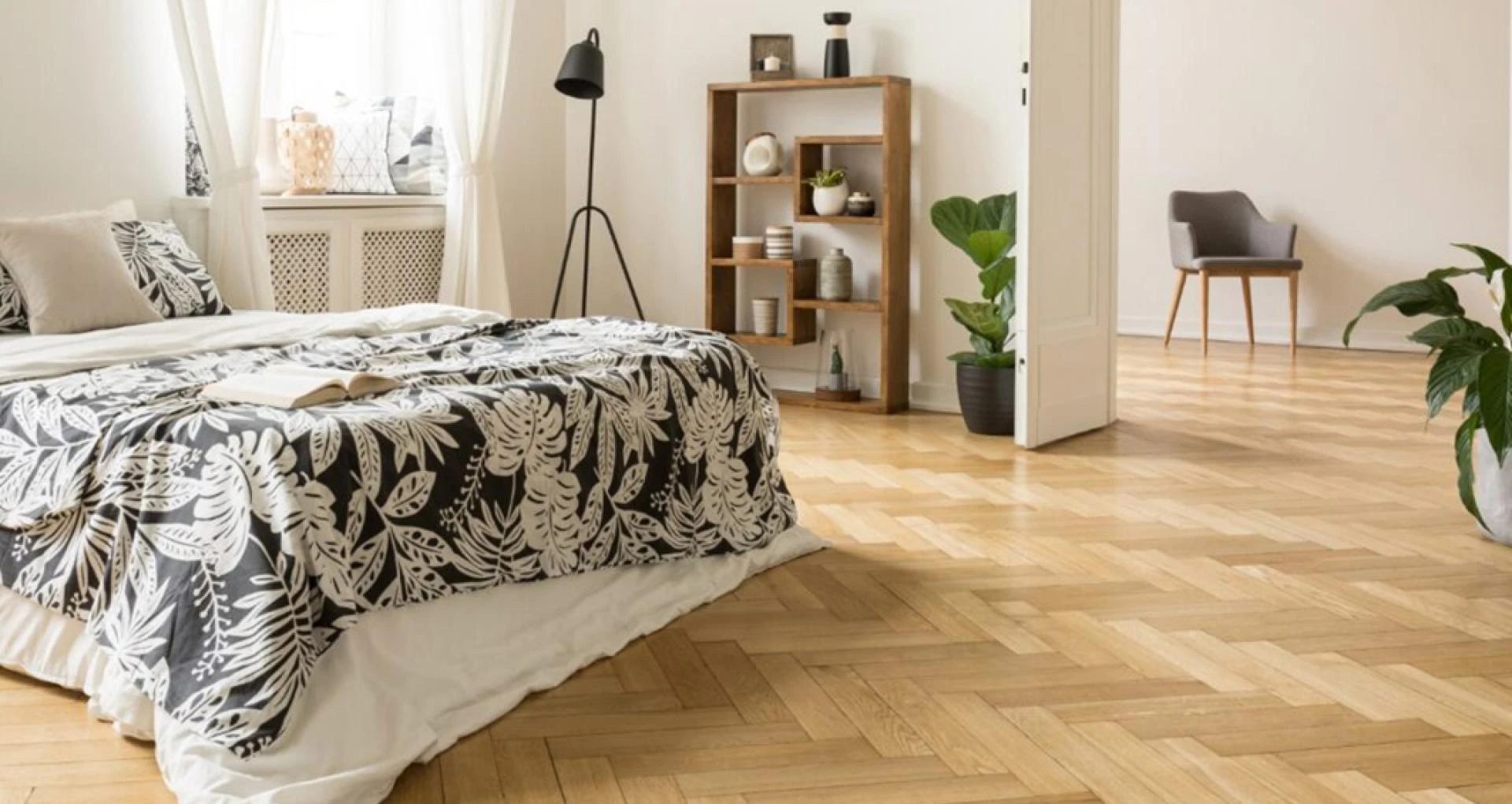
When a floor layout moves beyond standard straight planks and adopts a rhythm of angles, it shifts from passive to expressive. In a bedroom, choosing refined wood floor patterns such as herringbone or chevron transforms the surface into a design element in its own right, bringing movement, luxury and depth while still serving the foundational role of the room’s bedroom floor design.
Here are key ideas for using these patterns effectively in your bedroom wooden flooring:
- Choose the right scale of pattern: A tight herringbone (shorter, narrow boards) creates visual intricacy and texture, working well in compact or cosy bedrooms. A chevron pattern (boards meet at a clean ‘V’ point) offers a more dramatic and symmetrical appearance, ideal for larger rooms or open-plan zones.
- Consider directional emphasis: Lay the pattern toward a focal point, such as a window, bed wall or architectural feature, to draw attention and guide movement across the floor. This turns your modern bedroom flooring into a deliberate part of the spatial flow.
- Subtle tone shifts enhance pattern clarity: While keeping a unified tone across the floor, select boards with slight variation in hue or grain. This variation helps the geometry of the pattern stand out without resorting to contrast-heavy colours.
- Balance pattern with minimalist decor: Because patterned floors already carry visual weight, pair them with simple furniture lines, muted textiles and subdued wall treatments. This allows the pattern to speak confidently as part of your wooden floor room design without overwhelming the space.
- Pattern size relative to room size: In smaller bedrooms, a less busy pattern (e.g., a larger chevron angle or elongated herringbone) helps avoid visual crowding. Conversely, in larger bedrooms, tighter repeats or mixed‑direction layouts can fill the expanse elegantly.
Layered Wood Tones for Depth and Character
Depth and nuance in bedroom wooden flooring arise not only from the arrangement of planks but also from the subtle interplay of wood tones. Layering shades, from light to mid or warm to cool, adds dimension, making the floor feel dynamic and visually rich while still maintaining cohesion with the overall decor. Thoughtful tonal variation can transform a simple layout into a sophisticated backdrop for furniture, textiles, and lighting.
Key ideas to achieve layered depth in your bedroom floor design:
- Play with Light and Shadow: Imagine sunlight spilling across the floor in the morning. Use lighter boards where the sun hits to make the space feel airy, while slightly deeper tones in shadowed corners add grounding and intimacy.
- Visual Rhythm with Alternating Hues: Picture walking across the room and noticing subtle shifts in plank colour. Alternating soft honey, caramel, and chestnut planks creates a quiet cadence that draws the eye across the floor naturally.
- Texture-Infused Layering: Mix smooth, even-toned boards with planks that have pronounced grain or natural knots. This creates a floor that not only looks rich but feels tactile underfoot, adding depth and character to the room.
Accent Flooring to Define Bedroom Zones
Accent flooring is a subtle yet powerful way to guide how a bedroom is experienced. Instead of relying solely on furniture or rugs, using wooden bedroom flooring strategically can create zones that feel distinct, functional, and visually interesting. Whether delineating a sleeping area, reading nook, or dressing corner, accent choices transform the floor into an active participant in the room’s bedroom floor design.
Here are key ideas to use accent flooring effectively:
- Introduce a Patterned Insert: A small section of contrasting wood floor patterns near the bed or seating area can act like a stage, drawing the eye and creating a sense of intimacy without overwhelming the room.
- Frame Functional Spaces: Use a slightly darker or lighter tone around wardrobes, desks, or reading corners. This subtle contrast signals purpose while maintaining cohesion with the main flooring.
- Combine Materials with Care: Pairing wood with textured elements like inlaid tiles or muted stone strips can define zones while adding tactile variety, enhancing both comfort and style.
- Lead Movement Naturally: Placing accent planks along pathways or toward a window guides circulation visually, making the room feel purposeful and organised without adding physical barriers.
Selecting Finishes to Complement Bedroom Interiors
The finish of bedroom wooden flooring shapes both its appearance and how it feels underfoot. The right choice can make a bedroom feel warm and intimate or sleek and contemporary, while enhancing the overall bedroom floor design.
Key ideas for selecting finishes:
- Matte and Oil Finishes: Celebrate the natural grain and texture of wood, creating a soft, tactile surface that feels calm and inviting. Ideal for rustic, Scandinavian, or relaxed styles of residential flooring.
- Satin Finishes: Offer a gentle sheen that reflects light subtly, keeping the room bright while maintaining understated elegance, perfect for versatile, everyday bedroom styles.
- Glossy Finishes: Create a sleek, reflective surface that complements contemporary interiors and pairs beautifully with glass, metal, or minimalist furniture. The choice of tone and finish is crucial for enhancing the character of modern bedroom flooring.
- Colour and Tone: Light shades like ash or birch enhance brightness in smaller rooms, mid-tones such as honey oak provide warmth, and deep espresso or walnut tones introduce drama and anchor larger bedrooms.
Turn Your Bedroom’s Wooden Flooring into a Design Statement
A thoughtfully chosen bedroom wooden flooring does more than occupy space. It sets the tone, enriches texture, and subtly defines the room’s personality. The impact of a floor is heightened when complemented by finishing touches such as skirting, trims, and transition elements. Exploring offerings from leading brands that provide these accessories alongside their flooring allows for a seamless integration, giving the room a sense of cohesion and considered design. Attending to these details transforms your residential flooring into a harmonious foundation, where every element, from planks to finishes, works in concert to make the space feel purposeful, refined, and balanced. Among the varied options available on the market, engineered wood flooring is a practical yet elegant choice, one that combines comfort, craftsmanship, and long-term durability in a single design statement.