Will AI Replace Designers?
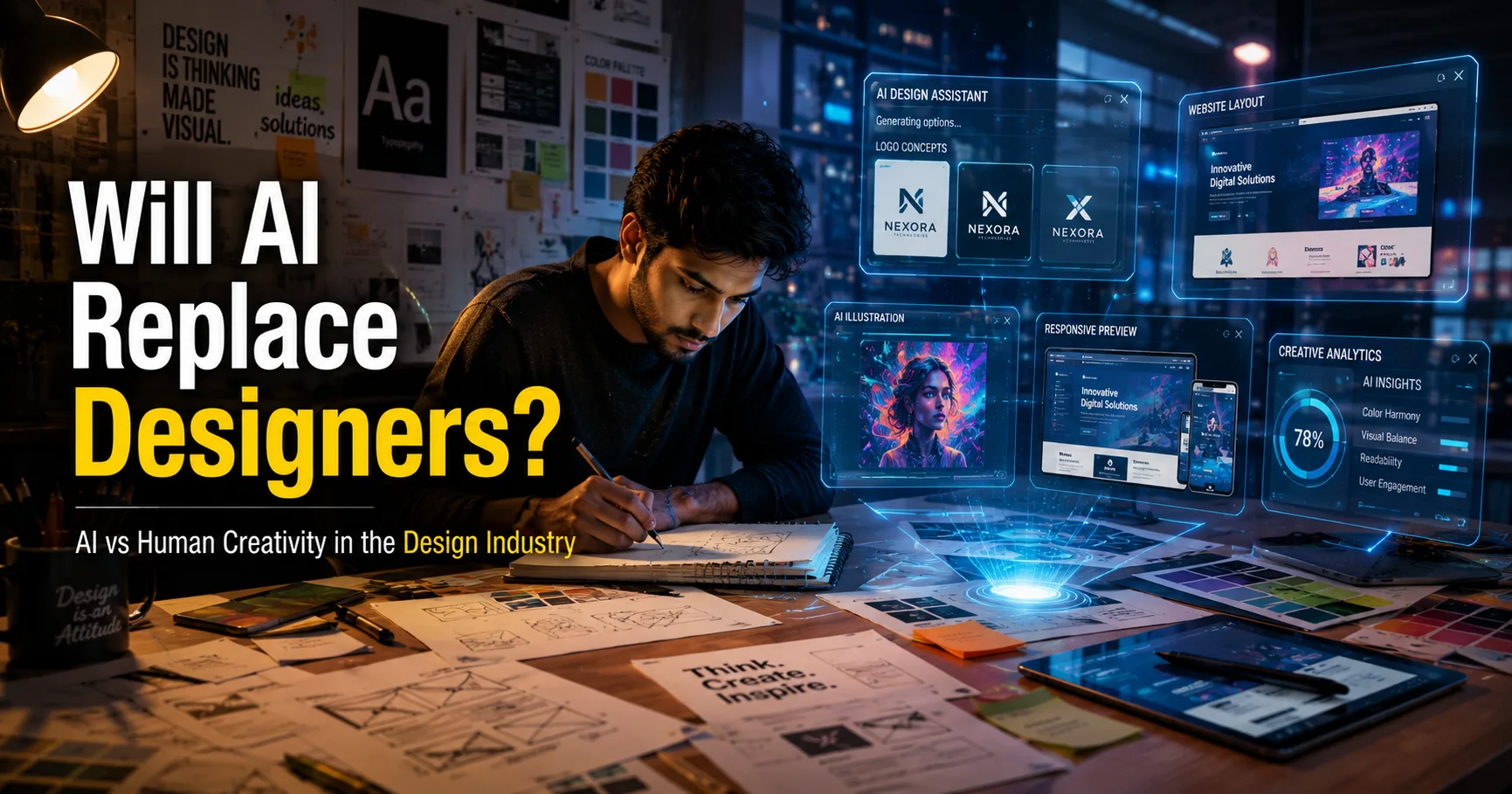
Artificial intelligence is rapidly transforming the creative industry. Today, AI tools can generate logos, social media graphics, UI layouts, illustrations, and even complete website designs within seconds. Because of this technological growth, many students and professionals are asking one major question: Will AI replace designers in the future?
The simple answer is no. AI may change how designers work, but it cannot completely replace human creativity, emotions, imagination, and storytelling. Design is much more than creating visually attractive graphics. A successful designer understands human psychology, branding, communication, user experience, and problem-solving. These are areas where human intelligence still plays the biggest role.
AI works using algorithms, data patterns, and machine learning. It can automate repetitive tasks, generate design suggestions, and speed up creative workflows. For example, AI can create multiple logo concepts instantly, but choosing the best visual identity for a brand still requires human judgment and emotional understanding. A designer knows how colors influence emotions, how typography affects perception, and how storytelling builds audience connection.
Instead of replacing designers, AI is becoming a creative assistant. Many professionals now use AI tools for brainstorming, image editing, layout suggestions, mockup generation, and content visualization. This allows designers to save time on repetitive work and focus more on innovation, strategy, and creativity.
The design industry has always evolved with technology. Earlier, designers shifted from manual artwork to digital software like Photoshop, Illustrator, and Figma. At that time, many people believed technology would reduce the importance of designers. Instead, it created even more career opportunities. AI is simply the next stage of that evolution.
However, designers who refuse to adapt to new technologies may struggle in the future. Basic and repetitive design production is becoming automated. Designers who combine creativity with AI tools will have a strong advantage in the modern industry.
Students preparing for creative careers should focus on improving fundamentals like sketching, storytelling, typography, observation skills, design thinking, and visual communication. Design entrance exams such as NID, NIFT, UCEED, and CEED still focus heavily on originality and creative problem-solving rather than automation.
The future belongs to designers who can combine human creativity with modern technology. AI can support creativity, but human imagination, emotions, originality, and innovation will always remain the true foundation of great design.
Why Human Creativity Still Matters
One of the biggest reasons AI cannot fully replace designers is because creativity is deeply connected to human experiences and emotions. Designers create work inspired by culture, memories, observations, travel, conversations, and personal imagination. AI can generate outputs based on existing data, but it cannot genuinely feel emotions or understand human experiences the way people do.