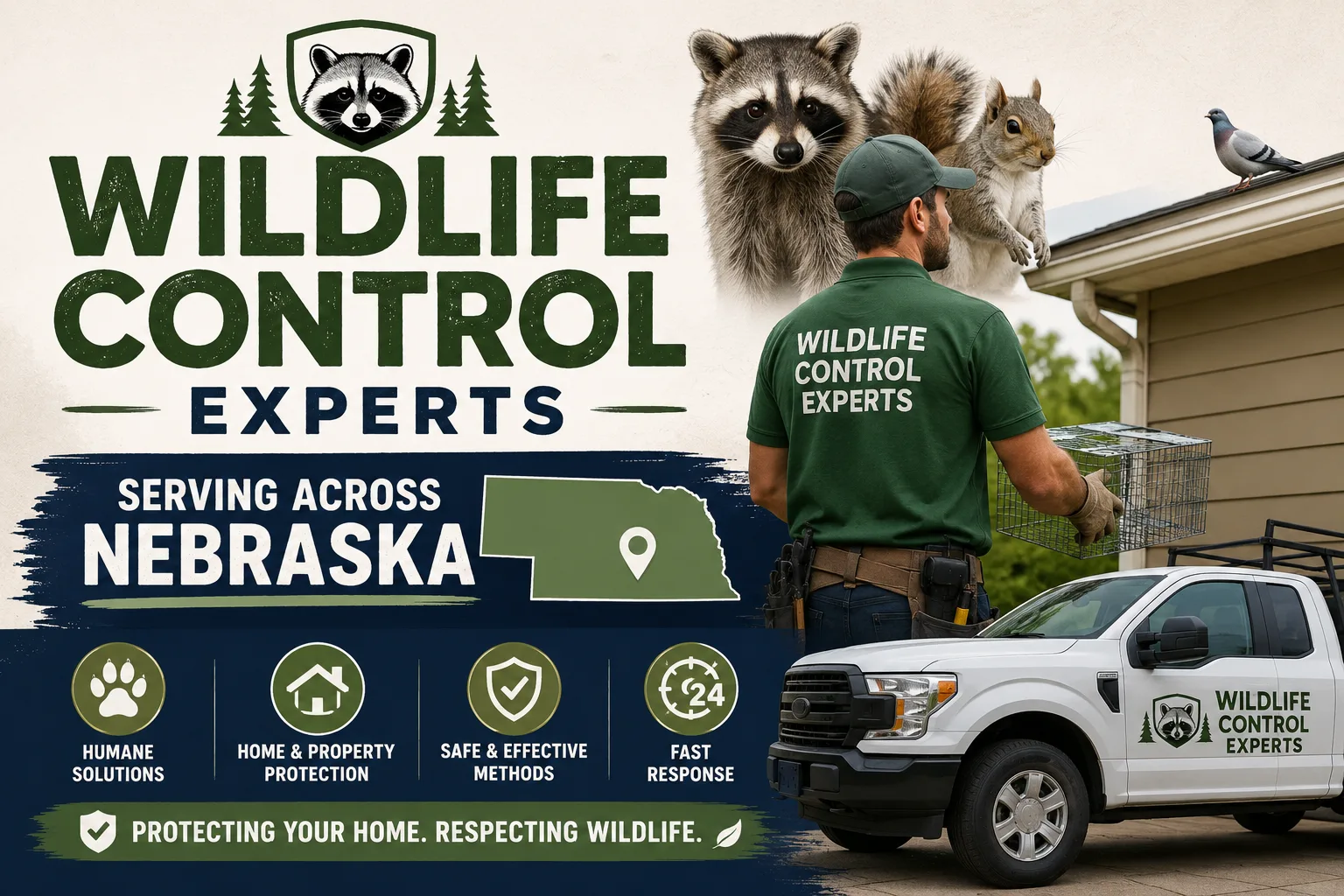
Wildlife in Nebraska is an important component of the natural environment; however, animals that start to infiltrate homes, attics, garages, or commercial buildings can quickly become a nuisance. Raccoons, squirrels, bats, skunks, opossums, birds and other animals that may be seeking food, shelter, or a place to raise their young are a common problem in Omaha.
Professional wildlife control services in Omaha, NE will not only handle the removal of the unwanted animals, they will also address the conditions which led the animals to enter your property.
Why Wildlife Enters Omaha Homes
Residential and commercial properties can be attractive to wild animals that are seeking food, water and shelter. Animals may get in through small openings around roofs, vents, chimneys, soffits and foundations.
Wildlife on the property may occur for a number of reasons including:
- No difficulty accessing garbage or pet food.
- Any openings in roofs or exterior walls.Any openings in roof or external walls.
- Unsealed chimneys and vents
- Trees touching roofs
- Under roof or floor spaces that are covered and enclosed.
- Buildings or other structures that are outdoors and offer hiding places
- Seasonal weather changes
If the entrance is not dealt with, an animal may come back to the same spot for comfort over and over.
An overview of common wildlife issues in Omaha, NE
.
Raccoons
Raccoons are very adaptable and are a nuisance if they intrude into the attic, chimney, garage or other enclosed spaces. Can harm insulation and roofing material when looking for food or nesting site.
Squirrels
Squirrels frequently get in through damaged roof areas, vents and small openings. Prompt wildlife control is important as they can chew on wood, insulation and electrical wiring.
Bats
Bats can enter attics through small holes around roofs, vents and siding. Bats can be tricky to safely remove from the home and homeowners should not do this on their own but should call on a wildlife professional.
Skunks
Skunks may dig dens under decks, sheds, porches or under any other protected spaces. They have an unusual smell and spray a defense mechanism that can make an encounter intensely unpleasant.
Opossums
Opossums tend to search for undisturbed, secluded locations around a house. They might hide under porches, decks, sheds, or crawl spaces, particularly when there is food and shelter available.
The following are warning signs you may have a wildlife problem.
It was not always easy to spot wildlife in the day. Other animals are nocturnal, or lurk inside walls or attic areas.
Look out for signs of wildlife activity such as:
- Any noises that occur if walls or ceilings are scratched or moved
- Leaving behind droppings or strange smells.
- Damaged insulation
- Chewed wires or wood
- Hole around the roof line
- Nesting materials
- Tracks or footprints
- Damaged vents or screens
- Animals repeatedly appearing around the property
The early detection of these signs can help avoid more extensive property damage.
The reasons why professional wildlife control is important.
Don't just remove a wild animal from a building. Professional approach usually involves locating entry; if additional animals are found, removing them and taking measures to ensure that they are not allowed back.
A wildlife control service can conduct a survey of:
- Rooflines
- Attics
- Chimneys
- Crawl spaces
- Soffits and fascia
- Vents
- Foundations
- Garages and sheds
After identifying the problem, the appropriate removal and exclusion methods can be considered based on the species and circumstances.
Wildlife Removal vs. Wildlife Exclusion
- Both services are connected but for different purposes.
- Wildlife removal means dealing with wildlife that is already in place on a property.
- Preventing the return of wildlife is wildlife exclusion.
- Exclusion may include repairing and/or reinforcing vulnerable areas like vents, roof openings, chimney access and gaps at the exterior of a building.
- Eliminating an animal by itself may not prevent another animal from taking its place.
If you find wildlife on your property, here are some things homeowners should do.
If you find an animal in your home, separate people and pets from the animal. Do not corner, chase an animal, or try to physically capture the animal.
Instead:
- Don't go to close range.
- Evacuate children and pets from the area.
- Do not handle animal waste or animals.
- Keep an eye out for obvious entry points.
- Call a professional wildlife control expert to take a look.
Giving special consideration to any wildlife which might be injured, trapped or looking after young.
Properly managing and maintaining property to avoid future wildlife issues.
Continuous maintenance of the home can decrease the potential for wildlife to enter. Residents can help control the spread of the infestation by securing garbage containers, eliminating food sources, cutting trees away from roofs, exterior structures and repair damaged vents and openings.
Prolonged inspections are especially helpful prior to seasonal shifts where animals may start looking for safe places to hide.
Choosing Wildlife Control in Omaha, NE
To find the best wildlife control company in Omaha NE, they should be able to determine the animal, to check the house, explain how the animal is going to be removed, and talk about possible entry points. Inquire into the company's experience with the particular species of wildlife being handled and if the company also offers exclusion or follow-up services.
A professional wildlife control solution can help you safeguard your home and solve your problem in a responsible way while minimizing the risk of reoccurrence.
Final Thoughts
Animals in a home or business can cause property damage, odors, and other concerns, and are a normal occurrence in an animal's life while living in the Omaha area. If the wildlife problem is identified early and addressed professionally, you can resolve the issue while making your property more resistant to future wildlife issues.
If you hear scratching noises, a damaged roofing, droppings, nesting materials or other indications of animal activity, it's advisable to get the property inspected before the situation gets worse.