
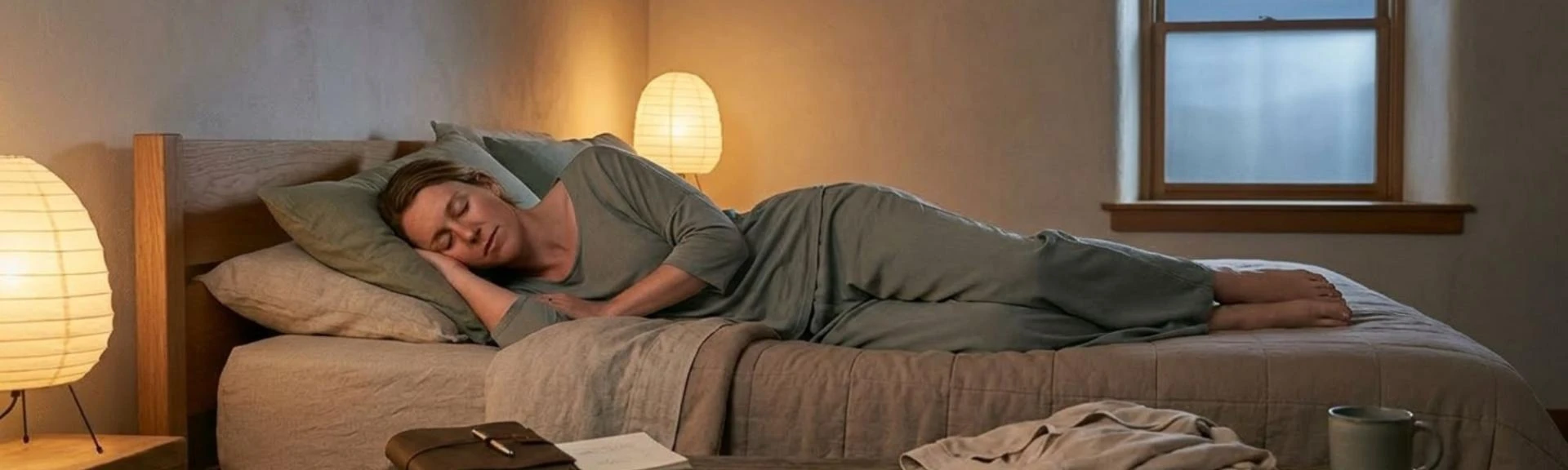
Most people cough up thousands of dollars for high-end memory foam mattresses and cooling pillows. But then, we go to bed in a stiff, heavy cotton t-shirt or some old gym shorts that have seen better days. It is a massive oversight.
Think about it. Your skin is your largest organ and it is in direct contact with your pajamas for eight hours a night. If you are serious about your health, you have to be serious about your gear. Your choice in sleepwear pajamas is not only a fashion statement, but it is a physiological tool that can help you sink into deep rest, or keep you tossing and turning in a pool of your own sweat.
The Hidden Link Between What You Wear and How You Sleep
We often think of sleep as a mental switch, but sleep is a deeply physical process. Your clothes are like your second skin and they have the ability to either help your body's natural rhythm or interrupt your body's natural rhythm.
How Fabric Affects Body Temperature
Your body contains a built in thermostat called the circadian rhythm. In order to fall asleep and to stay asleep, there needs to be a drop in your core body temperature by around one or two degrees. If your clothes act like a greenhouse, and your brain remains on red alert.
When you wear heavy or non-breathable fabrics, you are not allowing that heat to escape. This causes your body to work harder to cool off and keeps you from going through the deeper, more restorative stages of sleep. If you have ever woken up at 3 AM feeling like you are in a sauna, chances are your fabric choice is the culprit.
The Sensory Impact on Falling Asleep
Sleep onset is all about relaxation. If your pajamas have seams that itch, waistbands that can be tight, or material that feels like sandpaper, your nervous system remains slightly aroused. This is a distraction of the senses. Your brain is constantly processing that something is uncomfortable and this keeps you from falling asleep instead of allowing you to drift off and sleep deeply.
Why Your Nightwear Choice Disrupts Deep Sleep
Deep sleep, or slow wave sleep, is the time when your body repairs itself and builds bone and muscle. If you are always moving your clothes because they are twisting around your legs or sticking against your skin, you are micro-waking. And you may not recall it in the morning, but these small interruptions ruin the quality of your rest. You wake up feeling groggy and think that you're in bed for eight hours.
What to Look for in Sleepwear Pajamas for Better Rest
If you wish to upgrade your sleep, you need to look for specific qualities of functionality in your sleepwear pajamas.
Breathability and Moisture Control
There is a huge difference between absorbing moisture and wicking moisture away. Cotton, for example, is great at absorbing sweat, but it holds onto it. This means that you end up sleeping in a damp, cold shirt. You want fabrics that draw the moisture away from your skin and let it evaporate. This not only keeps you dry but also keeps your temperature stable.
Softness and Freedom of Movement
When you sleep, you make 13 to 20 movements. If your pajamas are too tight or have no stretch, they will catch on the sheets and pull on your skin. This friction is a sleep killer. You want something that moves with you, almost like a second skin that you forget is even there.
The Case for Tencel Sleepwear
This is where things get interesting. Tencel sleepwear has become the gold standard for high performance rest. Tencel is a fiber that has been made from wood pulp (typically eucalyptus) in a way that is sustainably sourced. It is designed to be extremely soft, so that it is suitable for sensitive people or simply for people who find silk too slippery or cotton too rough.
Tencel Sleepwear vs. Common Fabrics
To understand why your choice matters, you have to see how different materials stack up against each other.
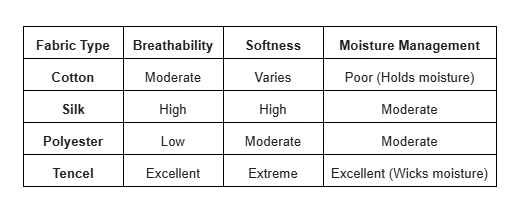
The reason Tencel sleepwear often heads the top stand is because of its unique structure. The fibers are composed of tiny nanofibrils, which are water-loving, called hydrophilic. They absorb moisture and deliver it into the air much more efficiently than cotton ever could.
Simple Tips for Choosing Your Ideal Sleepwear Pajamas
Choosing the right pair is a bit of a science. Here is how you should approach it:
- Check the Blend: Look for high percentages of Tencel or Modal. If it is mixed with a little bit of elastane, that is a bonus because it gives you that freedom of movement I mentioned earlier.
- Avoid the Frills: Big buttons, thick collars, and heavy drawstrings might look cute, but they are uncomfortable when you are lying on your side. Keep it simple and flat.
- Size Up: Never buy tight pajamas. Your body swells slightly during the night, and restricted blood flow is the last thing you want when trying to recover.
- Think Seasonal: While Tencel is great year round because it is thermoregulating, you might want a slightly heavier knit in the winter and a lighter jersey in the summer.
Caring for Your Sleepwear to Extend Comfort
High performance fabrics need a little bit of respect. If you treat your tencel sleepwear like a pair of old jeans, it will lose its magic pretty quickly.
- Wash in Cold Water: High heat breaks down the delicate fibers and can ruin the softness.
- Avoid Fabric Softeners: This sounds counterintuitive, but softeners can actually coat the fibers and reduce their ability to wick away moisture. Tencel is naturally soft, so you do not need the extra chemicals anyway.
- Air Dry if Possible: If you must use a dryer, keep it on the lowest heat setting. Intense heat is the enemy of deep rest gear.
Conclusion
At the end of the day, your sleep is your best asset. It affects your mood, your productivity, and your long-term health. If you are still sleeping in whatever old t-shirt was at the top of the drawer, you are doing yourself a disservice.
It is about biology. When you provide the right environment for your body to be cooled down and comfortable, then you will be rewarded with that kind of deep and restorative rest that actually makes a difference in your day. Stop settling for poke sleep and start dressing like your sleep is dependent on it. Because it actually does.