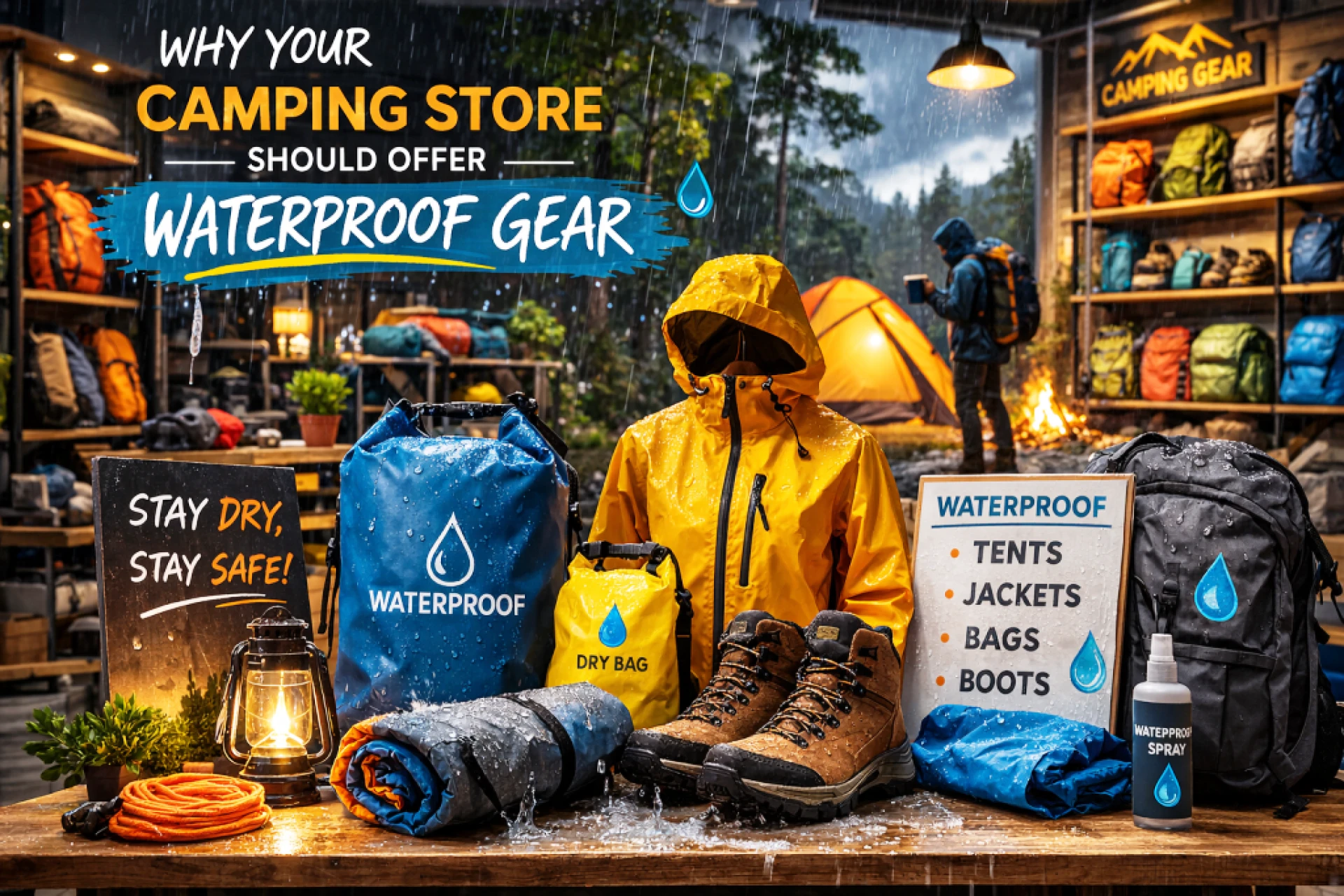
In the outdoor retail industry, success depends on understanding what campers truly need—not just what they want. While stylish backpacks and trendy apparel may attract attention, practical essentials drive long-term customer loyalty. One of the most important product categories any camping store should prioritize is waterproof gear. Whether your customers are weekend adventurers, long-distance trekkers, or survival enthusiasts, protection from rain and moisture is non-negotiable.
Offering waterproof gear isn’t just about expanding inventory - it’s about enhancing customer trust, increasing revenue opportunities, and positioning your store as a reliable outdoor authority. Why your camping store should offer waterproof gear? Here’s why waterproof gear should be a core focus for your camping business.
1. Weather Is Unpredictable
Anyone who has spent time outdoors knows that weather conditions can change rapidly. A clear morning can turn into a stormy afternoon without warning. In regions known for variable weather—such as Colorado in the United States or United Kingdom—unexpected rain is common even during peak camping seasons.
Campers who are unprepared for sudden rainfall risk damaged equipment, soaked clothing, ruined food supplies, and even health issues such as hypothermia. Waterproof gear provides peace of mind and practical protection. By offering high-quality waterproof products, your store becomes part of your customers’ safety plan.
2. Enhanced Safety and Comfort
Camping is meant to be an enjoyable experience. However, wet conditions can quickly transform adventure into discomfort. Damp sleeping bags, flooded tents, and soggy clothing can make nights miserable and mornings exhausting.
Waterproof gear such as rain jackets, ponchos, tarps, dry bags, and waterproof tents significantly improves safety and comfort. For example:
- Waterproof jackets keep body temperature stable.
- Waterproof boots prevent blisters and fungal infections.
- Waterproof backpacks protect electronics and food supplies.
- Tent rainflies prevent interior condensation and water leakage.
When customers associate your store with products that enhance comfort and safety, they are more likely to return and recommend your business to others.
3. Appeals to Multiple Customer Segments
Waterproof gear isn’t limited to hardcore campers. It appeals to a wide range of customers, including:
- Backpackers and trekkers
- RV travelers
- Festival-goers
- Fishermen and kayakers
- Emergency preparedness buyers
- Parents camping with children
For instance, national parks like Yosemite National Park or Yellowstone National Park attract millions of visitors annually, many of whom are casual campers unfamiliar with local weather patterns. These customers often rely on local camping stores to supply last-minute essentials—including waterproof gear.
By stocking waterproof products, you expand your target audience and create cross-selling opportunities.
4. Higher Profit Margins and Upselling Opportunities
Waterproof products often carry higher price points due to specialized materials such as Gore-Tex, sealed seams, water-resistant zippers, and reinforced coatings. This creates opportunities for improved profit margins.
Additionally, waterproof gear pairs naturally with other products, enabling effective upselling strategies:
- Tent + waterproof footprint
- Backpack + dry bags
- Sleeping bag + waterproof compression sack
- Hiking boots + waterproof spray treatment
When customers understand the value of complete protection systems, they are more likely to purchase multiple related items.
5. Builds Your Store’s Reputation as a Preparedness Expert
In today’s competitive retail environment, authority matters. Outdoor enthusiasts often research extensively before making purchases. By offering a comprehensive waterproof collection, you position your store as knowledgeable and prepared.
Leading outdoor brands such as The North Face and Columbia Sportswear have built strong reputations partly through their focus on weather-resistant technologies. Even if your store carries smaller or private-label brands, emphasizing waterproof solutions enhances perceived expertise.
You can further strengthen this position by:
- Displaying waterproof ratings clearly (e.g., 5,000mm, 10,000mm)
- Educating customers on water-resistance vs. waterproof
- Demonstrating sealed seams and taped zippers
- Creating in-store rain-test displays
Education builds trust—and trust builds sales.
6. Climate Change Increases Demand
With climate patterns shifting globally, heavy rainfall events are becoming more frequent in many regions. Flash storms and unexpected downpours are now common even in traditionally dry seasons.
Customers are increasingly aware of environmental unpredictability. As extreme weather becomes more normal, preparedness becomes a priority. Offering waterproof gear aligns your business with evolving climate realities and growing consumer awareness.
7. Boosts Online and Seasonal Sales
If your camping store also operates online, waterproof gear performs exceptionally well in seasonal promotions. During monsoon seasons, fall hiking periods, or spring camping months, waterproof products can become top sellers.
You can create targeted marketing campaigns such as:
- “Monsoon-Ready Camping Essentials”
- “Rainproof Adventure Sale”
- “Storm Survival Bundle Deals”
In regions like Seattle, known for consistent rainfall, waterproof gear is not a luxury—it’s a necessity. Highlighting local weather relevance in your marketing can significantly increase conversion rates.
8. Encourages Repeat Purchases
Unlike durable items such as tents that may last years, certain waterproof treatments require maintenance or replacement. Customers may need:
- Waterproofing sprays
- Seam sealants
- Replacement rain covers
- New rain jackets after wear and tear
This creates recurring revenue opportunities. When your store becomes the go-to place for waterproof maintenance products, you secure repeat visits.
9. Reduces Negative Customer Experiences
Nothing damages a camping experience faster than gear failure. If a customer purchases non-waterproof equipment and encounters rain, dissatisfaction can follow—even if the product functioned as designed.
By clearly offering waterproof alternatives and explaining their benefits, you help customers make informed decisions. This reduces product returns, complaints, and negative reviews.
A satisfied camper who stayed dry during a storm is far more likely to share a positive testimonial about your store.
10. Supports Emergency Preparedness Trends
Beyond recreational camping, many consumers are investing in emergency kits and survival gear. Waterproof equipment plays a vital role in disaster preparedness—protecting important documents, food, electronics, and clothing during floods or storms.
By marketing waterproof gear as part of emergency preparedness solutions, you tap into an additional revenue stream beyond traditional campers.
11. Competitive Advantage in a Crowded Market
Outdoor retail is competitive. Big-box retailers may offer low prices, but specialized camping stores can differentiate through expertise and curated product selections.
A well-stocked waterproof section demonstrates intentional planning. Customers seeking reliable performance will choose a store that clearly prioritizes durability and weather protection over one that simply stocks general outdoor items.
You can further stand out by:
- Offering warranty-backed waterproof products
- Providing expert staff recommendations
- Hosting workshops on staying dry while camping
- Creating educational blog content on waterproof ratings
These value-added services build a strong competitive moat.
Conclusion
Waterproof gear is not an optional accessory in the camping world—it’s a fundamental necessity. From unpredictable weather and climate change to enhanced safety, profitability, and customer loyalty, the benefits of offering waterproof products are extensive.
By prioritizing waterproof tents, jackets, backpacks, boots, and accessories, your camping store positions itself as a trusted partner in outdoor adventure. You protect your customers from discomfort and risk, increase sales opportunities, and strengthen your brand reputation.
In the end, camping is about connecting with nature—not fighting against it. When your store equips adventurers with reliable waterproof gear, you ensure that rain becomes a manageable challenge rather than a trip-ending disaster.