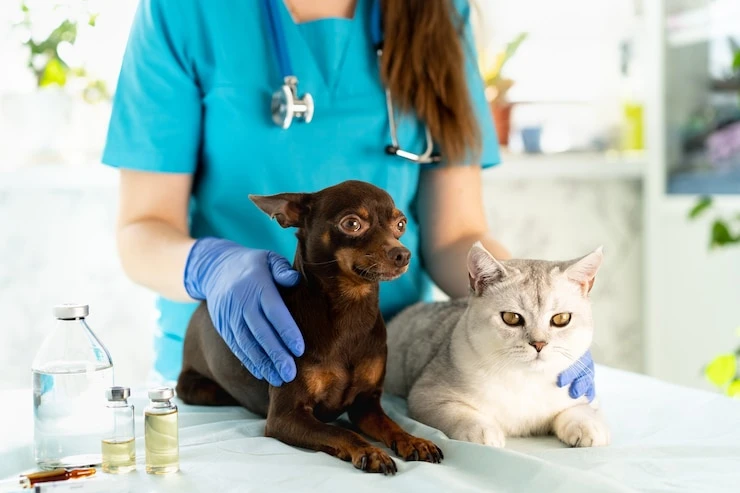
Walk into any veterinary clinic, and you’ll notice the familiar scenes, wagging tails, anxious cats in carriers, the soft hum of machines, and the compassionate smiles of veterinary professionals. But beyond the waiting room and the polished exam tables lies a world that most pet owners never fully see: the realm of veterinary internal medicine, a specialty dedicated to uncovering mysteries hidden deep within an animal’s body.
If general veterinary care is the frontline of animal health, internal medicine is the detective division, solving cases where symptoms are subtle, causes are unclear, and the stakes are often incredibly high.
Let’s we explore the fascinating world of veterinary internal medicine, not through the usual technical lens, but through the angle of “the invisible”: the conditions we can’t see, the internal battles pets silently fight, and the specialists who piece together complex puzzles to save lives.
When the Problem Isn’t Skin-Deep
One of the biggest misconceptions about pet care is that most problems are visible. A limp? You see it. A wound? You treat it. Fleas? You notice them instantly.
But what about:
- a heart that beats irregularly only at night,
- kidneys quietly losing function over months,
- an immune system attacking the body it’s supposed to protect,
- a hormonal imbalance silently affecting mood, appetite, or weight?
This is where veterinary internal medicine steps in. It’s the field dedicated to diagnosing and treating diseases of internal systems, organs, glands, blood, immune responses, digestion, metabolism, and more.
Think of it as the medical equivalent of going from “surface-level troubleshooting” to “deep system diagnostics.”
Why Internal Medicine Matters More Than Most Pet Owners Realize
The truth is simple: animals are masters at hiding illness. Evolution taught them that weakness attracts predators, so they often mask symptoms until a disease has progressed significantly.
This means the conditions internal medicine specialists treat are often:
- Chronic
- Complex
- Multisystemic
- Difficult to detect early
- Potentially life-threatening
From diabetes to liver disease, from immune disorders to cancers, from gastrointestinal conditions to endocrine dysfunction, internal medicine touches almost every corner of animal physiology.
It’s not glamorous. It’s not instantly visible. And yet, it is absolutely life-saving.
The Sherlock Holmes of Veterinary Medicine
Veterinary internal medicine internists are investigators.
They don’t treat “a cough”—they ask why the cough exists.
Is it cardiac? Respiratory? Infectious? Allergic? Immune-mediated? Something swallowed? Something inhaled? Something genetic?
Each case becomes a puzzle, and the clues often lie hidden deep inside the body.
Using tools like:
- ultrasound,
- endoscopy,
- CT scans,
- MRI,
- advanced blood panels,
- biopsies, and
- specialized diagnostic tests,
internal medicine veterinarians look where others can’t. Their job isn’t just to treat, it's to reveal the truth behind symptoms that seem unrelated or impossible to trace.
They operate at the intersection of science and intuition.
They are the ones who say, “Something else is going on here,” when everything on the surface appears normal.
A Day in the Life of an Internal Medicine Specialist
Picture this.
Morning rounds begin with a cat suffering from chronic vomiting. Multiple treatments have failed, but the internist notices a subtle pattern: vomiting occurs mostly after stress. A deeper look reveals inflammatory bowel disease triggered by food intolerance, a diagnosis only possible through endoscopic biopsy.
The next patient: a dog with unexplained weight loss. Tests show unusual liver values, but nothing conclusive. The internist orders advanced imaging, discovering a rare but treatable liver shunt.
Before lunch, a dog with recurring fevers arrives. Bloodwork reveals an autoimmune condition, caught just in time to begin immunosuppressive therapy.
Later, a senior cat arrives in respiratory distress. Quick thinking and targeted diagnostics identify heart disease, allowing immediate stabilization and a long-term management plan.
Every patient is different. Every problem is complex.
Every solution requires a blend of science, experience, and deep investigative skill.
The Emotional Side: Why This Field Changes Lives
Beyond technology and expertise lies something just as essential: heart.
Pet owners often arrive in internal medicine offices frightened and desperate. They’ve tried multiple treatments, seen multiple vets, and still don’t have answers.
When they meet a veterinary internal medicine internist, they meet someone who won’t stop searching.
These specialists:
- Offer hope when cases seem hopeless
- Provide clarity after months of confusion
- Create plans for long-term management
- Guide families through the hardest decisions
- Celebrate victories no one thought possible
Pet owners often describe internists as “the ones who finally listened,” because internal medicine is not just about tests, it’s about treating every patient like an individual story waiting to be solved.
From Chronic Disease to Quality of Life: The Long Game
Internal medicine is rarely about a quick fix. It’s often about:
- Managing lifelong conditions
- Creating treatment roadmaps
- Adjusting therapies as a pet ages
- Improving day-to-day comfort and function
A dog with diabetes can live a healthy life with proper insulin management.
A cat with kidney disease can enjoy years of good quality life through nutrition and fluid therapy.
An animal with autoimmune disease can thrive with monitoring and tailored medication.
This specialty isn’t about chasing miracles, it’s about providing stability, longevity, and comfort.
When General Veterinary Care Isn’t Enough
General veterinarians are superheroes in their own right, but like human medicine, some cases require deeper specialization.
Internal medicine steps in when:
- symptoms persist despite treatment,
- tests are inconclusive,
- conditions are rare or complex,
- multiple organ systems are affected,
- advanced diagnostics are required,
- long-term disease management is needed.
It’s not about replacing general vets, it’s about supporting them.
Together, they form a powerful team.
The Future of Veterinary Internal Medicine
As technology advances, so does the field. Today’s pets have access to medical capabilities once reserved for humans.
Expect rapid growth in:
- AI-based diagnostics
- genetic disease mapping
- advanced imaging
- minimally invasive procedures
- targeted drug therapy
- personalized treatment plans
Pets are living longer. Diseases once considered fatal are now manageable. And veterinary internists will continue to lead these breakthroughs.
Celebrating the Invisible Work That Saves Lives
Veterinary internal medicine rarely gets the spotlight. It doesn’t produce dramatic before-and-after photos or flashy success stories.
But it quietly saves lives every day.
It’s the field that uncovers the unseen.
The specialty that gives answers when others can’t.
The discipline where medicine meets mystery, and skill meets heart.
So next time your pet seems “a little off,” remember: sometimes the most important problems are the ones we can’t see, and the specialists trained to solve them are the silent heroes keeping our pets healthy from the inside out.