The modernization of business practices has many aspects concerning how to prepare the in-house teams for new tech initiatives. Leaders also wonder whether data sourcing is reliable and relevant. However, even among the top IT firms, every decision needs coordination of multiple departments and domain specialists. Moreover, getting an output from an AI tool or approving reports submitted by independent consultants has distinct quality assurance, accountability, and validation challenges.
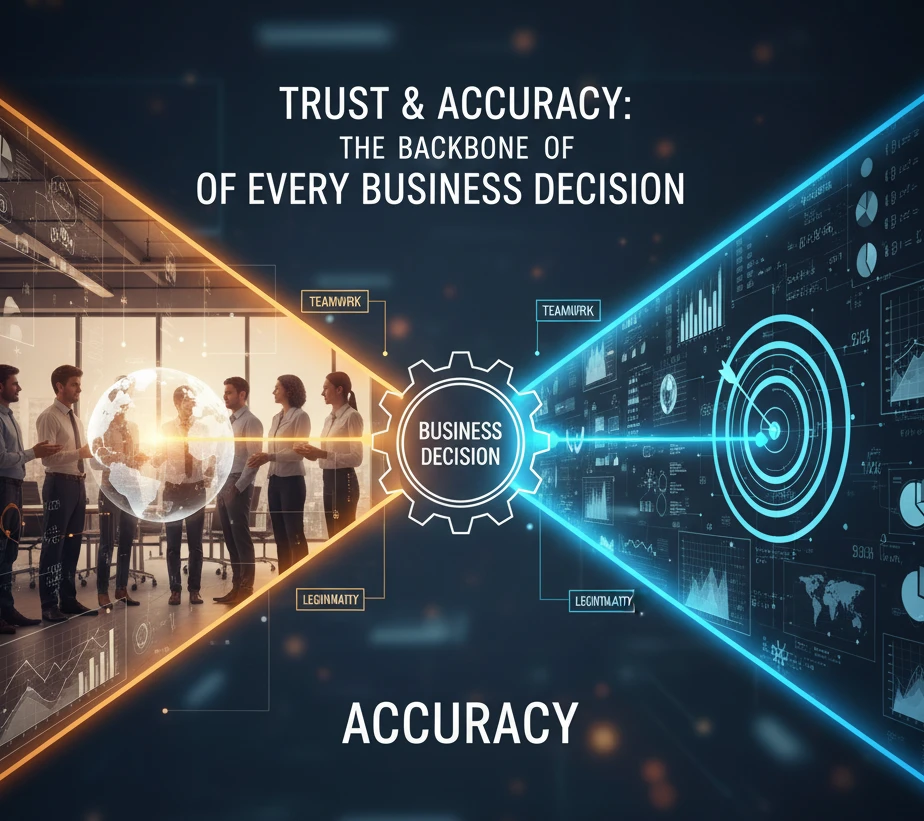
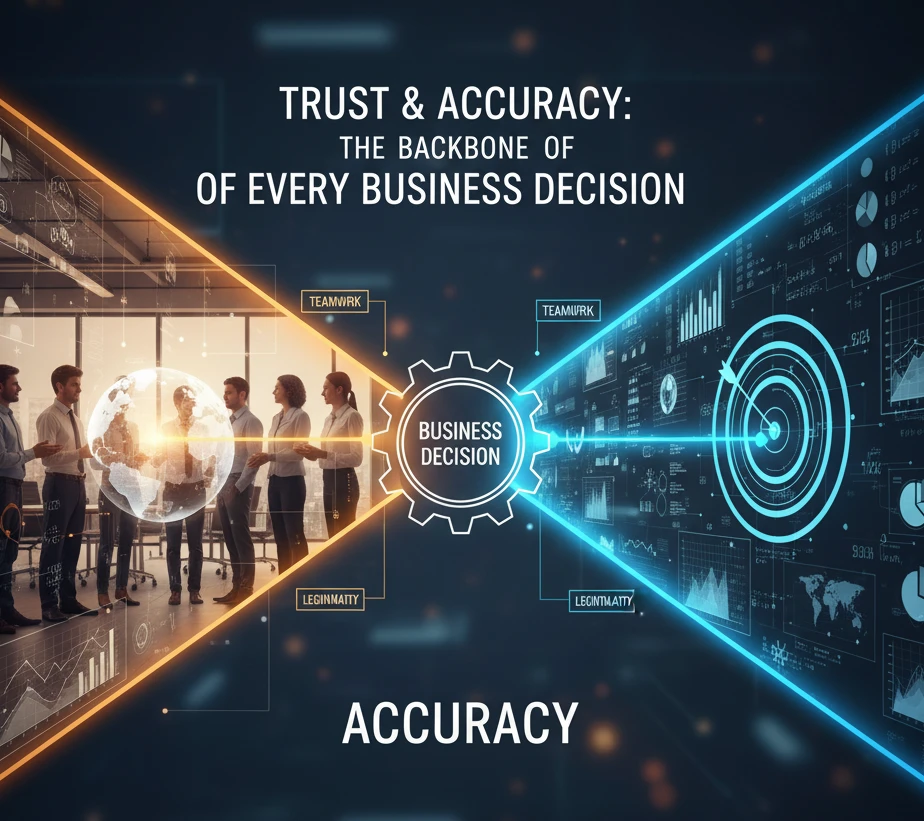
In such scenarios, trust enables all professionals to support each other, whereas accuracy provides better output, less prone to biases or technical issues. This post will explain why trust and accuracy are integral to every business decision.
Trust is the key currency that helps complete each action, share ideas, discuss problems, and constructively criticize each other. Therefore, every business relationship, whether internal or external, thrives on the mutual respect and trust between the parties. Still, leaders, employees, and partners cannot blindly trust the data sources, tools, strategies, policies, and reports. The demand for due diligence services is on the rise because newer accountability and compliance requirements have emerged.
Every worker’s perspective on virtues and vices can be unique. So, an individual who uses some software tools out of habit can still cause policy violations in the eyes of other team members. Similarly, trust can decrease when there is a frequent mismatch between what was promised and what was delivered. That is why founders must take extra precautions when preparing their pitch decks for potential investors. If the claims made in a disclosure document are baseless or half-truths, they will erase any possibility of investors trusting the business and investing in it.
In the case of internal teams, experience, subject knowledge, tech skill differences, or other factors can affect output quality. Since business decisions must depend on the reports deemed valid by trusted subject matter experts (SMEs), the content that forms the core of marketing, public relations, and whitepaper campaigns must have legitimate references and reviews. A lack of such care will adversely affect trustworthiness and force businesses to re-conduct the research and content creation. So, expenses will also increase.
Accuracy as the Non-Negotiable Aspect of Insights & Communication
Accuracy decides how well organizations translate data into meaningful actions. Partial or inaccurate information distorts reality. Therefore, stakeholders get impractical conclusions, which then cause them to craft misguided strategies. If a company bases its marketing communication on outdated information about its offerings, customers will stop buying from it.
Although trust is the psychological element of decision-making, accuracy is more objective. For instance, if a company uses computer vision solutions for facial authentication or surveillance, comparing their effectiveness is evidence-based. Similarly, if product designers do not conduct durability and ease of use assessments, many customers will note issues via feedback surveys or reviews and ratings.
Accuracy is especially vital to corporate communications concerning investor engagement, consumer-facing marketing campaigns, and sales. A tiny misattribution of product features or deliberately hiding technical specifications will lead to missed conversions. In other words, an entire long-duration campaign can completely miss the target audience due to inaccuracies and inconsistencies, wasting time and resources.
Why Trust and Accuracy Matter in Every Business Decision
Today, analytics, forecasts, and performance metrics lie at the core of doing business. Accurate data ensures that the insights provided are reflective of real trends, enabling companies to make informed decisions with confidence. Be it market demand prediction, supply chain optimization, or financial risk management, accuracy means leaders have the right information at the right time.
At the same time, stakeholder trust corresponds with the accuracy of data and the precision of processes. A decision based on accurate data automatically instills confidence in the strategies that the organizational leadership determines. Additionally, when current workflows, data quality standards, and policies show limitations, leaders can quickly intervene and re-evaluate them. That is how regularly communicated accurate insights help prevent major operational breakdowns later on.
In turn, where there is trust, stakeholders are more open to providing genuine information that enhances data quality and accuracy. This causes a snowball effect; trusted systems give rise to better data, and better data strengthens trust.
Conclusion
Trust and accuracy are not entirely abstract. The former affects how team members, investors, and customers perceive a brand. Failure to ensure transparency and compliance will adversely impact it. The latter goes many steps further, revealing what is actually happening on the project site through flawless depiction of key performance metrics (KPIs). In marketing communications, accuracy is the key to avoiding upsetting consumers who have very particular specifications in mind when they shop. Given these considerations, every business decision must promote a culture of trust and accuracy among in-house teams and broader stakeholder categories.