Theater has always been a powerful medium of cultural expression, bringing stories to life on stage through dialogue, music, and movement. Yet, as society evolves and audiences become increasingly diverse, theaters face new challenges in making performances accessible, inclusive, and relevant. One of the most effective solutions for this modern era is the integration of live performance subtitles. By providing real-time surtitles or captions, theaters not only break language barriers but also create an environment where everyone can fully engage with the performance.
In today’s fast-paced, globalized world, embracing this technology isn’t just a luxury—it’s becoming a necessity for theaters that wish to thrive. Let’s explore why live performance subtitles are essential in meeting accessibility standards, expanding audience reach, and simplifying backstage workflows.
Meeting Accessibility Standards for Modern Audiences
Accessibility is no longer optional; it’s a responsibility that every cultural institution must take seriously. Theater should be a space where all individuals—regardless of language proficiency or hearing ability—can experience the magic of live performance. Live performance subtitles bridge this gap seamlessly.
Audiences with hearing difficulties often struggle to fully enjoy traditional performances, even when amplified sound systems are in place. Subtitles displayed in real time ensure that they don’t miss a single line of dialogue, lyric, or dramatic moment. Unlike traditional printed scripts or accessibility devices, surtitles appear naturally during the performance, allowing individuals to stay immersed in the live experience.
Beyond supporting individuals with hearing challenges, subtitles also make performances accessible to non-native speakers. In an era of cultural exchange and international tourism, many visitors attend theater productions without being fluent in the local language. Live performance subtitles empower these audiences to follow the story, understand emotional nuances, and feel connected to the performance—without requiring translation headsets or prior preparation.
When theaters adopt this technology, they’re sending a strong message: art is for everyone. This inclusivity not only fulfills modern accessibility expectations but also enhances the reputation of theaters as progressive, community-oriented spaces.
Expanding Reach Beyond Local Languages
Theater may begin with local roots, but its stories often carry universal messages that deserve to reach far beyond geographic borders. One of the greatest advantages of live performance subtitles is their ability to transcend language limitations, allowing productions to appeal to international audiences.
Consider an opera or play performed in Italian, French, or another language less commonly spoken by the local population. Without subtitles, many audience members may feel alienated, relying on guesswork to follow the storyline. By contrast, providing surtitles in the audience’s preferred language transforms the performance into a shared cultural experience that resonates across borders.
This capability is especially crucial for opera houses and theaters that host touring companies or invite international artists. Subtitles allow them to maintain the authenticity of the original script while making it understandable to a broader audience. It’s a powerful way to honor both the art form and the people experiencing it.
Moreover, in today’s digital-first world, audiences expect flexibility. Some theaters are even experimenting with streaming captions directly to audience members’ devices, ensuring that even when projection isn’t possible, the story still comes through clearly. By integrating live performance subtitles, theaters are not only broadening their local audience base but also positioning themselves as global cultural leaders.
Reducing Technical Hassles for Theater Teams
Behind every successful performance is a team of directors, dramaturgs, translators, and technicians working tirelessly to ensure everything runs smoothly. Traditionally, creating surtitles was a time-consuming process. Many theaters relied on manual methods like PowerPoint slides, requiring constant editing, synchronization, and technical adjustments. Not only was this inefficient, but it also left room for errors that could disrupt the flow of a live performance.
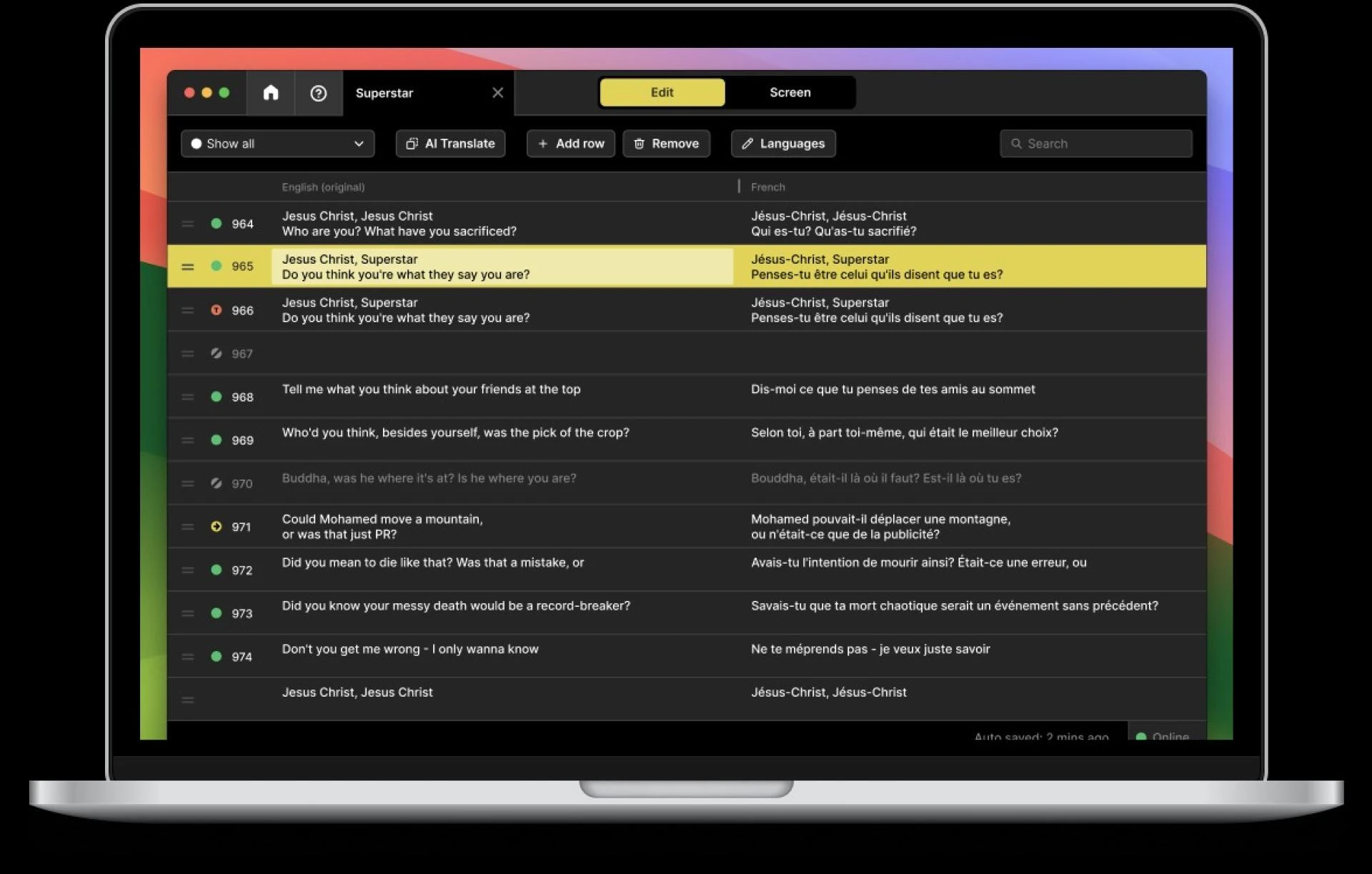
With modern AI-powered solutions, live performance subtitles are no longer a burden but an asset. Advanced tools now allow scripts to be automatically converted into surtitles, detecting spoken dialogue and formatting it for seamless projection. Teams can collaborate in real time through cloud-based platforms, meaning changes and translations are instantly shared across devices. This eliminates the delays and frustrations of older workflows, freeing staff to focus on the artistic quality of the production.
Another key benefit is the ability to customize captions to suit the tone and style of the performance. Whether adjusting fonts, alignment, or visual style, theaters can ensure subtitles enhance the aesthetic without distracting from it. Additionally, automation makes it possible to switch surtitles automatically during live shows, preventing the need for constant manual oversight.
Some platforms even offer innovative features such as “captions to audio,” which streams the subtitles in podcast-like form. This expands accessibility for audience members who may prefer listening rather than reading, and it provides flexibility in venues where projection is not feasible.
In essence, modern subtitle technology doesn’t just help audiences—it transforms the backstage experience as well. Theaters save valuable time, reduce technical stress, and deliver a polished, professional performance every night.
Conclusion: Theaters adopting live performance subtitles not only modernize operations but also demonstrate true inclusivity.
Theater is at its best when it connects with people—across languages, cultures, and abilities. In today’s diverse world, live performance subtitles are no longer an optional enhancement but a vital tool for accessibility, inclusivity, and artistic impact. They enable audiences with hearing challenges to enjoy performances, allow international visitors to engage with local productions, and empower theater teams to streamline workflows without sacrificing quality.
By adopting this technology, theaters are taking a bold step into the future. They’re modernizing their operations, expanding their reach, and showing their audiences that art belongs to everyone. In doing so, they’re not only preserving the rich tradition of live performance but also ensuring it continues to thrive for generations to come.