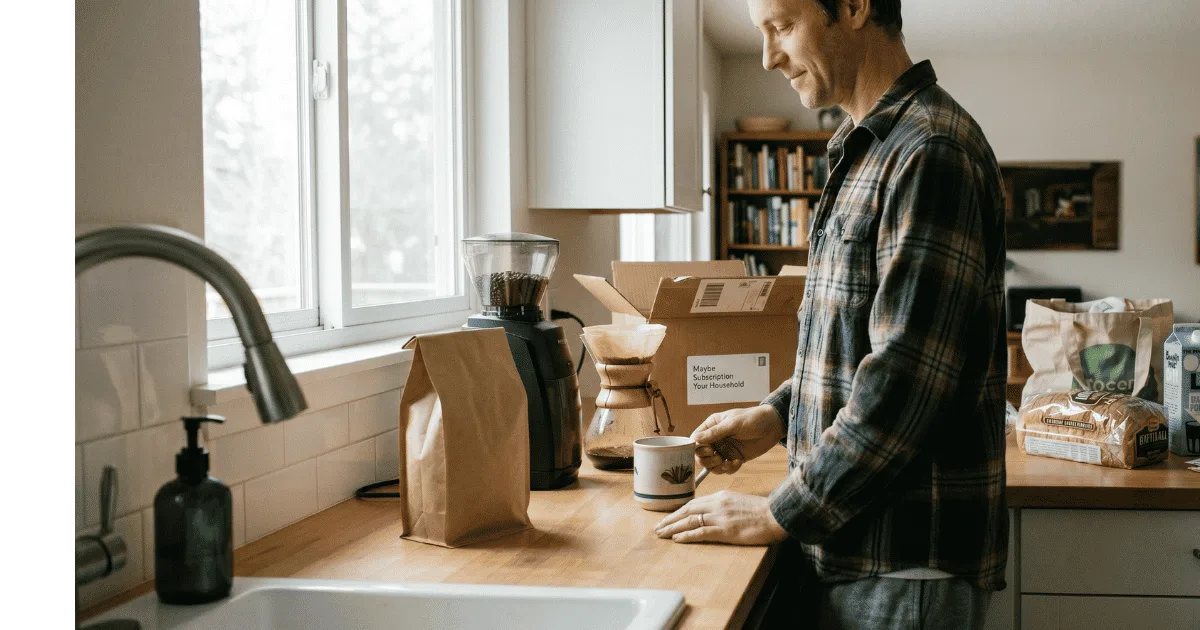
Walk into anyone's home, and the things on display tell one story. The books on the shelf, the art on the walls, the furniture they saved for — these are the curated version of a life. But look at what they reorder without thinking, and you get something closer to the truth.
Reordering is not glamorous. It does not get photographed or shared. There is no unboxing moment, no first impression. It is simply the quiet acknowledgment that something has earned a permanent place in life. And that act of returning — of choosing the same thing repeatedly — reveals more about actual values than any single intentional purchase ever could.
The Psychology Behind Repeat Purchases
Consumer behavior research draws a clear line between aspirational purchases and habitual ones. Aspirational purchases are driven by identity construction — the person someone wants to become. Habitual purchases are driven by reinforcement — the person they already are.
When something gets reordered, it has passed a test most products never survive. It delivered on its promise. It fits into the rhythm of real life, not just an imagined one. It did not end up in a drawer or get replaced after three uses.
This distinction matters because it reframes from what loyalty actually means. Brand loyalty, in the truest sense, is not built through advertising. It is built through repeated, positive experience — the kind that gets reinforced every time the product shows up and does exactly what it is supposed to do.
Rituals Are Built on Reliable Inputs
Every meaningful daily ritual depends on consistency. A morning routine that works on Monday needs to work the same way on Friday. When the inputs change — a different product, a substitute, a gap in supply — the ritual breaks down. And broken rituals have a way of disappearing entirely rather than rebuilding themselves.
This is especially true for sensory rituals. The smell of something, the texture, the taste — these cues trigger the routine before conscious thought even kicks in. When someone sets up a fresh roasted coffee beans subscription, they are not just solving a supply problem. They are protecting the architecture of a functioning morning.
Behavioral scientists call these "implementation intentions" — pre-committed plans that reduce the likelihood that a routine will fall apart. Automating the supply chain of a ritual is one of the most effective ways to preserve it.
What You Reorder Reflects What You've Stopped Questioning
There is a category of things in every person's life that have moved beyond evaluation. They are no longer compared to alternatives. They are not reconsidered during budget reviews. They simply belong.
Getting into that category is extraordinarily difficult for any product. It requires consistent performance, a fit with the person's actual lifestyle, and enough repeated positive experience that the idea of switching feels like unnecessary disruption.
Products that reach this status tend to share a few characteristics. They are used frequently, often daily. Their quality is noticeable — meaning a drop in quality would immediately be felt. And they are tied to a moment or activity that the person genuinely values.
The Economics of Not Deciding
There is a financial logic to reordering as well, though it rarely gets framed this way. When a person stops comparison shopping for something, they are making an implicit calculation: the value of their time and attention exceeds any marginal savings from switching.
This is rational, not lazy. Optimizing every purchase decision is costly. The person who spends 40 minutes researching a $15 item has almost certainly made a poor economic decision. The person who reorders the same thing in 90 seconds and moves on has preserved something more valuable than the price difference.
This is why subscription models have penetrated the premium segment of almost every consumer category. Customers at that level have already done math. They know what they like. They want it to show up reliably and free up their attention for things that actually require it.
Trust Is Proven in Repetition, Not in First Impressions
Marketing tends to obsess over acquisition — the first click, the first purchase, the conversion. But the more important moment happens the second time. And the third. Because that is where trust is actually built.
A product that earns a second purchase has done something significant. A product that earns a subscription has done something rare. It has crossed from the world of evaluation into the world of assumption — the assumption that it will be good, that it will arrive, that the experience will hold.
What Reorders Quietly Signal to the People Around You
There is also a social dimension to habitual consumption that rarely gets examined. When someone consistently uses the same thing, recommends it, and defends their choice of it, they are communicating something about their standards.
Reorders are a form of endorsement that carries more weight than any review because they are backed by actual, repeated behavior. The person who has reordered something twenty times is not speculating. They are reporting.
What you buy once can be an accident, a gift, or an experiment. What you reorder is a decision — made quietly, without ceremony, and with more conviction than almost anything else in a shopping cart.