
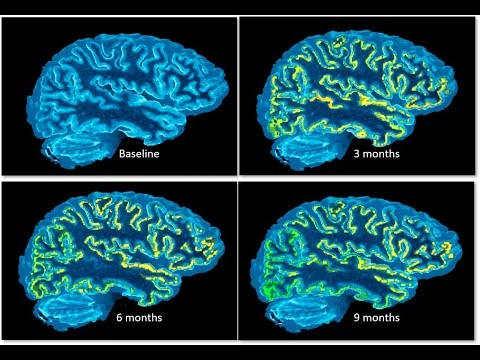
Alzheimer’s Disease is one of the most complicated neurodegenerative conditions in the world, with millions of people impacted by this worldwide disease and presenting significant challenges to those researching to find more effective methods for treating Alzheimer’s Disease. For many years, researchers primarily focused on amyloid plaques and tau tangles (two hallmarks of Alzheimer’s Disease) as targets for intervention.
However, as more studies have documented the relationship between neuroinflammation and the progression of Alzheimer's Disease, many researchers now believe that neuroinflammatory processes are major contributors to the development of Alzheimer's Disease and should be studied further to help elucidate the role that Neuroinflammation in Alzheimer's Disease.
One company, Annovis Bio, Inc., has developed a radically innovative concept to reverse damage to nerve cells and improve cognitive performance. As a result, the field of research into Neuroinflammation in relation to the treatment of Alzheimer's Disease is crucial to understanding how Alzheimer's Disease progresses and which factors contribute to accelerating or delaying the onset of Alzheimer's Disease and how to potentially intervene in the future.
Learning the Role of Neuroinflammation
Neuroinflammation represents the inflammation of the brain in response to brain damage or toxic accumulation. Although this reaction is vital in safeguarding the brain, chronic inflammation develops to be toxic, and that is what the scientists think happens in Alzheimer's disease. Microglia and astrocytes, which are the immune cells of the brain, overreact and start releasing inflammatory molecules, which end up accidentally demolishing healthy neurons. In the long run, it causes dysfunctional communication among nerve cells, which adds on a large scale to memory impairment, disorientation and loss of cognitive functions. Traditionally, therapeutic interventions for Alzheimer's focused on amyloid plaques and tau tangles, whereas a large number of researchers consider the inflammation to be an earlier and more significant causative factor of the disease.
Research has demonstrated that chronic inflammation impairs the brain to remove toxic proteins, and thus, amyloid deposition may be caused by inflammation and not necessarily its cause. Some companies, such as Annovis Bio, Inc., are also working on multi-pathway-based therapies that promote inflammation and enhance information transfer between nerve cells. Their direction indicates a wider change in the scientific community, that is, neuroinflammation is recognized as a major driver of the development of the disease. That is why the idea of attacking the biological pathways related to the Neuroinflammation of Alzheimer's Disease continues to be regarded as an important step towards any form of significant therapeutic success.
The Case of Neuroinflammation Targeting the Next Generation of Therapies
Single-target approach has fewer advantages than targeting neuroinflammation. Inflammation can disrupt various cellular activities, and interventions which lower it may be useful in improving neuron-neuron (and other cell-cell) communication, improving synaptic performance, and enabling the brain to regenerate itself. This multi-benefit designation is necessary, particularly since Alzheimer's is not brought about by a single factor; it is the consequence of several related failures in the brain. The leadership in this direction is being assumed by Annovis Bio, Inc., which is developing therapies that improve the information flow in nerve cells. The focus of their study on Alzheimer's, Parkinson and other neurodegenerative diseases is reversal of cellular stress, enhancement of energy generation and minimization of toxic accumulation.
Using inflammation as a therapeutic approach to the body has demonstrated statistically favorable results in the initial research across the industry, as patients reported an increase in the clarity of cognitive functions, attention, motor performance, and overall neurological stability. Such outcomes have given new hope to the treatment methods that are not based on symptomatic treatment but rather seek to rectify the imbalance in the biology of the body.
With neuroinflammation emerging as a central topic in the field of neuroscience, scientists are becoming more and more convinced that a treatment focused on this concept can produce stronger and more lasting effects than the standard treatments. Modulating and attacking inflammatory reactions is thus becoming the focus of the coming generation of Alzheimer's therapeutic approaches, and this is likely to be a characteristic feature of the future therapeutic progress in the field, particularly as more studies reveal the extent and magnitude of deep-rooted inflammation in the early stages and pathogenesis of the disease.
Conclusion
Focusing on neuroinflammation can remake the revolution in Alzheimer's therapy because it will target one of the most profound causes of cognitive impairment instead of the manifested symptoms. As resourceful companies such as Annovis Bio, Inc., develop multi-pathway solutions that increase cellular communication and regulate inflammatory reactions, the industry is heading towards more efficient and long-lasting outcomes achieved by patients.
With the rise in scientific knowledge and the development of clinical studies, new therapies based on the regulation of inflammation can take the first place among the main innovations. To the observers of the Alzheimer's Disease Clinical Trials and Drug Development field, it is becoming more apparent that neuroinflammation is a promising new direction the one that could potentially redefine the future of Alzheimer's care.