Why Supplier Capacity Matters in Manufacturing Procurement
When an OEM selects a manufacturing supplier, price and quality are usually high on the list of priorities. However, another factor can have an equally important impact on production: supplier capacity.
A supplier may have the right equipment and experience but still struggle to meet an order if its production schedule is already full. Understanding capacity before placing an order can help procurement teams avoid unnecessary delays.
What Is Supplier Capacity?
Supplier capacity refers to the amount of production a supplier can reasonably handle within a given period.
For machined components, capacity can depend on machine availability, tooling, operators, material availability, setup requirements, inspection time, and the number of operations required to complete a part.
For fabricated components, cutting, bending, welding, finishing, and assembly requirements can also affect available production capacity.
Why Capacity Should Be Discussed Before Ordering
A supplier's general capability does not necessarily mean that capacity is available when an OEM needs it.
For example, a supplier may regularly produce CNC machined components but have limited machine availability during a period of high demand.
If capacity is not discussed early, the buyer may receive a quotation that appears suitable but later discover that the required delivery date cannot be maintained.
Ask the Right Questions
Procurement teams can ask suppliers practical questions before placing an order:
• What is the expected production lead time?
• Is capacity currently available?
• Can the supplier support an increase in quantity?
• Are special tooling or processes required?
• How are urgent requirements handled?
• What could affect the quoted delivery schedule?
These questions provide a better understanding of the supplier's ability to support the actual requirement.
Consider Demand Changes
OEM production schedules do not always remain constant. Customer demand can increase, new projects can begin, or an existing product may require additional components.
A supplier that can support the initial order may not have enough capacity when volumes increase.
Discussing potential future demand with the supplier can help both sides plan production more effectively.
Lead Time and Capacity Are Connected
Lead time is often a reflection of production availability and manufacturing complexity.
A component requiring several operations may naturally need more production time. If the supplier is also managing a full production schedule, the lead time may increase further.
Procurement teams should therefore evaluate lead time together with capacity rather than treating them as separate issues.
Maintain a Backup Source
For critical components, a qualified second supplier can provide additional flexibility.
A second source can help when the primary supplier has limited capacity, unexpected equipment downtime, quality problems, or a sudden increase in workload.
The purpose is not necessarily to replace the primary supplier. It is to maintain another qualified manufacturing option.
Capacity Should Be Part of Supplier Qualification
Supplier qualification should include more than equipment and pricing.
OEMs should consider:
• Manufacturing capability
• Available production capacity
• Lead times
• Quality processes
• Engineering support
• Communication
• Total procurement cost
• Ability to support future demand
• Backup sourcing options
A supplier with strong technical capability but insufficient capacity may not be the right choice for a time-sensitive production requirement.
Better Planning Reduces Surprises
Supplier capacity should be discussed before production commitments are made. Clear requirements, realistic delivery expectations, and regular communication can help procurement teams plan more effectively.
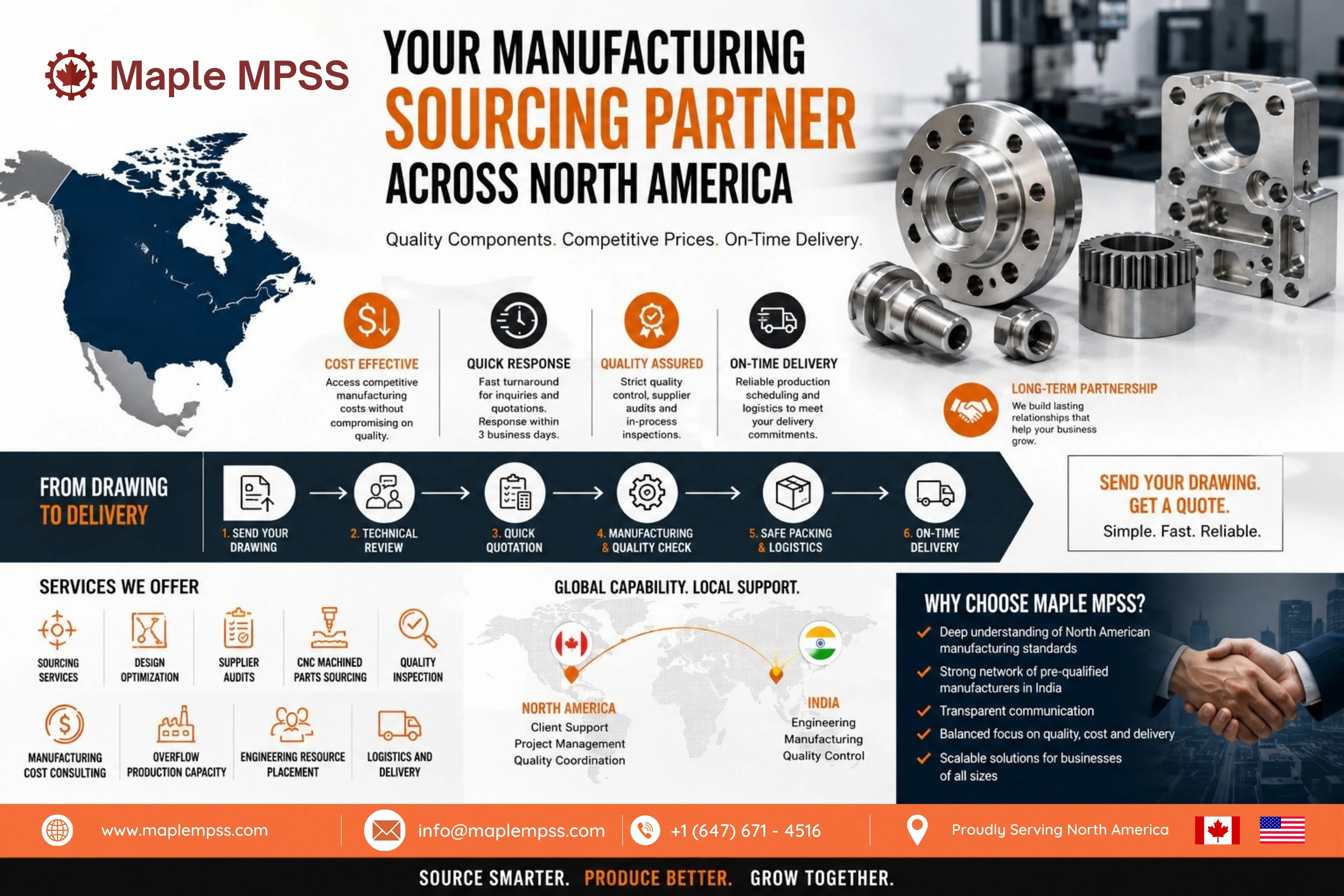
For North American OEMs and manufacturers, Maple MPSS supports manufacturing sourcing, supplier qualification, procurement support, precision machined and fabricated components, engineering coordination, quality inspection, contract manufacturing, and overflow manufacturing support.
A practical approach to supplier capacity can help OEMs build more predictable manufacturing and procurement processes.