Organic chemistry has long held a reputation as one of the most challenging courses in college science curricula. For many students in the United States, especially those pursuing careers in medicine, pharmacy, or chemical engineering, organic chemistry is a gatekeeper subject—required, rigorous, and often anxiety-inducing. Despite its foundational importance, a significant number of students struggle to grasp even the basic concepts.
But why is this the case? What makes organic chemistry so difficult compared to other sciences? For some, the challenge lies in the abstract nature of the material; for others, it’s the cumulative knowledge required to make sense of reaction mechanisms and molecular structures. Add to that the pressure of high-stakes testing, and you have a perfect storm of academic stress.
Understanding the core reasons behind these struggles can help educators, students, and even parents develop more effective learning strategies. For students particularly overwhelmed, platforms like Learn Organic Fever offer structured guidance and conceptual clarity, helping learners rethink how they approach the subject.
Key Points
- Organic chemistry is conceptually different from general chemistry and needs a distinct approach.
- Lack of foundational knowledge often sets students back early in the course.
- Visual-spatial understanding is key but often underdeveloped in students.
- Memorization is mistaken for understanding, leading to shallow learning.
- Effective study strategies and resources can make a significant difference in learning outcomes.
The Conceptual Shift: From General to Organic Chemistry
Why the Transition is Hard
General chemistry typically focuses on equations, stoichiometry, and ions. Students learn formulas and apply them to solve problems with definitive answers. Organic chemistry, on the other hand, is less about numbers and more about understanding how and why atoms interact. This shift from quantitative problem-solving to qualitative reasoning can be jarring.
What Students Don’t Expect
Many students enter organic chemistry expecting a similar experience as general chemistry. However, they quickly realize that success requires a more intuitive and conceptual understanding of molecules and their behavior. This transition is not always clearly communicated, leaving students unprepared for the mental leap organic chemistry demands.
Common Knowledge Gaps
Foundations Matter
Students often struggle because they lack a solid foundation in general chemistry principles. Concepts like electronegativity, hybridization, and acid-base theory are essential in organic chemistry but are sometimes only superficially understood from prior courses. When these concepts are not fully internalized, students find it difficult to build upon them.
Not Just Memorization
Memorizing reactions and mechanisms without understanding the underlying principles is a common pitfall. While rote learning may work temporarily, it doesn’t provide the flexibility needed to solve novel problems or understand new material. True mastery requires deep comprehension of why certain reactions occur and how electrons move in a mechanism.
The Visualization Barrier
Drawing and Visual Thinking
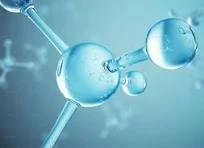
Organic chemistry is a highly visual subject. Students must learn to interpret and draw chemical structures, understand 3D conformations of molecules, and visualize electron flows. This spatial aspect is often underdeveloped in students who are more accustomed to linear, equation-based subjects.
Tools That Help
Using molecular model kits or software tools can significantly enhance spatial understanding. These tools allow students to physically or digitally manipulate molecules, improving their ability to visualize and understand stereochemistry and conformational changes.
Misconceptions and Mental Blocks
“I’m Just Not Good at Chemistry”
One of the biggest barriers is the psychological one. Many students come into the course believing they’re not good at science or that organic chemistry is inherently impossible to understand. These limiting beliefs can hinder their ability to engage with the material proactively.
Breaking the Stereotype
Organic chemistry is not reserved for geniuses. Success comes from consistent practice, curiosity, and the right learning strategies. By shifting their mindset and embracing a growth-oriented approach, students can vastly improve their performance.
Ineffective Study Habits
Last-Minute Cramming
Organic chemistry is cumulative. Missing even a single concept can create a domino effect of confusion. Students who cram before exams often find themselves overwhelmed because the material requires long-term engagement and continuous practice.
Better Approaches
- Active Recall: Test yourself frequently instead of just rereading notes.
- Spaced Repetition: Review material over increasing intervals to solidify memory.
- Practice Problems: Work through varied problems to build problem-solving flexibility.
The Role of Instructors and Curriculum
Variability in Teaching Styles
Different instructors emphasize different aspects of organic chemistry. Some focus heavily on mechanisms, while others stress nomenclature or synthesis. This inconsistency can confuse students who rely heavily on lectures without supplementing their learning with outside resources.
Curriculum Challenges
Many organic chemistry courses are taught at a fast pace, covering vast amounts of material in limited time. This leaves little room for students to digest and reinforce what they’ve learned. Additionally, textbooks can be dense and inaccessible, contributing further to the confusion.
Strategies for Success
Develop Conceptual Understanding
Rather than memorizing mechanisms, students should focus on the principles that drive chemical behavior. Why does a nucleophile attack an electrophile? Why do certain leaving groups make better products? Answering these questions builds a deeper understanding that can be applied across multiple contexts.
Utilize Diverse Resources
- Videos and Tutorials: Sometimes a visual explanation can clarify what a book cannot.
- Study Groups: Explaining concepts to peers is a great way to reinforce your own understanding.
- Online Platforms: Resources like Learn Organic Fever offer structured lessons that break down complex topics into digestible parts.
The Importance of Practice
Practice Makes Proficient
Organic chemistry is like learning a new language. The more you practice reading, writing, and “speaking” in it—by drawing mechanisms, naming compounds, and solving problems—the more fluent you become. Practice is indispensable for success.
Feedback is Key
Simply doing problems isn’t enough. Students need feedback to understand their mistakes and correct misconceptions. Working with tutors, attending office hours, and using annotated solutions can help in this regard.
Leveraging Technology and Tools
Modern Aids
Apps and software have revolutionized how students study organic chemistry. Platforms now offer interactive molecule viewers, reaction simulators, and quiz generators tailored to the organic curriculum. These tools, when used alongside traditional methods, enhance both comprehension and retention.
Staying Engaged
Gamification and interactive learning are increasingly popular. Students might find themselves more motivated to study using tools that reward progress and adapt to their pace. These new methods can make a traditionally “dry” subject more engaging and accessible.
FAQ
Why is organic chemistry considered so difficult?
Because it requires a deep understanding of abstract concepts, spatial reasoning, and cumulative knowledge. Unlike other science courses focused on calculations, organic chemistry demands both conceptual clarity and practical application.
Can I succeed in organic chemistry without a strong chemistry background?
Yes, but you’ll need to invest extra time in reviewing general chemistry topics. Using supplementary resources and focusing on foundational principles can help bridge the gap.
How much time should I study for an organic chemistry course?
Most experts recommend at least 10–15 hours per week of focused, active study. This includes reviewing notes, solving problems, and self-testing.
What are the best resources for learning organic chemistry?
In addition to textbooks and lectures, online platforms like Learn Organic Fever can offer targeted lessons, conceptual explanations, and self-assessment tools that make learning more effective.