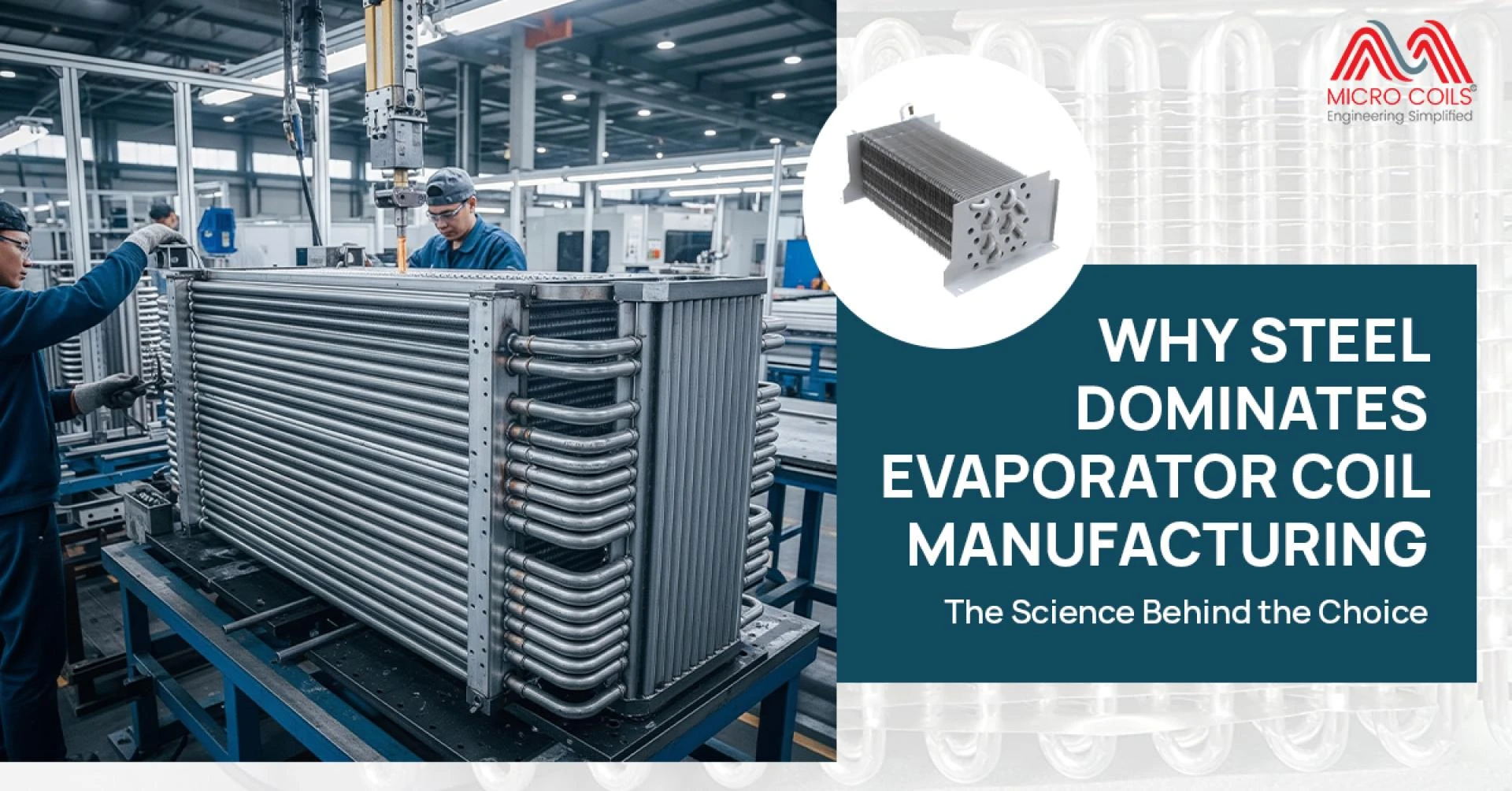
When you peek inside your air conditioning unit or refrigerator, those serpentine metal tubes doing the heavy lifting aren't made from just any material. Steel has become the go-to choice for these critical components, and the reasons run deeper than you might expect.
The Material Science Foundation
Evaporator coil construction demands materials that can handle extreme conditions. Steel rises to meet these challenges with remarkable consistency. The metal's molecular structure provides stability under pressure while maintaining flexibility during thermal expansion and contraction cycles.
Heat transfer efficiency drives every decision in HVAC design. Steel conducts thermal energy at precisely the right rate for refrigeration applications. Too fast, and the system becomes inefficient. Too slow, and performance suffers dramatically. Steel hits that sweet spot engineers crave.
Durability Under Pressure
Corrosion resistance matters enormously in humid environments. Modern steel alloys resist rust formation through careful chemical composition. Chromium and other elements create protective barriers against moisture damage. This longevity translates directly into cost savings for property owners.
Recommended Read - The Impact of AC Condenser Coil Design on HVAC System Efficiency
Manufacturing processes favor steel for practical reasons. The material shapes easily into complex coil configurations. Welding joints remain strong under operational stress. Assembly lines can work with steel efficiently, keeping production costs reasonable.
Safety and Reliability Standards
Pressure tolerance becomes critical when refrigerants flow through these systems. Steel withstand internal pressures that would burst weaker materials. Safety regulations demand this reliability, especially in commercial applications where failure could prove catastrophic.
Temperature fluctuations test every component in cooling systems. Steel expands and contracts predictably, maintaining structural integrity through thousands of cycles. Other materials might crack or deform under similar stress, but steel endures.
Economic Advantages
Cost considerations influence every engineering decision. Steel provides excellent performance per dollar invested. While exotic materials might offer superior properties in specific areas, steel delivers the best overall value proposition for most applications.
Installation flexibility gives steel another advantage. Technicians can modify coil configurations in the field when necessary. Copper might be easier to bend, but steel offers better long-term reliability once installed properly.
Maintenance and Service Benefits
Maintenance requirements stay minimal with steel coils. Cleaning procedures remain straightforward, and replacement parts are readily available. This serviceability extends equipment life cycles significantly compared to more specialized materials.
Environmental factors play increasingly important roles in material selection. Steel's recyclability aligns with sustainability goals. When coils eventually reach end-of-life, the steel can be reclaimed and repurposed, reducing waste streams.
Thermal Performance Characteristics
Thermal cycling creates stresses that many materials cannot handle. Steel's crystalline structure maintains stability through repeated heating and cooling phases. This durability prevents premature failure in demanding applications.
Chemical compatibility matters when different refrigerants contact coil surfaces. Steel remains chemically inert with most common refrigerants, preventing unwanted reactions that could compromise system performance or safety.
Design and Engineering Considerations
Weight considerations balance durability against structural requirements. Steel provides strength without excessive mass that might stress mounting systems. This balance proves especially important in residential applications where space constraints exist.
Surface treatments enhance steel's natural properties further. Galvanizing, powder coating, and other finishes provide additional protection against environmental hazards while maintaining heat transfer characteristics.
Thermodynamic Integration
Adiabatic cooling principles influence coil design significantly. When refrigerants undergo phase changes within steel coils, the material's thermal properties complement these thermodynamic processes perfectly. Steel neither adds nor removes excessive heat during critical transitions.
Quality control becomes easier with steel manufacturing. Testing procedures are well-established, and material properties remain consistent between batches. This reliability reduces manufacturing defects and warranty claims.
Market and Supply Chain Stability
Market availability ensures steady supply chains. Steel production facilities exist globally, reducing dependency on specialized suppliers. This widespread availability keeps costs stable and delivery times predictable.
Innovation continues improving steel formulations. Metallurgists develop new alloys specifically for HVAC applications, incorporating elements that enhance specific properties while maintaining overall performance characteristics.
Regulatory and Compliance Aspects
Regulatory compliance stays straightforward with steel coils. Building codes and safety standards recognize steel's proven track record. Approval processes move smoothly when established materials are specified in system designs.
Performance predictability helps system designers optimize overall efficiency. Steel's well-documented thermal and mechanical properties allow accurate modeling of system behavior under various operating conditions.
Installation and Repair Advantages
Field repairs become possible with steel coils when damage occurs. Welding equipment and expertise remain widely available, enabling on-site fixes that might be impossible with exotic materials.
Compatibility with other system components ensures smooth integration. Steel coils work harmoniously with copper tubing, aluminum fins, and other common HVAC materials without creating galvanic corrosion problems.
Manufacturing Scalability
Manufacturing scalability supports industry growth. Steel production can increase rapidly to meet rising demand without requiring entirely new production infrastructure or specialized equipment.
Testing protocols verify steel coil performance under extreme conditions. Laboratory simulations confirm durability under accelerated aging, pressure cycling, and chemical exposure scenarios that represent decades of normal operation.
Future-Proofing and Reliability
Supply chain resilience matters in today's uncertain economic climate. Steel's established production networks provide stability that newer materials cannot match. This reliability translates into consistent project delivery schedules.
Design flexibility allows engineers to optimize coil geometry for specific applications. Steel can be formed into complex shapes that maximize heat transfer surface area while fitting within tight spatial constraints.
Worker safety improves with steel handling compared to some alternatives. Installation technicians appreciate working with familiar materials that don't require special handling procedures or protective equipment beyond standard safety protocols.
The dominance of steel in evaporator coil manufacturing stems from this comprehensive combination of benefits. No single alternative material matches steel's overall performance profile across all these critical factors, making it the clear choice for reliable, efficient cooling systems.