
Introduction
Microsoft Dynamics 365 is one of the world’s leading ERP and CRM platforms, trusted by enterprises to manage finance, supply chain, HR, and customer engagement. But when businesses expand into complex industries like real estate, construction, or financial services, they often find that Standard D365 alone isn’t enough.
And that’s not a flaw — it’s by design.
Why Dynamics 365 Isn’t “One-Size-Fits-All”
Every enterprise software system faces a tough question: should it aim to cover everything for everyone, or should it provide a strong foundation that industries can build upon?
Microsoft chose the second path. Dynamics 365 is designed to be modular and extensible, rather than overloaded with every possible workflow.
Why industries struggle with Standard D365 out of the box
Press enter or click to view the image in full size
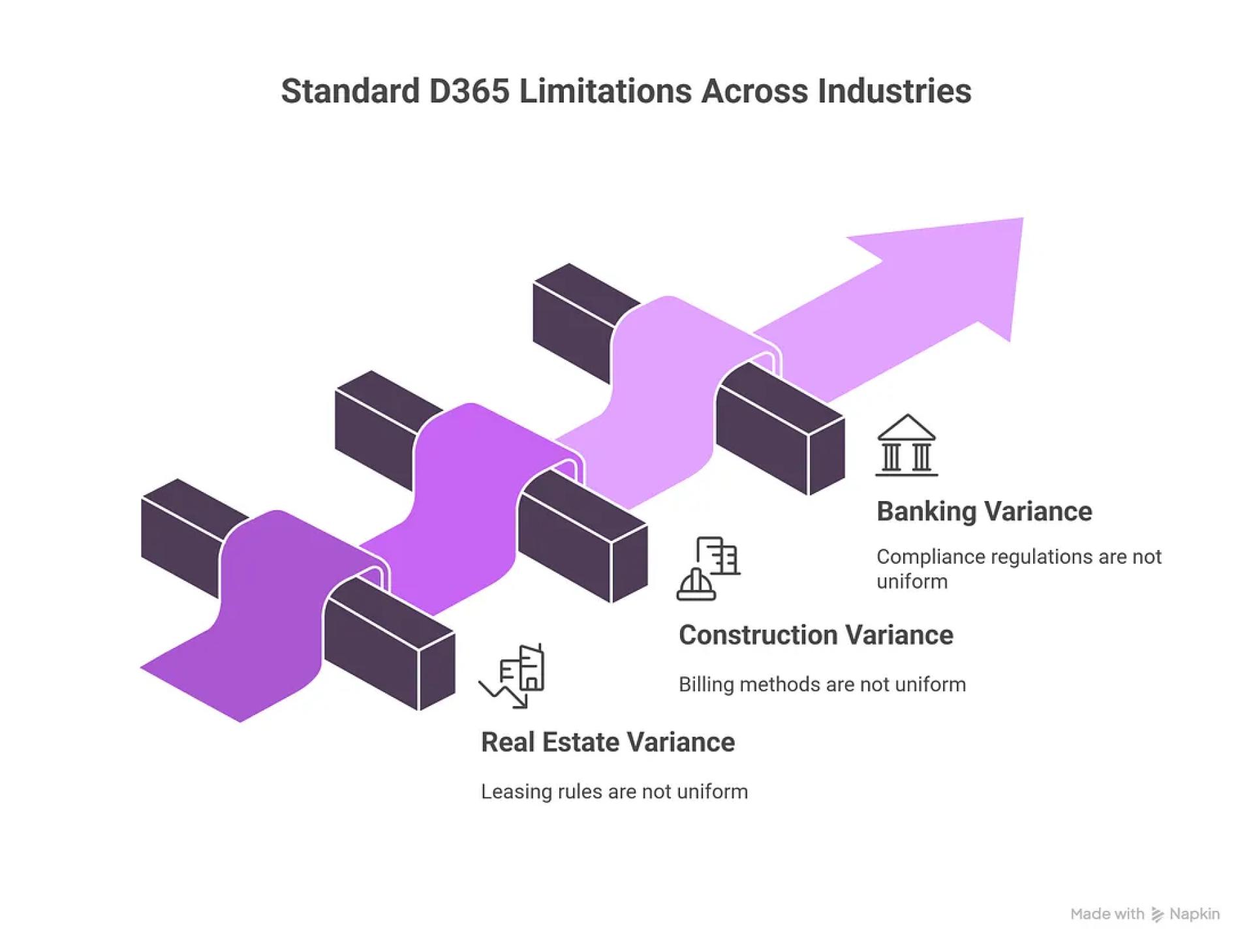
- Real estate: Leasing rules vary between Dubai, Mumbai, and Toronto.
- Construction: India uses BOQ billing, and Europe prefers milestone-based invoicing.
- Banking: Compliance regulations shift drastically across regions.
No single ERP can capture all of these complexities without becoming rigid and unwieldy.
Enter: ISV Solutions
Instead of trying to “hard-code” every scenario, Microsoft relies on ISV (Independent Software Vendor) solutions to bring industry expertise into Dynamics 365. These vertical add-ons extend D365 into domains like:
Think of Dynamics 365 as the engine, while ISV solutions provide the specialized gear that makes it perform in different terrains.
Enterprise example
Consider a hospital group already using Dynamics 365 for HR, procurement, and finance. When they expand into leasing staff quarters and commercial spaces, they hit a roadblock: standard D365 doesn’t manage leases, service charges, or tenant lifecycles.
The foundation is strong. But the vertical workflows are missing.
This is exactly where ISV solutions step in.
What Happens Without Extensions?
Enterprises trying to run industry-specific operations on Standard D365 alone often face:
- High-cost custom development
- Project delays
- Workarounds with spreadsheets
- Compliance and reporting gaps
The ERP itself isn’t the problem — the lack of industry tailoring is.
The Smarter Path: Extend, Don’t Replace
Instead of rebuilding or customizing everything from scratch, enterprises can extend Dynamics 365 with industry-ready solutions:
- RealEstatePro: Lease lifecycle, CAM/service charges, multi-property billing
- Contract Management: BOQ & milestone billing, subcontractor workflows, site-level cash flow
- Treasury Management: Risk profiling, KYC/AML compliance, audit-ready reporting
These plug directly into D365 with minimal disruption, allowing enterprises to scale smoothly across industries.
Final Thought
Dynamics 365 was never designed to solve every industry problem straight out of the box — and that’s its strength. By keeping the platform lean and modular, Microsoft ensures enterprises can adapt it with ISV solutions that fit their unique industries.