The aviation industry is evolving faster than ever. With increasing air traffic, advanced aircraft systems, and stricter safety regulations, pilot education must keep pace with modern demands. Traditional flight training alone is no longer sufficient to prepare pilots for today’s complex operational environments. This is where simulator-based training has emerged as a game-changer—and it is rapidly becoming the future of pilot education.
From cost efficiency to enhanced safety and skill mastery, flight simulators are transforming how pilots are trained across the world. In this blog, we explore why simulator-based training is shaping the future of pilot education and how it benefits aspiring pilots, airlines, and training organizations alike.

Understanding Simulator-Based Pilot Training
Simulator-based training uses advanced flight simulators that replicate real aircraft cockpits, flight dynamics, weather conditions, and emergency scenarios. These simulators range from fixed-base simulators to full-flight simulators (FFS) with motion systems and 360-degree visuals.
Modern simulators allow trainee pilots to experience realistic flight conditions without leaving the ground. This makes them an essential part of commercial pilot training, type rating courses, and recurrent airline training programs.
1. Enhanced Safety: Training Without Risk
Safety is the foundation of aviation. One of the biggest advantages of simulator-based pilot training is that pilots can practice high-risk situations without real-world danger.
Pilots can repeatedly train for:
- Engine failures during takeoff
- Severe weather conditions
- Hydraulic or electrical system malfunctions
- Emergency landings
In real aircraft, practicing these scenarios can be risky, expensive, or impossible. Flight simulators make it safe to fail, learn, and improve, which significantly enhances pilot confidence and decision-making skills.
2. Cost-Effective Pilot Education
Flying real aircraft is expensive. Fuel costs, aircraft maintenance, airport fees, and instructor time all add up. Simulator-based training helps reduce these costs dramatically.
Key cost benefits include:
- Lower fuel and maintenance expenses
- Reduced aircraft wear and tear
- Optimized instructor utilization
- Shorter overall training timelines
For students pursuing a commercial pilot license (CPL) training or airline type rating, simulators make professional pilot education more accessible and financially sustainable.
3. Realistic Training for Modern Aircraft Systems
Today’s aircraft are highly automated, with advanced avionics and flight management systems. Learning these systems effectively requires more than textbook knowledge.
With flight simulator training, pilots can:
- Practice cockpit workflows in real time
- Understand automation management
- Train on glass cockpit systems
- Master standard operating procedures (SOPs)
This level of realism ensures pilots are job-ready when they transition to airline operations.
4. Faster Skill Development and Better Retention
Studies show that experiential learning leads to better skill retention—and simulators excel at this. Pilots can repeat maneuvers, approaches, and procedures until they achieve mastery.
Simulator-based training allows:
- Immediate feedback from instructors
- Pause, replay, and analysis of mistakes
- Customized training based on pilot performance
As a result, trainees develop strong situational awareness, crew resource management (CRM) skills, and confidence much faster than with traditional methods alone.
5. Training for Rare and Complex Scenarios
Some flight scenarios occur very rarely in real operations, but pilots must be fully prepared for them. Simulators make it possible to train for these rare events extensively.
Examples include:
- Dual engine failure
- Extreme wind shear
- Low-visibility CAT II & CAT III landings
- Complex airport operations
This is why airlines worldwide rely heavily on simulator-based recurrent training to keep pilots prepared for every situation.
6. Alignment with Global Aviation Regulations
Aviation authorities worldwide emphasize simulator training as a core part of pilot education. Regulatory bodies like DGCA and EASA mandate simulator hours for licensing, type rating, and proficiency checks.
Simulator-based training ensures:
- Compliance with international safety standards
- Structured assessment and evaluation
- Standardized pilot competency levels
This makes simulator training essential for pilots aiming for international airline careers.
7. Environmentally Sustainable Training
Sustainability is becoming a priority across industries, and aviation is no exception. Simulator-based training significantly reduces carbon emissions by minimizing aircraft flying hours.
Environmental benefits include:
- Reduced fuel consumption
- Lower noise pollution
- Smaller carbon footprint
By adopting simulator-based pilot education, training organizations contribute to greener aviation practices while maintaining high training standards.
8. Preparing Pilots for Airline-Style Operations
Airlines operate on strict schedules, SOPs, and teamwork principles. Simulators are designed to replicate real airline environments, helping pilots adapt seamlessly.
Through simulator sessions, pilots learn:
- Multi-crew coordination
- Airline communication protocols
- Time-critical decision-making
- Line-oriented flight training (LOFT)
This bridges the gap between flight school training and real airline operations.
9. The Future: AI, VR, and Next-Gen Simulators
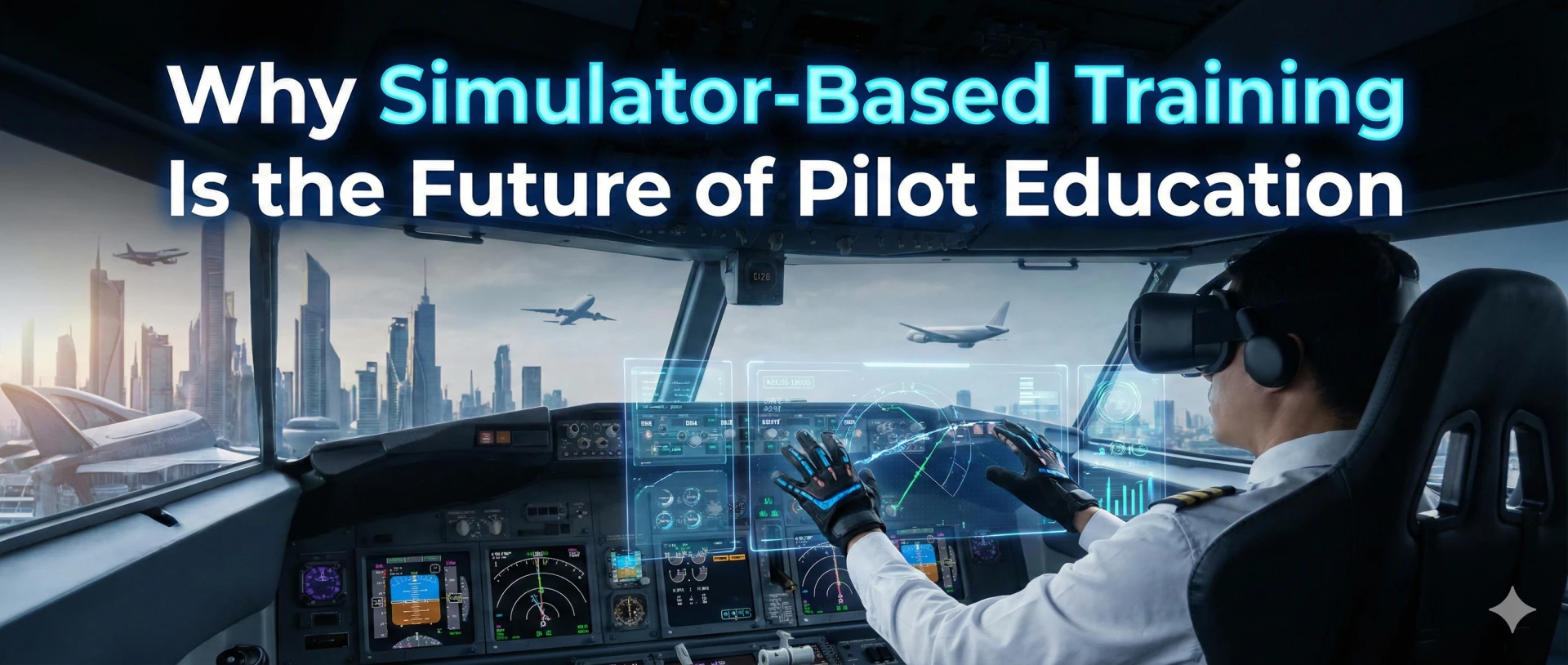
The future of simulator-based training is even more promising. Advancements in artificial intelligence (AI), virtual reality (VR), and data analytics are making simulators smarter and more adaptive.
Future trends include:
- AI-driven performance analysis
- Personalized training modules
- Immersive VR cockpit experiences
- Predictive skill assessment
These innovations will further enhance pilot competency and training efficiency.
Conclusion: Simulator-Based Training Is Here to Stay
Simulator-based training is no longer just a supplement to traditional flight training—it is the foundation of modern pilot education. By offering safer, cost-effective, realistic, and regulation-compliant training, simulators prepare pilots for the real challenges of today’s aviation industry.
As airlines expand and aircraft technology advances, the demand for highly skilled, simulator-trained pilots will continue to grow. For aspiring aviators, investing in simulator-based training is not just a smart choice—it’s the future of a successful flying career.