Siege of Orgrimmar remains one of the most important story moments in World of Warcraft because it turned a faction that was normally united against outside enemies into the center of its own civil war. Instead of presenting the Horde as a single force with one clear direction, the story showed how quickly loyalty could fracture when leadership stopped representing the values of the people it was supposed to lead. Garrosh Hellscream’s rise had already created tension long before the raid itself began, but by the time players reached Orgrimmar, those tensions had become impossible to ignore. His increasingly aggressive rule, obsession with strength, and willingness to push the Horde toward a more extreme vision gradually alienated several of its most important leaders. What began as disagreement became resistance, and that resistance eventually became open rebellion.
One of the strongest parts of the storyline is that Garrosh was not simply presented as a villain who appeared out of nowhere. His downfall was built over time. Players had already seen his personality, his pride, his belief in military power, and his growing conviction that the Horde needed to become something harsher and more dominant. That gradual development gave the conflict much more weight because the rebellion did not feel sudden. Vol’jin, Baine Bloodhoof, and other leaders had reasons to question him long before the final confrontation. Their opposition became less about personal dislike and more about whether Garrosh still represented the Horde at all. The conflict therefore became ideological as much as military: was loyalty owed to the Warchief, or to the ideals and people of the Horde itself?
That question is what made the Darkspear Rebellion so important. Vol’jin’s resistance was not framed simply as another power struggle for the throne. It represented a breaking point. Garrosh’s leadership had created enough fear, anger, and division that staying loyal to him increasingly meant accepting a version of the Horde that many of its own members no longer recognized. The rebellion gave players the unusual experience of fighting not against an outside faction, but against forces that were technically part of their own side. That immediately made the story more personal. Orcs, trolls, tauren, blood elves, and other Horde races were no longer automatically moving in the same direction, and the idea of faction identity became much more complicated than the usual Horde-versus-Alliance conflict.
The Alliance also added another layer to the siege. Normally, an attack on Orgrimmar would have been portrayed as a straightforward invasion, but here the situation was completely different. Alliance forces were advancing into the Horde capital at the same time that Horde rebels were fighting against Garrosh from within. That created one of the strangest temporary alignments in Warcraft history: enemies who had spent years fighting each other suddenly had a common reason to see Garrosh removed. It did not erase old rivalries or create lasting trust, but it showed that the political situation in Azeroth could become more complicated than simple faction colors. For a raid built around a civil war, that ambiguity helped make the entire campaign feel larger and more believable.
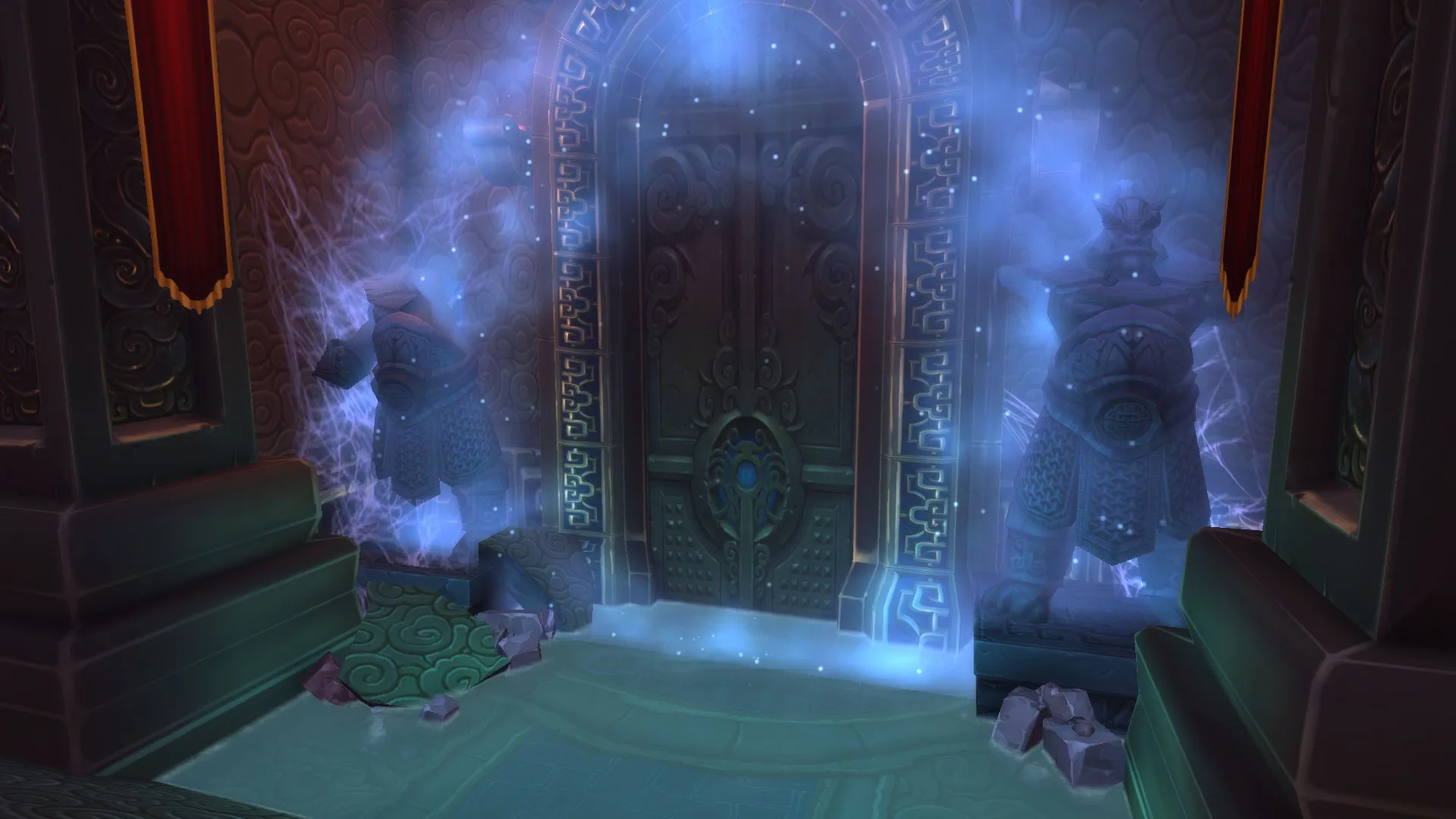
The raid itself also benefited enormously from being tied so closely to the story. Siege of Orgrimmar did not feel like a random collection of bosses hidden inside a fortress. Players were moving through the consequences of Garrosh’s rule. The environment became part of the narrative, and the deeper the raid progressed, the more obvious it became that Orgrimmar had been transformed by militarization, fear, and the pursuit of power. Instead of simply being told that Garrosh had changed the Horde, players could physically move through the city and see what that change looked like. That kind of environmental storytelling made the raid more memorable because the location already meant something to players before they entered it as enemies.
Garrosh himself worked particularly well as the final opponent because defeating him was about much more than killing another raid boss. By the time players reached the final confrontation, the story had already spent an entire expansion building toward it. His obsession with strength and control had isolated him from many of the people who once stood beside him, and the final battle represented the collapse of his entire vision for the Horde. That gave the encounter emotional context that many raid bosses simply do not have. Players were not fighting an unknown monster introduced a few quests earlier; they were confronting a leader whose decisions had shaped the faction, divided its people, and influenced the wider war across Pandaria.
The aftermath mattered just as much as the battle itself. Removing Garrosh did not magically erase the damage he had caused. The Horde had to reconsider what kind of faction it wanted to become and who could realistically lead it after such a destructive internal conflict. Vol’jin’s rise represented a very different direction, emphasizing cooperation between the Horde’s races rather than domination by one vision of strength. That contrast is important because it made the siege feel like an actual turning point rather than a temporary crisis. The leadership changed, the internal balance of the faction changed, and the consequences continued to influence later stories.
This is also why the themes of loyalty and betrayal work so well throughout the storyline. Characters who turned against Garrosh could technically be described as betraying their Warchief, but the story constantly asks whether remaining loyal to him would have been the greater betrayal. Baine, Vol’jin, and others were forced to choose between obedience to one leader and responsibility to their own people. That moral tension made the conflict much more interesting than a simple rebellion between heroes and villains. Loyalty in Warcraft is rarely absolute, and Siege of Orgrimmar demonstrated that a faction can survive only if its members believe the leadership still represents something worth following.
For modern players, revisiting older stories like Siege of Orgrimmar can also be one of the most enjoyable ways to experience World of Warcraft outside of current endgame progression. The game now contains years of raids, zones, quests, achievements, collectibles, and major narrative moments, which makes it easy to spend a huge amount of time moving between old and new content. Players who want to focus more on exploration or older storylines while simplifying some of their current dungeon progression may look for a wow mythic carry option such as wowvendor. That kind of flexibility can leave more time for the parts of Azeroth a player actually wants to experience instead of spending every session repeating the same progression routine.
What ultimately makes Siege of Orgrimmar stand out is how effectively it connects character development, faction politics, environmental storytelling, and gameplay. It is a raid about defeating Garrosh, but it is also a story about what happens when a faction loses trust in its own leadership. The battle forces the Horde to confront its identity while allowing the Alliance to take advantage of a rare moment when its greatest rival is divided from within. Every major character arrives with different motivations, yet all of those motivations eventually converge on the same battlefield.
Years later, the storyline still works because its central conflict is easy to understand without being simplistic. Garrosh believed he was making the Horde stronger, while many of those around him increasingly believed he was destroying the very thing he claimed to protect. That disagreement grew from political tension into rebellion and finally into a full assault on Orgrimmar itself. Few World of Warcraft raids have been so closely connected to the internal identity of a playable faction, and that is what gives Siege of Orgrimmar its lasting place in Warcraft history. It was not merely the conclusion of a raid tier; it was the point where the Horde was forced to decide what being the Horde was supposed to mean.