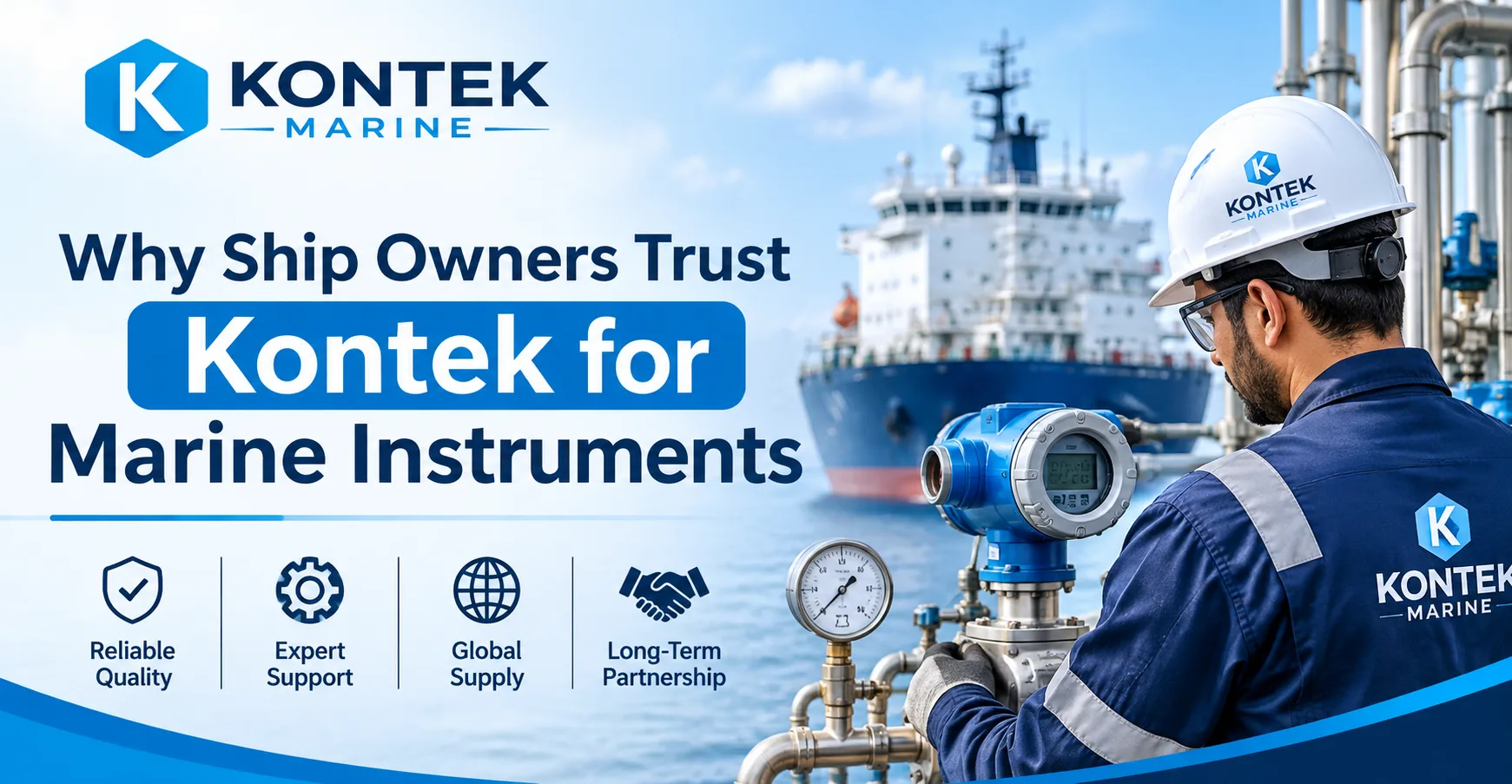
Why Ship Owners Trust Kontek for Marine Instruments
At sea, there is no roadside assistance. When a vessel is hundreds of miles from the nearest port, its instruments are the crew’s eyes, ears and early-warning system. Compasses, echo sounders, anemometers, pressure gauges and radar displays all feed the decisions that keep people, cargo and the environment safe.
When an instrument drifts out of calibration or fails outright, the consequences range from costly delays to serious safety incidents. That is why experienced ship owners and fleet managers are selective about where their equipment comes from. Kontek Marine has built its reputation on meeting that need as a dependable marine instrumentation parts supplier, one that understands how much rides on every reading.
Why Reliable Instrumentation Matters
Modern vessels depend on accurate data to navigate, manage engines, monitor cargo and comply with regulations. Reliable instruments support three things:
- Safety: Accurate depth, heading and position data help prevent groundings and collisions.
- Performance: Correct engine and fuel readings let operators optimize consumption and avoid unplanned breakdowns.
- Compliance: International rules require vessels to carry specific navigational and monitoring equipment, and that equipment must work. The International Maritime Organization’s SOLAS convention sets out safety requirements for merchant ships, including navigational equipment.
Cutting corners on instrumentation is a risk, not a saving.
Common Types of Marine Instruments
A vessel’s instrument suite is broader than many people realize. The main categories include:
Navigation instruments. Magnetic and gyro compasses, GPS receivers, radar, AIS units, echo sounders and speed logs help the bridge team know where the ship is and where it is heading. Sourcing from a trusted marine navigation equipment supplier keeps this critical layer accurate and certified.
Engine room and machinery instruments. Pressure gauges, thermometers, tachometers, flow meters and level indicators let engineers monitor propulsion systems, auxiliary machinery and fluid systems in real time.
Meteorological instruments. Barometers, anemometers and hygrometers support voyage planning and help crews respond to changing weather.
Safety and alarm systems. Gas detectors, fire detection panels and bilge alarms give early warning of dangerous conditions.
Each category has its own wear patterns and replacement cycles, so each needs a supplier with specific product knowledge.
Maintenance Challenges Ship Owners Face
Marine instruments work in some of the harshest conditions of any industry. Constant vibration, salt-laden air, humidity, temperature swings and long periods without shore-side support all take a toll.
Common challenges include:
- Calibration drift. Even high-quality instruments lose accuracy over time and need periodic checks.
- Corrosion and moisture damage. Salt and humidity degrade connectors, housings and sensors.
- Obsolete components. Older vessels often run on equipment whose parts are hard to find.
- Counterfeit or substandard parts. Low-quality replacements may look right but fail early or give inaccurate readings.
- Delivery delays. A vessel waiting in port for a small but critical part can lose significant revenue every day.
These challenges are manageable, but only with the right sourcing and servicing partner.
Why Sourcing from a Trusted Supplier Matters
Buying marine instruments is not like buying general industrial equipment. A dependable marine instrumentation parts supplier offers value that goes well beyond the part itself.
Authenticity and quality assurance. Genuine or properly certified components perform to specification and protect your warranty and class compliance.
Technical knowledge. A specialist can help match the right part to the right vessel, which matters when model numbers, ranges and connection types vary.
Speed and availability. Ships operate on tight schedules. A supplier who understands that urgency can make the difference between a short stop and a costly delay.
Documentation and traceability. Certificates and traceable parts records make audits, inspections and class surveys smoother.
Long-term partnership. Fleet operators benefit from a supplier who knows their equipment history and can anticipate needs before they become emergencies.
Spare Parts and Servicing Support
Instruments don’t last forever, and planned maintenance is far cheaper than emergency repair. Keeping critical spares on board and having a reliable service partner ashore reduces the odds that a small fault becomes a voyage-disrupting failure.
Kontek’s marine spare and service offering supports owners and operators with the parts and servicing they need to keep instruments accurate and vessels compliant. Whether you are building a spares inventory for a newbuild or replacing a failed sensor on a long-serving ship, having one dependable source simplifies procurement and shortens response times.
The Kontek Difference
Ship owners return to Kontek because the company approaches supply as a service, not just a transaction. That means:
- A focus on marine-grade, reliable instruments and parts
- Responsiveness suited to the pace of shipping operations
- Guidance on selecting the right components for each application
- A commitment to supporting vessels throughout their operating life
As both a marine instrumentation parts supplier and a marine navigation equipment supplier, Kontek helps crews trust what their instruments tell them, which is the foundation of safe operations.
Conclusion
Reliable instrumentation is central to vessel safety, efficiency and compliance. The harsh marine environment makes maintenance a constant challenge, and poor-quality or counterfeit parts only add risk. Partnering with an experienced marine instrumentation parts supplier gives ship owners genuine components, technical support, faster turnaround and peace of mind.
Key takeaways:
- Accurate instruments are essential for safety, performance and regulatory compliance.
- Calibration drift, corrosion and obsolete parts are the most common maintenance headaches.
- A trusted supplier offers quality assurance, expertise and speed, not just products.
- Planned spares and servicing cost far less than emergency repairs.
Ready to talk about your vessel’s instrumentation needs? Contact the Kontek team today and find out how a dedicated marine instrumentation parts supplier can support your fleet.
Frequently Asked Questions
1. What does a marine instrumentation parts supplier do?
A marine instrumentation parts supplier provides the instruments, sensors, gauges and replacement components used for navigation, engine monitoring and onboard safety systems. A good supplier also offers technical advice and helps match parts to specific vessels.
2. How often should marine instruments be calibrated?
It depends on the instrument type, manufacturer guidance and class or flag-state requirements. Many are checked at regular survey intervals, and critical navigation instruments should be verified whenever readings seem inconsistent.
3. Why is it risky to buy non-certified marine parts?
Non-certified or counterfeit parts may give inaccurate readings, fail early or cause compliance problems during inspections. Any of these can compromise safety and lead to expensive downtime.
4. Can I source both navigation equipment and engine room instruments from one supplier?
Yes. Working with one supplier that covers both areas, such as a marine navigation equipment supplier that also stocks machinery instruments, simplifies ordering, reduces lead times and makes support more consistent.
5. How do I know which spare instruments to keep on board?
Start with the instruments most critical to safe navigation and propulsion, review manufacturer recommendations and your vessel’s failure history, and consult your supplier. They can help you build a spares list suited to your route and equipment.