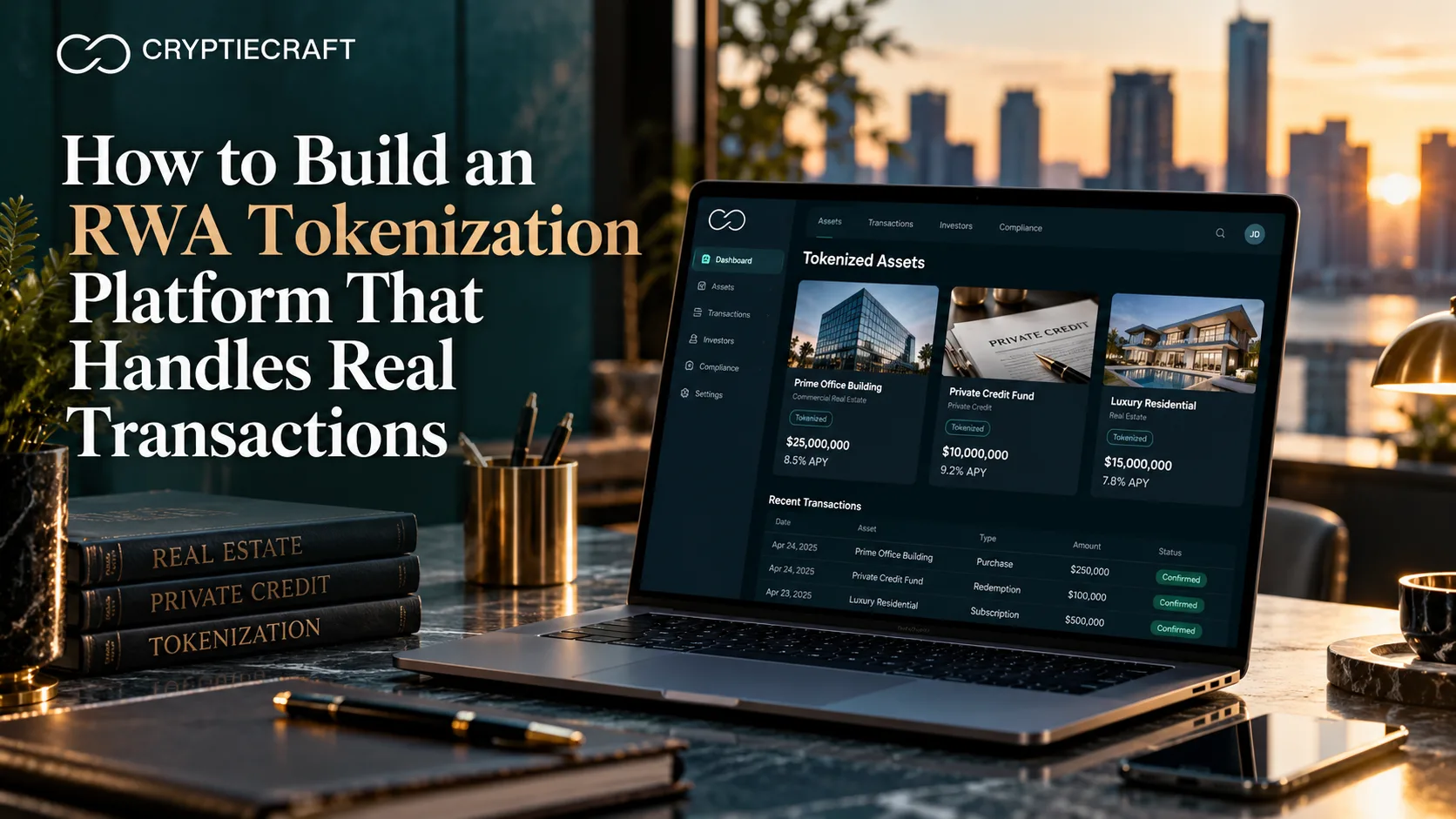
Blockchain technology has evolved significantly since the introduction of cryptocurrencies. While digital currencies and decentralized finance (DeFi) initially dominated the blockchain landscape, a new trend is rapidly gaining attention: Real-World Asset (RWA) tokenization.
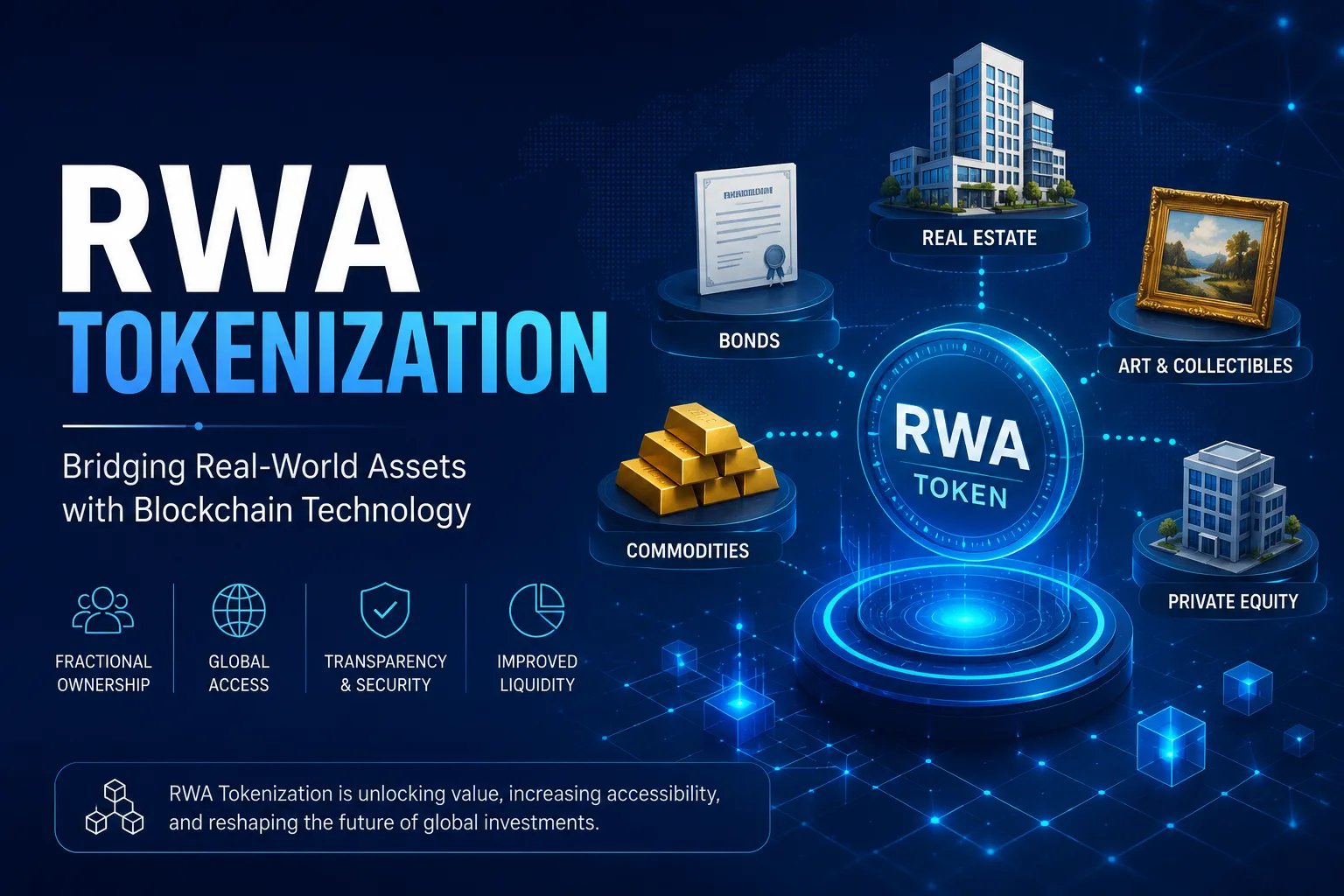
RWA tokenization involves converting ownership rights to physical or traditional financial assets into digital tokens stored on a blockchain. These assets can include real estate, commodities, artwork, private equity, government bonds, and other valuable assets.
As businesses and investors look for more efficient, transparent, and accessible financial systems, RWA tokenization is emerging as one of the most promising applications of blockchain technology.
What Is RWA Tokenization?
RWA tokenization is the process of representing real-world assets digitally on a blockchain. Each token can represent full or partial ownership of an asset, depending on the structure of the project.
For example, a commercial property worth millions of dollars can be divided into thousands of digital tokens. Instead of requiring a single investor to purchase the entire property, multiple investors may be able to own fractional shares.
Blockchain technology records ownership and transactions, creating a transparent and secure system for managing these digital representations of real-world assets.
Why Is RWA Tokenization Becoming So Popular?
1. Fractional Ownership Makes Assets More Accessible
Many traditional assets, such as real estate and private equity, require significant capital to access. RWA tokenization can divide these assets into smaller digital units.
This fractional ownership model allows more investors to participate in opportunities that were previously available only to institutions or high-net-worth individuals.
For example, instead of investing a large amount in an entire property, investors may be able to purchase a smaller tokenized share, depending on applicable regulations and the asset structure.
2. Blockchain Provides Greater Transparency
Traditional asset ownership often involves multiple intermediaries, paperwork, and complex record-keeping systems. Blockchain can simplify this process by recording transactions on a transparent and tamper-resistant ledger.
Participants can verify ownership records and transaction history more efficiently, helping create greater trust between buyers, sellers, and investors.
3. Improved Liquidity for Traditionally Illiquid Assets
Some assets, especially real estate, private company shares, and collectibles, can be difficult to buy or sell quickly.
Tokenization has the potential to create digital markets where tokenized assets can be transferred more efficiently. While liquidity depends on regulations, market demand, and platform infrastructure, tokenization can help reduce some of the barriers associated with traditional asset transfers.
4. Reduced Dependence on Intermediaries
Traditional asset transactions often involve brokers, banks, custodians, lawyers, and other intermediaries.
With blockchain-based systems and smart contracts, some processes can be automated. Smart contracts can execute predefined actions when specific conditions are met, potentially reducing manual processes and operational costs.
This can make asset management and transactions more efficient.
5. Global Access to Investment Opportunities
Blockchain networks operate digitally and can support transactions across geographical boundaries. This creates the potential for investors from different locations to access tokenized assets.
However, global participation is still subject to local laws, investor eligibility requirements, taxation rules, and other regulatory considerations.
Major Use Cases of RWA Tokenization
RWA tokenization can be applied across a wide range of industries.
Real Estate
Real estate is one of the most discussed applications of RWA tokenization. Properties can be divided into digital tokens, allowing investors to gain exposure to fractional ownership models.
To understand the process in greater detail, explore how RWA tokenization works in real estate—from asset valuation and legal structuring to token creation, investor ownership, and blockchain-based transactions.
Tokenization may also improve the efficiency of property transactions, ownership management, and investment distribution.
Government Bonds and Financial Assets
Traditional financial instruments such as government bonds and other securities can be represented digitally on blockchain networks. This can help improve settlement efficiency and create new forms of digital financial infrastructure.
Commodities
Gold, precious metals, and other commodities can potentially be linked to blockchain-based tokens. These tokens may represent ownership or claims associated with an underlying asset, depending on the legal and technical structure.
Art and Collectibles
High-value artwork and collectibles can be tokenized to create fractional ownership opportunities. Blockchain records can also help establish transparent ownership histories and transaction records.
Private Equity and Business Assets
Tokenization can provide new ways to represent ownership in private companies and other traditionally difficult-to-access investment opportunities. This area requires careful consideration of securities laws and regulatory requirements.
The Role of Smart Contracts in RWA Tokenization
Smart contracts are a critical part of the RWA tokenization ecosystem.
These self-executing blockchain programs can automate various processes, including:
- Ownership transfers
- Payment distribution
- Dividend or income payments
- Compliance checks
- Asset management rules
- Transaction settlement
By automating predefined processes, smart contracts can reduce manual intervention and improve operational efficiency.
Challenges Facing RWA Tokenization
Despite its potential, RWA tokenization still faces several challenges.
Regulatory Compliance
One of the biggest challenges is regulation. Tokenized assets may be classified differently depending on the asset type and jurisdiction.
Businesses must comply with securities regulations, anti-money laundering requirements, know-your-customer procedures, taxation rules, and other applicable laws.
Connecting Digital Tokens to Physical Assets
A blockchain token does not automatically guarantee ownership of a physical asset. Legal agreements, custodians, auditors, and trusted systems may be required to ensure that the digital token is properly connected to the underlying asset.
Market Liquidity
Tokenization can make assets easier to transfer, but liquidity is not guaranteed. A tokenized asset still needs buyers, sellers, trading infrastructure, and sufficient market demand.
Security and Technology Risks
Blockchain platforms, smart contracts, wallets, and digital infrastructure can face security risks. Strong cybersecurity practices and professional smart contract audits are essential for reducing potential vulnerabilities.
Why RWA Tokenization Could Shape the Future of Blockchain?
The growth of RWA tokenization represents a major shift in the blockchain industry. Instead of focusing only on purely digital assets, blockchain technology is increasingly being used to connect the digital and physical economies.
RWA tokenization can combine the benefits of blockchain—such as transparency, automation, and digital ownership—with traditional assets that already have real economic value.
As blockchain infrastructure improves and regulatory frameworks become clearer, more businesses and financial institutions may explore tokenization as a way to improve asset management, investment access, and financial operations.
Conclusion
RWA tokenization is becoming one of the most important trends in blockchain because it brings real-world value into the digital ecosystem.
By enabling fractional ownership, improving transparency, supporting automation, and creating new possibilities for asset management, tokenization has the potential to transform industries such as real estate, finance, commodities, art, and private equity.
Although challenges related to regulation, security, asset verification, and liquidity remain, the long-term potential of RWA tokenization is significant.
As the blockchain industry continues to mature, RWA tokenization could become a key bridge between traditional finance and the decentralized digital economy.