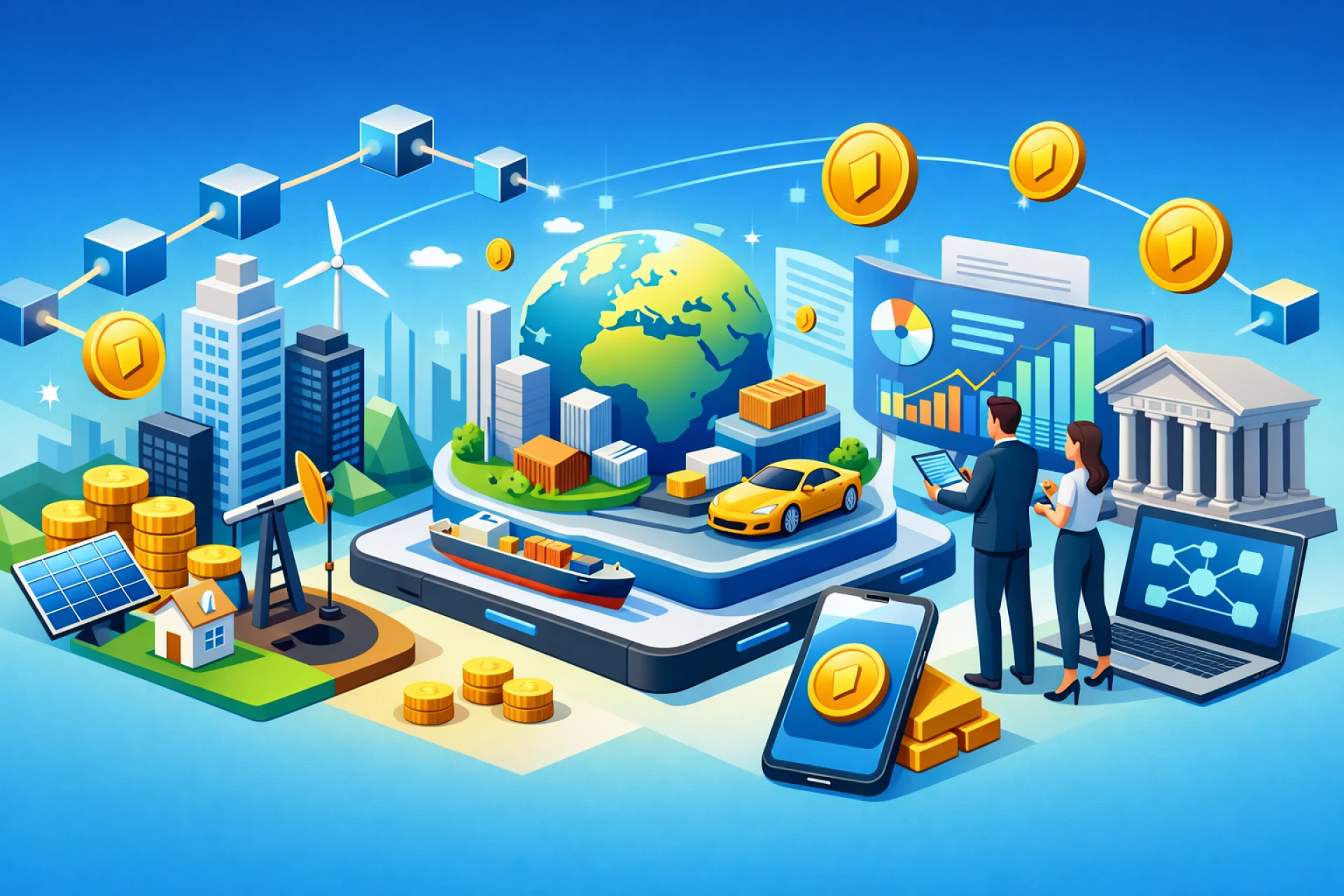
Financial technology has entered a phase where digital systems are no longer limited to payments, lending, or trading of cryptocurrencies. The focus has gradually shifted toward connecting physical assets with blockchain-based systems. This is where RWA Tokenization is gaining attention across fintech ecosystems in 2026. Instead of treating real-world assets as static holdings, financial firms are turning them into digital units that can be accessed, divided, and exchanged more efficiently.
From real estate and commodities to invoices and bonds, Real World Asset Tokenization is giving fintech firms new ways to expand services and reach investors who were previously excluded. What was once considered experimental has now moved into practical adoption. Companies are not just testing concepts but actively deploying rwa tokenization platform development strategies to build new financial products.
This shift is not happening in isolation. It is influenced by changes in investor behavior, regulatory clarity in certain regions, and the need for more flexible financial instruments. As a result, fintech companies are increasingly working with an RWA tokenization development company or building in-house capabilities to support these initiatives.
The Changing Nature of Financial Assets
Traditional finance has long relied on centralized systems to manage ownership, valuation, and transactions. Assets such as real estate or private equity often involve lengthy processes, high entry barriers, and limited liquidity. These limitations have created gaps in accessibility and efficiency.
RWA Tokenization introduces a different structure. By representing physical or financial assets as digital tokens on blockchain networks, ownership can be divided into smaller units. This allows multiple investors to participate in assets that were once limited to high-net-worth individuals or institutions.
In 2026, fintech firms are recognizing that this approach is not just about digitization but about redefining how assets are accessed and exchanged. Real World Asset Tokenization Services are helping organizations convert traditional holdings into programmable digital formats, making them easier to manage and distribute.
Why Fintech Companies Are Prioritizing RWA Tokenization
One of the main reasons fintech firms are adopting RWA Tokenization is the opportunity to expand their product offerings. Instead of focusing only on digital currencies or payment systems, companies can now provide investment options linked to real-world value.
Another factor is the growing demand from investors who are looking for diversified portfolios. Tokenized assets provide exposure to different sectors without requiring large capital commitments. This aligns well with the goals of fintech platforms that aim to attract a broader user base.
RWA tokenization development services are also helping firms reduce operational inefficiencies. Automated processes for ownership tracking and transaction settlement reduce reliance on intermediaries. This creates faster transaction cycles and reduces administrative overhead.
Additionally, fintech firms see tokenization as a way to remain competitive. As more companies enter the space, those without tokenization capabilities risk falling behind. Partnering with an RWA Tokenization Company or investing in internal development is becoming a strategic decision rather than an optional one.
The Role of Blockchain in Asset Digitization
Blockchain technology plays a central role in RWA Tokenization. It provides a secure and verifiable record of ownership and transactions. Each token represents a share or unit of an underlying asset, and this information is stored on a distributed ledger.
For fintech companies, blockchain offers reliability and consistency in managing asset data. It reduces the chances of discrepancies and fraud by maintaining a single source of truth. This is particularly important when dealing with high-value assets such as real estate or commodities.
RWA token development relies on smart contracts to define the rules governing each token. These contracts handle processes such as ownership transfers, dividend distribution, and compliance checks. By automating these functions, fintech platforms can operate more efficiently.
In 2026, the integration of blockchain with traditional financial systems is becoming more refined. Companies are finding ways to connect tokenized assets with existing banking and payment infrastructures, making the transition smoother for users.
Expanding Access to Investment Opportunities
One of the most significant impacts of Real World Asset Tokenization is the democratization of investment opportunities. Traditional markets often require large minimum investments, which limits participation. Tokenization changes this by allowing fractional ownership.
For example, a commercial property can be divided into thousands of tokens, each representing a small share of the asset. Investors can purchase these tokens based on their budget, gaining exposure to the asset without needing substantial capital.
Fintech platforms are using this model to attract retail investors. By offering smaller investment units, they can onboard users who were previously excluded from certain asset classes. This approach also encourages portfolio diversification, as investors can spread their funds across multiple tokenized assets.
RWA Tokenization Services are helping companies design platforms that support these features. From user interfaces to backend systems, every component is designed to handle fractional ownership and high transaction volumes.
Liquidity and Market Efficiency
Liquidity has always been a challenge in traditional asset markets. Assets such as real estate or private equity are not easily traded, leading to long holding periods and limited exit options. RWA Tokenization addresses this issue by creating digital markets for these assets.
Tokenized assets can be traded on secondary markets, allowing investors to buy and sell their holdings more easily. This increases market activity and provides more flexibility for investors. Fintech companies are leveraging this capability to create new trading platforms and marketplaces.
RWA tokenization platform development focuses on building systems that support continuous trading and real-time price updates. These platforms are designed to handle high transaction volumes while maintaining accuracy and security.
The result is a more dynamic market environment where assets can be exchanged more frequently. This benefits both investors and asset owners, as it provides greater flexibility and access to capital.
Regulatory Developments and Compliance
Regulation has always been a critical factor in financial innovation. In the early stages of tokenization, uncertainty around legal frameworks slowed adoption. However, by 2026, several regions have introduced clearer guidelines for digital assets and tokenized securities.
Fintech companies are working closely with regulators to ensure compliance. RWA tokenization development includes features that support identity verification, transaction monitoring, and reporting requirements. These measures help companies operate within legal boundaries while offering new financial products.
An RWA tokenization development company often provides compliance solutions as part of its services. This includes integrating know-your-customer processes and anti-money laundering checks into tokenization platforms.
As regulations continue to evolve, fintech firms are adapting their strategies to align with new requirements. This ongoing collaboration between industry and regulators is helping build trust among investors and institutions.
Integration with Existing Financial Systems
One of the challenges in adopting new technologies is integrating them with existing systems. Fintech companies are addressing this by developing solutions that bridge traditional finance and blockchain-based platforms.
RWA Tokenization is being integrated with banking systems, payment gateways, and investment platforms. This allows users to move funds between traditional accounts and tokenized asset platforms without friction.
RWA tokenization platform development involves creating APIs and middleware that connect different systems. These integrations make it easier for financial institutions to adopt tokenization without overhauling their entire infrastructure.
By combining traditional and digital systems, fintech companies can offer a more comprehensive range of services. This hybrid approach is becoming more common as the industry moves toward broader adoption of tokenized assets.
The Role of Institutional Investors
Institutional investors are playing an important role in the growth of Real World Asset Tokenization. Their involvement brings credibility and larger capital inflows to the market.
In 2026, many institutions are allocating a portion of their portfolios to tokenized assets. This includes real estate funds, private equity firms, and asset management companies. Their participation is encouraging fintech platforms to enhance their offerings and meet higher standards.
RWA Tokenization Services are being designed to cater to institutional needs, including large-scale transactions and detailed reporting. This ensures that platforms can handle both retail and institutional investors effectively.
The presence of institutional investors also influences market stability. With more participants and higher liquidity, tokenized asset markets are becoming more robust.
Use Cases Across Different Asset Classes
RWA Tokenization is not limited to a single type of asset. It is being applied across various sectors, each with its own benefits and challenges.
Real estate remains one of the most popular use cases. Tokenizing properties allows for fractional ownership and easier transfer of shares. This is particularly useful in commercial real estate, where investment amounts are typically high.
Commodities such as gold and oil are also being tokenized. These tokens represent ownership of physical assets stored in secure facilities. Investors can trade these tokens without dealing with the logistics of physical storage.
Another growing area is invoice financing. Businesses can tokenize their receivables and sell them to investors, improving cash flow. This creates new opportunities for both companies and investors.
RWA token development is also being applied to bonds and other fixed-income instruments. By converting these assets into digital tokens, fintech platforms can offer more flexible investment options.
Challenges and Considerations
Despite its growth, RWA Tokenization faces several challenges. One of the main issues is the valuation of underlying assets. Ensuring accurate and consistent valuation is critical for maintaining investor confidence.
Another challenge is interoperability between different blockchain networks. As multiple platforms emerge, ensuring compatibility becomes important for seamless transactions.
Security is also a concern. While blockchain provides a secure foundation, vulnerabilities can still exist in smart contracts or platform infrastructure. Fintech companies must invest in thorough testing and security measures to protect user assets.
Additionally, there is the need for education. Many investors are still unfamiliar with tokenized assets and how they work. Providing clear information and user-friendly platforms is essential for wider adoption.
The Role of RWA Tokenization Companies
As demand for tokenization grows, specialized firms are playing a significant role in supporting fintech companies. An RWA Tokenization Company provides expertise in asset digitization, platform development, and compliance.
These companies offer end-to-end solutions, from asset selection and token creation to platform deployment and maintenance. By working with experienced providers, fintech firms can reduce development time and focus on their core business.
RWA tokenization development company services also include consulting and strategy planning. This helps organizations identify suitable assets for tokenization and design effective business models.
In 2026, collaboration between fintech firms and tokenization providers is becoming more common. This partnership approach allows companies to leverage external expertise while building internal capabilities.
Future Outlook for RWA Tokenization in Fintech
Looking ahead, RWA Tokenization is expected to continue gaining traction. As technology improves and regulations become more defined, adoption is likely to increase across different regions and sectors.
Fintech companies will continue to refine their platforms, focusing on user experience and operational efficiency. The integration of artificial intelligence and data analytics may further enhance tokenization platforms by providing better insights and risk management.
RWA tokenization platform development will also evolve to support new asset classes and investment models. This includes more complex financial instruments and hybrid products that combine multiple asset types.
As the market matures, competition among platforms will intensify. Companies that offer reliable services, user-friendly interfaces, and strong compliance frameworks are likely to attract more users.
Conclusion
RWA Tokenization has moved from a niche concept to a significant component of fintech strategies in 2026. By connecting physical assets with digital systems, it is opening new opportunities for investors and financial institutions.
The adoption of Real World Asset Tokenization is driven by the need for better access, improved liquidity, and more efficient processes. Fintech companies are responding by investing in RWA tokenization development and collaborating with specialized providers.
While challenges remain, the progress made so far indicates a steady movement toward broader acceptance. As more companies adopt tokenization and refine their platforms, the financial landscape will continue to evolve.
For fintech firms, embracing RWA Tokenization is no longer just an experiment. It has become a practical approach to expanding services and meeting the changing expectations of investors in a digital-first world.