Most homeowners can tell you the age of their furnace, their car, and maybe their water heater. Ask about the roof and the answer is often a shrug. Maybe it came with the house. Maybe a previous owner replaced it at some point. That uncertainty is common, and it can lead to costly surprises.
Roof age affects far more than appearance. It shapes how a roof handles storms, whether a repair makes sense, how insurers view a claim, and what buyers think when you sell. For homes in Tinley Park, Orland Park, Mokena, and the rest of the south suburbs, where weather is hard on roofing, knowing that number is worth the effort.
How Long Roofs Typically Last Here
Standard three tab asphalt shingles, common on homes built before the early 2000s, often last somewhere around fifteen to twenty years in Illinois. Architectural or dimensional shingles, now the most common choice, typically last longer, often in the range of twenty to thirty years depending on the product and installation. Metal roofing can last considerably longer, and other materials have their own ranges.
Those numbers are not promises. Attic ventilation, roof pitch, sun exposure, tree cover, and installation quality all move the real lifespan up or down. A poorly ventilated attic can cook shingles from below and shorten their life by years. A well built roof on a properly vented home may outlast the estimate.
Why Illinois Weather Speeds Up Aging
The Chicago region puts roofs through a wide range of stress. Summer sun softens asphalt and breaks down the oils that keep shingles flexible. Winter brings repeated freeze and thaw cycles that open small cracks and stress seals. Spring storms add hail and high winds. Each season chips away at the roof a little at a time.
Older shingles are less able to handle that stress. They become brittle, lose their protective granules, and their seal strips weaken. A storm that a ten year old roof shrugs off can tear tabs from a twenty year old one.
How to Find Out Your Roof's Age
If you do not know when the roof was installed, a little detective work usually helps. Start with your home purchase paperwork, since inspection reports and seller disclosures often mention the roof's age. Your village building department may have permit records showing when a roof replacement was approved. Previous owners or longtime neighbors sometimes remember when work was done, especially if several houses on the street were reroofed after the same storm.
A roofing professional can also estimate age based on the shingle style, wear patterns, granule loss, and sometimes manufacturer markings on the shingles themselves. It will not be exact, but it gives you a useful range.
Age Changes the Repair Conversation
On a younger roof, repairing a leak or replacing a few storm damaged shingles is usually straightforward. Matching shingles are often still available, and the rest of the roof has plenty of life left. Spending money on repairs makes clear sense.
On an older roof, the math shifts. Replacement shingles may not match in color or shape. Nearby shingles may crack when lifted during the repair. Fixing one leak may simply move the problem to the next weak spot. At some point, repeated repairs cost more than they are worth, and planning for a replacement becomes the wiser choice.
Signs age is catching up
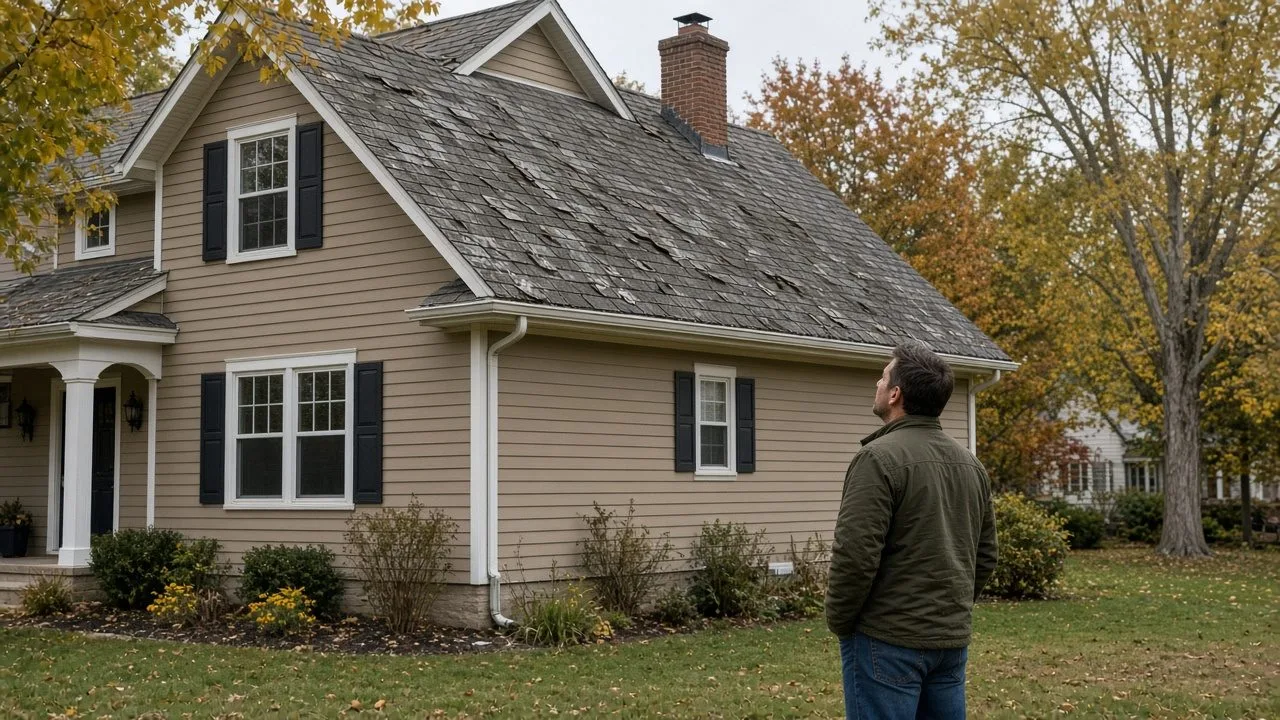
Curling or cupped shingle edges, bald spots where granules have worn away, cracked tabs, heavy granule buildup in gutters, and daylight visible through the attic decking all suggest a roof is nearing the end of its useful life. Interior signs include water stains on ceilings and musty attic smells.
Insurance and Roof Age
Many homeowners are surprised to learn how much roof age can matter to insurers. Some policies pay claims on older roofs based on actual cash value, which factors in depreciation, rather than full replacement cost. Some companies limit coverage or require an inspection once a roof passes a certain age. Policies vary widely, so it is worth reading yours closely or asking your agent how roof age affects your coverage.
Knowing your roof's age ahead of time puts you in a better position after a storm. You can set realistic expectations and plan for out of pocket costs if needed.
Selling and Buying a Home
Roof age is one of the first things buyers and inspectors ask about. A newer roof is a selling point. An older one can lead to price negotiations or requests for credits. If you plan to sell in the next few years, an honest assessment helps you decide whether to replace the roof before listing or adjust your price. Buyers benefit from the same information before they commit.
Planning Instead of Reacting
The real value of knowing your roof's age is the chance to plan. A replacement scheduled on your terms, with time to compare estimates and budget, is far less stressful than one forced by a leak in January. Setting aside money gradually as the roof approaches the end of its expected life makes the eventual cost easier to manage.
Regular inspections help too. A quick look every year or two, and after major storms, shows how the roof is aging and whether small issues are developing.
A Clear Picture of Where You Stand
If you are not sure how old your roof is or how much life it has left, a professional look can give you a clearer answer. Clearway Exteriors works from 18521 Spring Creek Drive Unit B in Tinley Park and holds Illinois roofing license 104.020391. Homeowners who want a roof age assessment for Illinois homes can call (866) 328-1110 to schedule an inspection and get a straightforward explanation of what they are working with.