
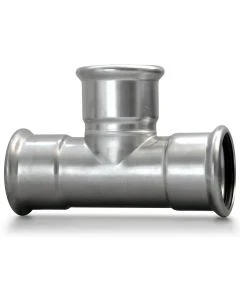
When people think about piping, they usually picture the pipe itself — long straight runs disappearing behind walls or ceilings. In reality, the real story sits in the small connections. The elbows, tees, reducers and couplings quietly carry the responsibility for the entire system’s reliability.
Over the years working around plant rooms and service areas, I’ve noticed something simple: good systems rarely fail dramatically. They age calmly. And most of that calm behaviour comes down to choosing the right stainless steel pipe fittings suppliers rather than just the cheapest fittings in stock.
What are pipe fittings?
Pipe fittings are the pieces that allow a piping system to actually function in the real world. Straight pipe only works on paper — buildings need turns, equipment connections, expansions and maintenance access.
Common fittings you’ll see every day:
- Elbows changing direction around beams or walls
- Tees splitting supply lines to multiple machines
- Reducers balancing pressure between systems
- Unions allowing future removal without cutting pipe
In stainless steel systems, these parts do more than connect — they protect the integrity of the entire installation.
Key features to consider
Not every fitting stamped “stainless” behaves the same. I’ve opened old installations where one section still looked new while another had tea-coloured staining after just a couple of years.
The difference usually comes down to small details:
- Material grade consistency (304 vs 316 in coastal or chemical areas)
- Smooth internal finishing to avoid turbulence
- Accurate threading or press tolerance
- Clean welding seams
One lesson I’ve learned: if a fitting feels rough inside, water and gas won’t forgive it later.
Benefits of high-quality fittings
People often compare fittings purely by price per piece, but systems live for decades. That perspective changes everything.
What good fittings quietly prevent:
- Pressure loss across long runs
- Contamination in food or medical systems
- Early corrosion around joints
- Vibration noise at night (the complaint nobody predicts)
A maintenance manager once told me, “I never notice the expensive fittings — only the cheap ones.”
That stuck with me.
Reliable stainless steel pipe fittings suppliers save costs in the parts nobody budgets for: callouts, downtime and reputation.
Tips for choosing the right fittings
I usually tell clients not to start with the catalogue — start with the environment.
A few questions that always matter:
- Is the system near salt air or wash-down zones?
- Will it see temperature swings?
- Does the line carry gas, potable water or process fluid?
- Will someone need to remove it later?
After that, supplier reliability becomes more important than brand labels. A dependable supplier answers technical questions quickly, not just sends a price list.
Installation or maintenance advice
Installations rarely fail because of dramatic mistakes. It’s usually small habits.
Things I’ve seen repeatedly:
- Over-tightening threaded stainless (it galls fast)
- Mixing metals without isolation
- Skipping cleaning after cutting
- Using wrong sealants for gas lines
One apprentice once polished a pipe beautifully but left metal filings inside. Six months later, a valve seat failed. Tiny details travel long distances in piping systems.
Real-life experiences or anecdotes
A café renovation job comes to mind. Everything was done properly except one imported fitting that looked identical to the others. After a few months, it developed surface rust — right above a preparation bench. The owner panicked, thinking the whole system was failing.
We replaced just that one component. The rest remained untouched for years.
Moments like that remind me: systems don’t fail evenly. They fail at their weakest component, and often that part came from a different supplier during a rushed purchase.
Why choose Europress Group
What I appreciate about working with a consistent supplier isn’t just the material — it’s predictability. When specifications match previous deliveries, installation becomes smoother and future repairs easier.
With a reliable partner:
- sizing stays consistent
- documentation is traceable
- replacement parts arrive without guesswork
That continuity matters more than people realise. Over time, projects stop feeling like separate jobs and start behaving like one maintained system.
Conclusion
Piping systems don’t impress people because they work — they impress people because nobody notices them. Quiet operation is the highest compliment.
Choosing stainless steel pipe fittings suppliers is less about purchasing components and more about selecting long-term behaviour for a building or facility. The pipe carries the medium, but the fittings carry the trust.
After enough years in the trade, you learn that good installations aren’t built during installation day — they’re decided during purchasing day.