Quick Service Restaurant (QSR) projects move fast. Whether it’s a franchise rollout, tenant improvement, or ground-up development, speed-to-market is critical. The restaurant Construction industry reached an estimated $9.1 billion in 2025.
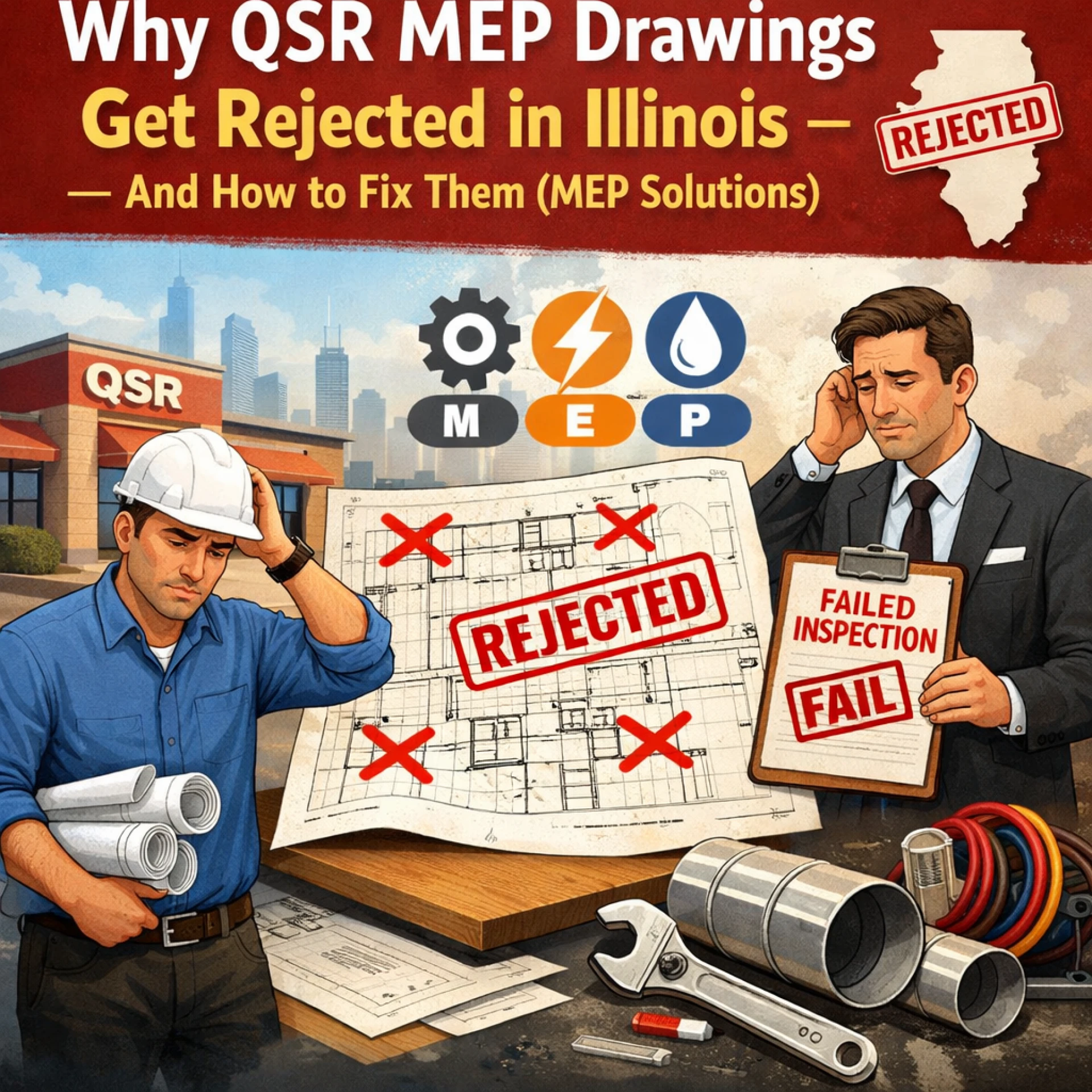
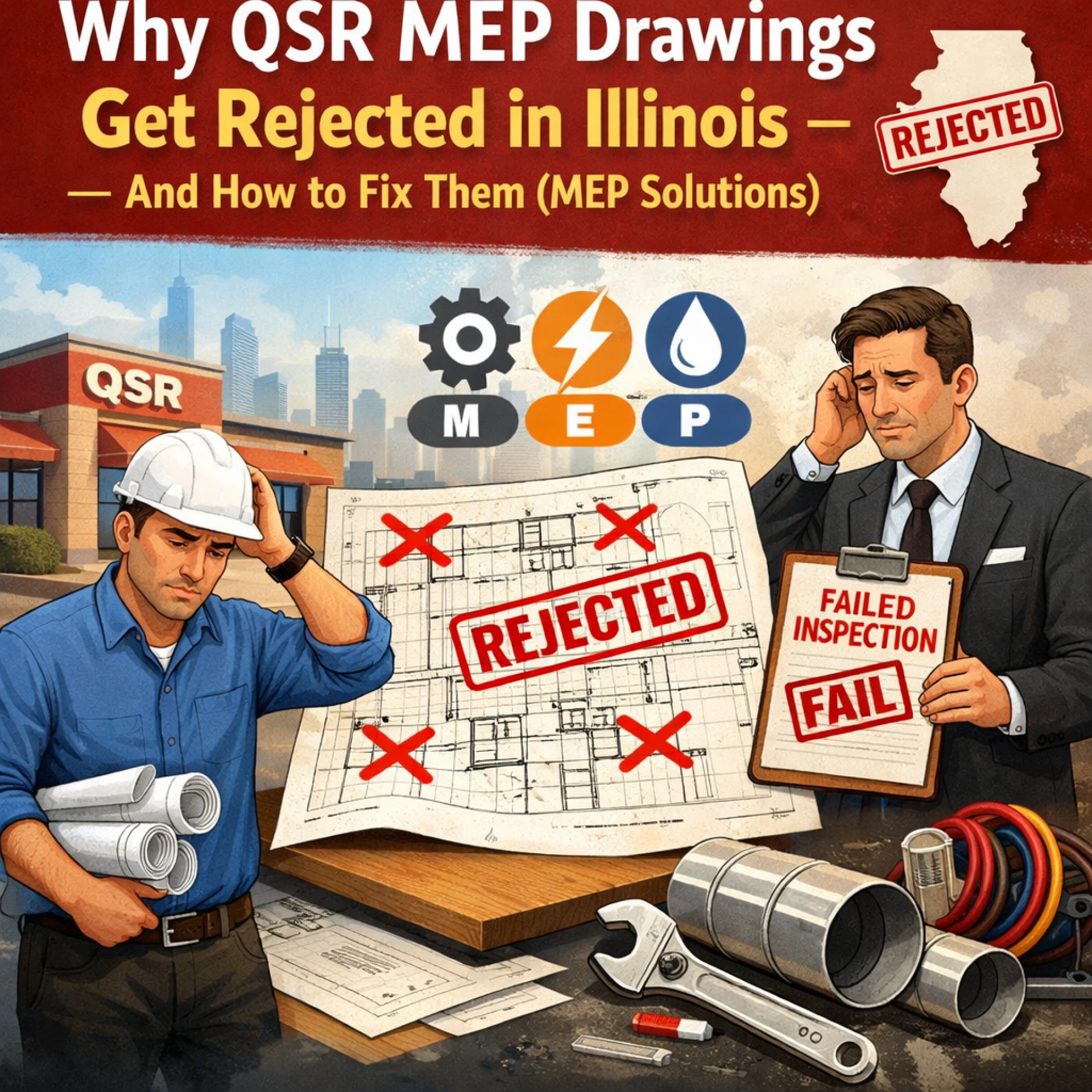
However, in Illinois, many QSR projects face unexpected setbacks when MEP drawings are rejected during plan review.
Understanding why these rejections happen — and how to prevent them — can save architects, franchise owners, and developers significant time and money.
This guide explores the common causes of drawing rejections and how professional engineering coordination improves approval success rates.
The High Stakes of QSR Permitting in Illinois
Illinois municipalities are known for strict plan review processes, particularly for restaurants. QSR facilities combine mechanical ventilation, grease exhaust systems, fire protection, plumbing, and electrical infrastructure — all within compact footprints.
Because commercial kitchens operate under intense mechanical and life-safety requirements, even minor coordination gaps can trigger resubmissions. For QSR projects operating on tight franchise timelines, rejected drawings often mean:
- Delayed store openings
- Increased construction costs
- Additional consultant fees
- Lease penalties
A strong understanding of local codes and review expectations is essential to avoid these risks.
Nearly 98 % of U.S. construction projects face delays, often extending 37 % longer than expected due to workflow and review challenges.
Common Reasons QSR MEP Drawings Get Rejected
1. Incomplete Kitchen Ventilation and Exhaust Design
One of the most frequent rejection points in Illinois involves commercial kitchen ventilation systems. Improper hood sizing, missing exhaust air calculations, or lack of makeup air coordination can immediately trigger comments from plan reviewers.
Municipalities closely review grease duct routing, fire-rated shaft requirements, and rooftop equipment placement. When ventilation systems are not clearly detailed or properly coordinated with architectural layouts, approvals are delayed.
2. Grease Interceptor and Plumbing Coordination Issues
Plumbing design errors — particularly around grease waste systems — are another common cause of rejection. Plan reviewers expect clear documentation of:
- Grease interceptor plans and sizing calculations
- Proper venting details
- Cleanout locations
- Compliance with Illinois plumbing codes
If grease waste systems are not aligned with kitchen equipment schedules or health department requirements, drawings are often sent back for revision.
Learn more about grease trap sizing and installation requirements from industry guidance that details minimum retention and interceptor volumes for commercial kitchens.
3. Electrical Load Miscalculations
QSR facilities contain high-demand equipment such as fryers, ovens, refrigeration units, and HVAC design systems. Underestimating total electrical load or failing to coordinate panel schedules with actual equipment can result in insufficient service capacity.
Illinois reviewers carefully assess load calculations, short circuit ratings, and grounding details. Any discrepancies between electrical drawings and equipment schedules can lead to rejection.
4. Fire Protection and Life-Safety Conflicts
Restaurants must meet strict life-safety and fire code standards. Inadequate sprinkler coverage, missing fire alarm coordination, or insufficient emergency lighting layouts can delay permit approval.
Additionally, kitchen hood suppression systems must align with fire protection system design. When these systems are treated separately instead of being integrated, it increases the likelihood of review comments.
5. Lack of Local Code Familiarity
Illinois municipalities may interpret state codes differently. Cities such as Chicago, Naperville, and Aurora each have unique review nuances. MEP drawings prepared without local code familiarity often require multiple revisions before approval.
Understanding jurisdiction-specific requirements is critical for minimizing rejection risk.
How Integrated MEP Engineering Prevents Drawing Rejections
Avoiding rejections is less about reacting to comments and more about proactive coordination.
Professional engineering teams specializing in QSR projects focus on:
- Accurate HVAC load calculations
- Detailed grease waste and plumbing coordination
- Electrical service capacity verification
- Integrated fire protection and life-safety planning
- Pre-submittal quality control reviews
By aligning architectural layouts with mechanical, electrical, and plumbing systems early in the design phase, teams reduce inconsistencies that trigger reviewer concerns.
Projects supported by coordinated MEP documentation move through permitting more efficiently, with fewer resubmittals.
The Importance of Early MEP Involvement in QSR Projects
Fast-paced restaurant projects often compress design timelines. When MEP engineers are brought in late, conflicts between kitchen layouts, duct routing, and structural elements are more likely.
Early involvement allows engineers to:
- Validate equipment loads before design freeze
- Confirm utility capacities
- Coordinate exhaust shaft locations
- Prepare permit-ready documentation
This proactive approach significantly improves approval timelines and protects franchise launch schedules.
Successful QSR projects start with early coordination between architects and engineers specializing in restaurant MEP design, ensuring permit-ready submissions.
Supporting Franchise Rollouts Across Illinois
Many QSR brands expand rapidly across Illinois markets. Standardized prototype designs must still comply with local building and health department regulations.
Working with engineers who understand QSR requirements and Illinois review expectations ensures prototype drawings are adapted properly without compromising brand consistency.
Strong MEP coordination helps franchise owners avoid repeat rejection cycles as they scale.
Reducing RFIs and Change Orders During Construction
Permit approval is only one part of the equation. Poorly coordinated MEP drawings often lead to field conflicts, contractor RFIs, and costly change orders.
Integrated engineering reduces construction-phase uncertainty by:
- Ensuring equipment schedules match panel loads
- Aligning duct routing with structural layouts
- Coordinating plumbing slopes and grease waste lines
- Confirming fire suppression integration
Clear, coordinated documentation results in smoother build-outs and predictable budgets.
Choosing the Right Engineering Partner
To minimize QSR mep drawing rejections in Illinois, architects and developers should collaborate with MEP engineers who:
- Have experience with QSR-specific systems
- Understand Illinois building and health codes
- Perform internal QA/QC reviews before submission
- Coordinate closely with architects and contractors
For project consultation, see our comprehensive services at QSR MEP Design Services in Illinois
Final Thoughts
QSR MEP drawing rejections in Illinois are common — but they are preventable. Most issues stem from incomplete documentation, misaligned calculations, or lack of early coordination.
With integrated engineering strategies and a clear understanding of local review expectations, architects and developers can avoid costly redesigns, reduce delays, and accelerate store openings.
If your next QSR project requires compliant, permit-ready documentation, partnering with experienced firms like Nearby engineers can make all the difference.