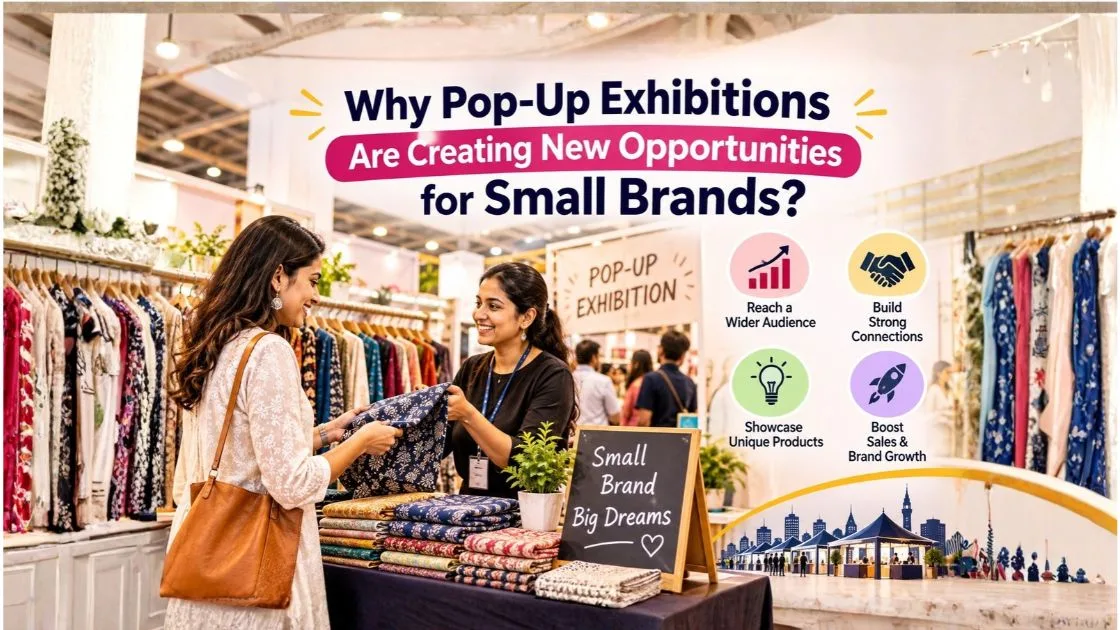
Summary - Pop-up exhibitions are creating new opportunities for small brands by providing affordable ways to showcase products, reach new customers and build brand awareness without investing in permanent retail stores. These temporary events bring independent designers, start-ups, artisans and entrepreneurs together in one place, allowing them to interact directly with shoppers, understand market demand and generate sales. From fashion and jewellery to handloom and handicrafts, pop-up exhibitions are becoming valuable platforms for small businesses looking to expand their reach and establish a stronger market presence.
Starting a small business is exciting, but getting noticed by the right customers can be challenging. A new clothing label, handmade jewellery business or home décor brand may have beautiful products, yet reaching potential buyers and building trust takes time. Online marketing helps, but customers often want to see, touch and understand a product before making a purchase.
This is where pop-up exhibitions are making a difference. They give small brands an opportunity to showcase their collections, meet customers face-to-face and introduce their products to new audiences without opening a permanent store.
Across India, fashion exhibitions, lifestyle events, craft fairs and curated shopping experiences are creating valuable opportunities for independent businesses. But how exactly do these events help small brands grow? Let's understand their benefits and how businesses can make the most of them.
What Are Pop-Up Exhibitions and How Do They Work?
Pop-up exhibitions are temporary shopping and promotional events where brands display and sell their products at a specific venue for a limited period. They may run for a single day, a weekend or several days, depending on the event.
Unlike permanent retail stores, pop-up events allow businesses to participate without committing to long-term shop rentals or substantial infrastructure expenses.
For example, an independent clothing brand can set up a stall at a fashion exhibition to showcase its latest ethnic wear collection. Similarly, a handmade jewellery business can display its designs, explain the materials used and connect directly with interested buyers.
These exhibitions bring multiple brands together, giving visitors more choices while providing participating businesses with valuable market exposure.
Why Are Pop-Up Exhibitions Creating New Opportunities for Small Brands?
Pop-up exhibitions offer several advantages, particularly for businesses that are still building their customer base.
Building brand awareness: A physical stall helps customers discover a brand they may never have encountered online.
Reaching new audiences: Exhibitions attract shoppers with different interests, creating opportunities to connect with potential customers beyond existing social media followers.
Generating sales: Direct product displays and personal interaction can help customers make informed purchasing decisions.
Reducing retail commitments: Brands can explore physical selling opportunities without maintaining a permanent retail outlet.
Building customer trust: Customers can examine product quality, ask questions and understand the value behind a product before buying.
For a small fashion label, even a well-organised weekend exhibition can provide useful insights into which designs attract attention and which products customers are more likely to purchase.
How Do Pop-Up Exhibitions Help Small Brands Connect Directly with Customers?
One of the biggest advantages of physical exhibitions is the opportunity for direct customer interaction.
Online platforms provide likes, comments and website visits, but face-to-face conversations can reveal much more about customer preferences.
For instance, a handmade jewellery seller may discover that visitors prefer lightweight everyday designs over heavier statement pieces. A clothing brand may receive questions about fabric, sizing, stitching and colour options.
This feedback helps businesses understand what customers actually want.
Small brands can make these interactions more valuable by:
- Explaining product features and materials clearly.
- Offering demonstrations wherever appropriate.
- Asking visitors for feedback on designs and collections.
- Collecting customer enquiries with permission.
- Sharing social media and contact details for future communication.
These small efforts can help turn a one-time exhibition visitor into a returning customer.
Which Types of Small Businesses Can Benefit from Pop-Up Exhibitions?
Pop-up exhibitions are suitable for various product-based businesses, especially those whose products benefit from physical presentation.
Some examples include:
- Fashion and clothing brands: Emerging designers can showcase ethnic wear, contemporary clothing, dresses and seasonal collections.
- Jewellery businesses: Handmade jewellery sellers can introduce their designs and demonstrate product details.
- Handloom and textile brands: Businesses can display traditional sarees, fabrics, dupattas and handcrafted textiles.
- Handicraft businesses: Artisans can present handmade décor, artwork, traditional crafts and gift items.
- Home décor brands: Small businesses can showcase furnishings, decorative accessories and lifestyle products.
- Women-led businesses: Entrepreneurs can introduce their products, build visibility and connect with potential buyers.
For many independent creators, these events offer a practical way to move beyond selling exclusively through social media or online marketplaces.
How Can Pop-Up Exhibitions Help Small Brands Grow Beyond Online Selling?
Online selling and physical exhibitions do not have to compete with each other. In fact, combining both can create a stronger brand experience.
A small business can use Instagram, Facebook and WhatsApp to announce its exhibition participation, share product previews and invite existing followers to visit its stall.
During the event, visitors can discover the brand physically, examine products and follow its social media pages for future updates.
After the exhibition, businesses can continue the relationship through product updates, new collection announcements and personalised communication, where customers have agreed to receive it.
For example, a handmade accessories brand might receive its first purchase at an exhibition and later generate repeat orders through Instagram or WhatsApp.
This combination of online promotion and offline customer engagement helps small businesses build more consistent connections.
How Can Small Brands Prepare for a Successful Exhibition?
Participating in an exhibition is only the first step. Proper preparation can make a significant difference to the overall experience and business results.
Here are some practical points to consider:
- Choose the right exhibition: Research the event's audience, product categories, location and participating brands before booking a stall.
- Plan your budget: Account for stall charges, transportation, display materials, packaging, staffing and promotional expenses.
- Create an attractive display: Use organised product arrangements, clear branding and suitable lighting to make your stall inviting.
- Prepare sufficient inventory: Carry a balanced selection of popular products, different sizes, colours and price ranges.
- Promote your participation: Share event details and product previews on social media before the exhibition.
- Follow up after the event: Review customer feedback, enquiries and sales to understand what worked well.
Small businesses can also explore domestic trade fairs and exhibitions promoted by the Ministry of MSME to showcase their products and reach wider markets.
It is also useful to track expenses and sales separately. This helps businesses evaluate whether participating in a particular exhibition was commercially worthwhile.
How Do Diwali Exhibitions in Pune Create Opportunities for Small Brands?
Festive seasons provide particularly valuable opportunities for businesses selling fashion, jewellery, traditional textiles, gifts and home décor.
A Diwali Exhibition in Pune brings together shoppers looking for festive clothing, sarees, jewellery, handmade gifts and decorative products. For small brands, participating in these events can provide access to customers who are actively planning their festival purchases.
Independent designers can showcase festive collections, while artisans and handloom businesses can introduce traditional products to shoppers interested in Indian craftsmanship.
Pune's exhibition culture also provides opportunities for businesses to connect with local shoppers and customers from nearby areas.
For brands interested in understanding the shopping experience and customer appeal of these events, this shopping exhibition in Pune offers additional context.
Businesses exploring festive participation can also discover best Diwali shopping exhibitions to understand the types of products and collections attracting festive shoppers.
Where Can Small Brands Find Upcoming Exhibition Opportunities?
Finding the right exhibition is important for getting meaningful results. Small businesses should look for organisers who host relevant events and attract audiences interested in their product categories.
Fashion designers may benefit from lifestyle and designer exhibitions, while handmade product sellers may find craft fairs and handicraft events more suitable.
Before participating, check the event's audience, venue, exhibitor categories, stall arrangements, participation charges and promotional support.
Businesses can also explore upcoming exhibition events to discover relevant event opportunities and plan their participation.
Give Your Small Brand an Opportunity to Grow
Building a successful brand takes more than creating good products. It also requires visibility, customer relationships and opportunities to showcase what makes a business different.
Pop-up exhibitions provide small brands with a practical way to connect with shoppers, introduce new collections and understand market demand. Whether you are an emerging fashion designer, independent jewellery seller, handloom business or handmade product entrepreneur, the right exhibition can help you take an important step towards business growth.
Are you looking for opportunities to showcase your products and connect with new customers? Explore upcoming exhibitions, enquire about stall participation and connect with exhibition organisers to find an event that matches your brand and business gWhy Pop-Up Exhibitions Are Creating New Opportunities for Small Brands
Frequently Asked Questions About Pop-Up Exhibitions
1. What is a pop-up exhibition?
A pop-up exhibition is a temporary event where businesses showcase and sell their products at a physical venue for a limited period. It gives brands an opportunity to reach customers without opening a permanent store.
2. How do pop-up exhibitions help small businesses?
They help small businesses improve brand visibility, reach new customers, generate sales, collect feedback and establish direct relationships with buyers.
3. Are pop-up exhibitions suitable for new brands?
Yes. New brands can use exhibitions to introduce their products, test customer interest, understand buying preferences and build initial brand recognition.
4. Which businesses should participate in pop-up exhibitions?
Fashion labels, jewellery designers, handloom businesses, handicraft sellers, home décor brands and other product-based start-ups can benefit from participating.
5. How can small brands find exhibition opportunities in India?
Businesses can follow exhibition organisers, explore event websites, join relevant business communities and monitor social media announcements for upcoming fashion, lifestyle and shopping exhibitions.