There is a peculiar moment that happens with old cars.
You stop calling it “my car.”
You start calling it “the car.”
The car in the driveway.
The car behind the garage.
The car that doesn't start.
The car that needs work.
The car we're going to sell.
Notice what usually doesn't happen.
Nobody says, “This vehicle is an essential part of my transportation.”
Because it isn't.
The owner may have replaced it years ago. They may have bought another vehicle. They may work from home. They may have moved somewhere they no longer need a second car.
And yet the old one remains.
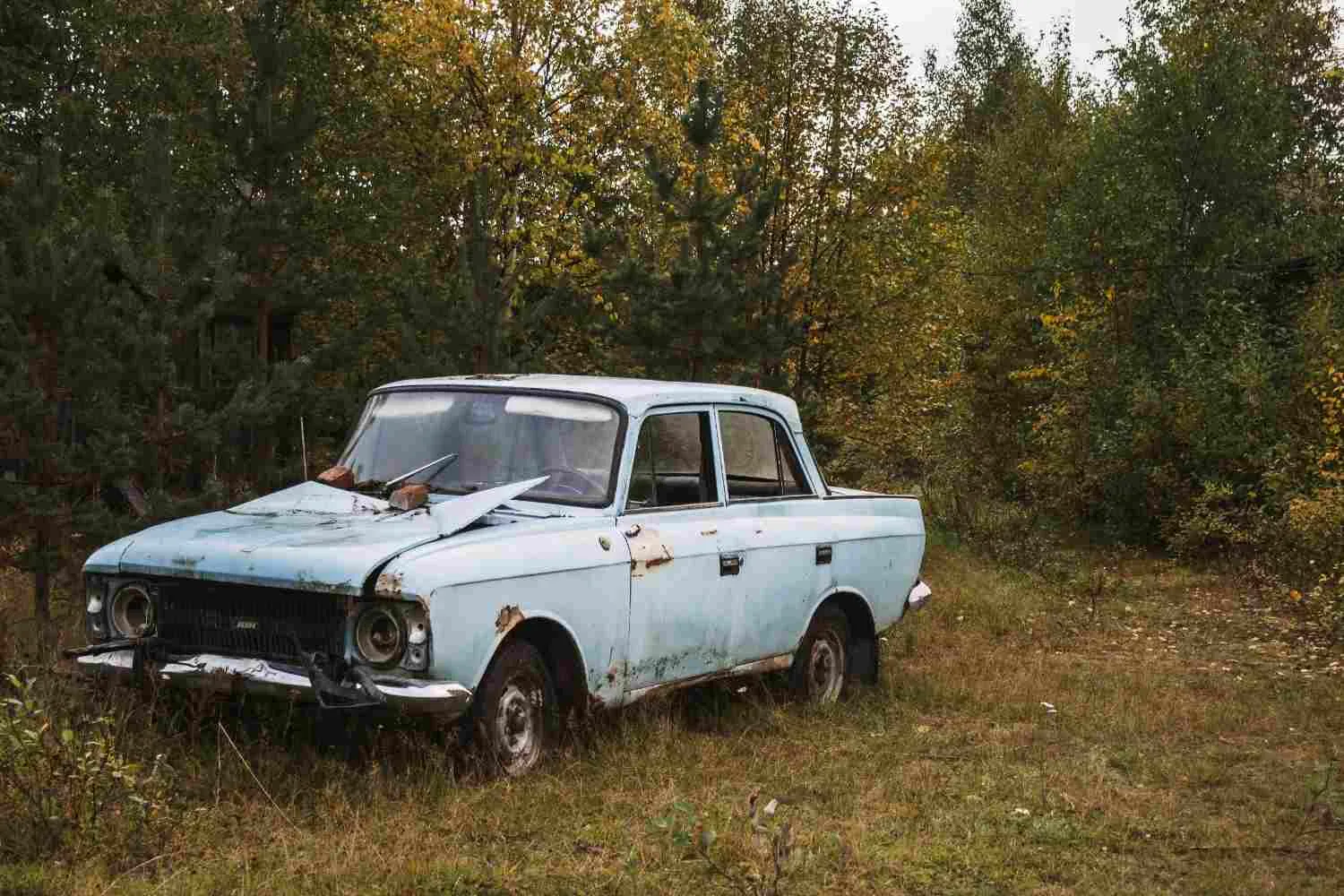
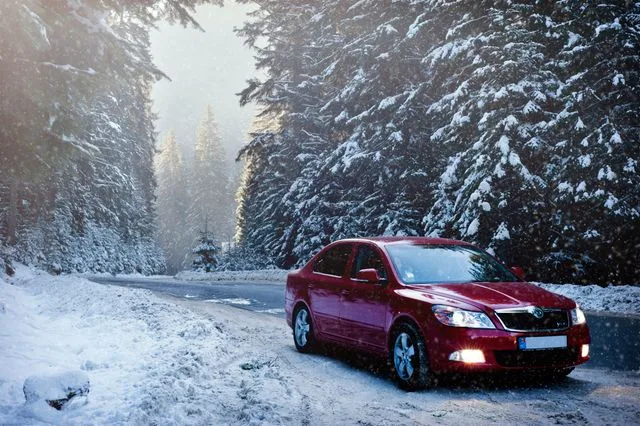
It can sit there through summer heat, autumn rain, an Ontario winter, another spring and another winter.
The strange part is that the owner may already know the ending.
They aren't going to repair it.
They aren't going to drive it.
They aren't going to restore it.
They aren't even particularly interested in selling it.
So why is it still there?
Because getting rid of a car is not always a car decision.
Sometimes it is a decision-making problem disguised as a vehicle problem.
The Car Has Become an “Option”
This is one of the most overlooked reasons people keep useless cars.
An old vehicle represents an option.
Maybe not a realistic option, but an option.
As long as the car is still sitting there, the owner can tell themselves:
“I could fix it.”
“I could sell it.”
“I could give it to someone.”
“I could use it if my current vehicle breaks down.”
“I could restore it.”
The possibility costs almost nothing psychologically.
Actually acting on that possibility does.
Once the vehicle is sold, the owner has eliminated every future scenario involving that particular car.
People generally dislike closing doors, even doors they have no intention of walking through.
That is why a vehicle can remain parked for years without anyone doing anything with it.
The owner isn't necessarily preserving the car.
They are preserving the possibility of changing their mind.
An Unused Car Creates an Interesting Illusion of Wealth
There is another reason the decision can be difficult.
People tend to count things they own as assets.
A car sitting outside looks like an asset.
It has a make.
A model.
A year.
Four wheels.
An engine.
A VIN.
A purchase history.
There is a strange mental comfort in thinking:
“At least I still have the car.”
But ownership and value are not the same thing.
A vehicle can be owned and still be economically unproductive.
If it cannot be driven, cannot reasonably be repaired, is not generating income and costs money or space to keep, its economic role has changed.
It has stopped behaving like transportation.
It may now be behaving more like stored inventory.
And stored inventory has a problem.
It can deteriorate.
The Value of a Car Doesn't Just Fall. Its Nature Changes.
People often think depreciation is a straight line.
The car is worth $20,000.
Then $15,000.
Then $10,000.
Then $5,000.
Eventually, zero.
Real life is messier.
A vehicle can move between different markets as its condition changes.
A relatively new car has consumer value.
An older but functional car may still have used-car value.
A damaged vehicle may have repairable or salvage value.
An end-of-life vehicle may have parts and material value.
The vehicle doesn't necessarily go from “valuable” to “worthless.”
Its type of value changes.
That distinction matters enormously when deciding what to do with an unwanted car.
A car that nobody would sensibly buy as transportation can still contain components or recyclable materials that have economic value.
That is one reason an owner considering a scrap car for cash should not automatically assume that a non-running vehicle has no value.
The Most Expensive Car Might Be the One You Don't Notice
Nobody likes talking about opportunity cost when discussing a rusty vehicle.
But it matters.
Suppose a dead car occupies the only usable spot beside your house.
You cannot use it for your newer vehicle.
You cannot use the space for storage.
You cannot easily clean or renovate that part of the property.
You may even have to park farther away.
There may be no invoice saying:
“Driveway opportunity cost: $47 per month.”
But the cost exists.
This is why people sometimes underestimate what an unwanted car is costing them.
They look at the vehicle and ask:
“How much is it worth?”
A better question can be:
“What is keeping this vehicle preventing me from doing?”
The answer may be surprisingly valuable.
Why “I'll Sell It When I Have Time” Doesn't Work
Selling an old car sounds simple until you actually start listing everything involved.
You have to photograph it.
Figure out its condition.
Find the paperwork.
Decide on a price.
Answer messages.
Deal with people who want a lower price.
Explain why it doesn't start.
Figure out how it will be transported.
Arrange a pickup.
And then deal with the possibility that the buyer changes their mind.
For a functioning vehicle worth thousands of dollars, this effort makes sense.
For an immobile vehicle worth considerably less, the administrative effort itself becomes a barrier.
This is where decision friction becomes important.
Sometimes people aren't refusing to sell.
They simply don't want to spend their Saturday solving a problem they have been successfully ignoring for three years.
So the car remains.
Not because the owner has decided to keep it.
Because nobody has decided to remove it.
The Car Becomes Part of the Property
This sounds ridiculous until you see how often it happens.
At first, the car is temporary.
Then it is parked for a month.
Then six months.
Then a year.
Eventually, everyone mentally incorporates it into the landscape.
It becomes like an old shed or a broken appliance in the basement.
You stop seeing it.
That is when an interesting psychological phenomenon takes over: normalization.
Something that would have seemed unacceptable on day one becomes completely ordinary after enough time.
The owner walks past the vehicle every morning.
The neighbour stops asking about it.
Family members stop mentioning it.
The problem hasn't disappeared.
It has simply become familiar.
And familiar problems are remarkably easy to tolerate.
Winter Is Doing More Than Making the Car Look Ugly
This is where the practical side becomes important.
A vehicle sitting outside is still exposed to environmental stress.
Moisture can contribute to corrosion. Road salt can accelerate corrosion on exposed metal and underbody components. Batteries can discharge. Tires can lose pressure and deteriorate. Brake surfaces can corrode.
If the vehicle is repeatedly exposed to freeze-thaw cycles, water can find its way into places it would rather not be.
Then there is the wildlife issue.
An engine bay can provide shelter for rodents.
A vehicle that looks abandoned to its owner can look like premium real estate to a mouse.
This doesn't mean every parked vehicle will suffer catastrophic damage.
It means “I'm not using it, so nothing is happening to it” is a false assumption.
Something is happening.
Time is happening.
The “Repair Cost” Isn't the Real Question
People often ask:
“Is it worth repairing?”
That's actually incomplete.
The better calculation has several parts:
Repair cost + remaining maintenance + time + expected reliability + vehicle value after repair.
Imagine spending $4,000 on a vehicle that will still be old, high-mileage and likely to need more work.
The question isn't whether $4,000 is affordable.
The question is whether the resulting vehicle gives you $4,000 worth of useful transportation compared with your alternatives.
That is a completely different calculation.
This is why an old car can be mechanically repairable but economically irrational to repair.
Those are not the same thing.
Why People Overestimate What Their Old Car Is Worth
There is a particularly stubborn pricing problem with unwanted vehicles.
Owners tend to compare their car with similar vehicles listed online.
But an online listing is not proof of a sale.
A running 12-year-old car advertised for $7,000 is not necessarily comparable to a 12-year-old car that has been sitting for 18 months with a dead battery, seized brakes, major rust and an unknown mechanical condition.
One is a used vehicle.
The other may be a salvage candidate.
The difference isn't cosmetic.
It changes the entire market the vehicle belongs to.
That is why an owner should be careful about assuming that an old car is worth thousands simply because a similar model appears online at that price.
The Scrap Market Is Not Just “Money for Metal”
This is another area where people oversimplify.
When a vehicle reaches the end of its useful road life, its value can come from several sources.
There may be components that can be recovered.
There may be metals and other materials that can be processed.
There may be demand for particular parts depending on the make, model and condition.
And there is the vehicle's recyclable material content.
So when someone looks into cash for scrap vehicles, the relevant question isn't simply:
“How much metal is in my car?”
The practical question is:
“What can still be recovered from this particular vehicle, and what is the current market willing to pay for it?”
That is a much more useful way of thinking about scrap value.
A Scrap Yard Is the End of the Car, Not the End of Its Materials
People sometimes picture a scrap yard as the place where a car goes to die.
That's only half the story.
For an end-of-life vehicle, dismantling and recycling can be the beginning of another material cycle.
Depending on the vehicle and facility, usable components may be recovered before the remaining shell is processed.
Fluids and other materials require appropriate handling.
Ferrous metals such as steel can be separated and recycled.
The important point is that the vehicle's usefulness doesn't necessarily end when its usefulness as a car ends.
That distinction is easy to miss.
A vehicle can be finished as transportation while still having value as a collection of recoverable materials.
There Is Also a Weird Human Fear of “Selling Too Early”
Some owners worry:
“What if I get rid of it and then need it?”
This is loss aversion in a very practical disguise.
The pain of losing an option often feels greater than the benefit of gaining something from it.
Even if the probability of using the car again is tiny, the possibility remains emotionally powerful.
But consider the reverse.
What if you keep it for another three years and never use it?
You haven't preserved an opportunity.
You've simply postponed the decision for three years.
And during those three years, the vehicle may have deteriorated further.
Sometimes the fear isn't really:
“What if I need the car?”
It is:
“What if I regret getting rid of the car?”
Those are very different fears.
The Five-Year Test
There is a surprisingly useful test for an unwanted vehicle.
Imagine someone offers you the same car today.
Not your car.
The exact same vehicle.
Same age.
Same mileage.
Same damage.
Same mechanical problems.
Same condition.
And they say:
“I'm giving this to you for free.”
Would you take it?
If your immediate reaction is:
“Absolutely not. I don't have room for that thing.”
Then ask yourself why you are keeping the one you already own.
Ownership can make us irrationally attached to objects that we would never choose to acquire today.
The Real Cost of “Maybe”
“Maybe I'll fix it.”
“Maybe I'll sell it.”
“Maybe I'll need it.”
“Maybe it will be worth more later.”
Every one of those statements sounds reasonable.
Together, they can keep a dead vehicle sitting indefinitely.
The problem with “maybe” is that it has no deadline.
A better approach is to force the vehicle into a real category.
Repair it.
Sell it.
Donate it.
Part it out.
Recycle it.
Once you decide which category the vehicle belongs in, the problem becomes much easier to solve.
Sometimes the Car Is Already Telling You the Answer
Look at the vehicle honestly.
When was the last time you drove it?
Do you have a repair appointment?
Have you actually priced the repairs?
Would you buy this same vehicle today in its current condition?
Are you realistically going to use it again?
If the answers are mostly no, then the car may no longer be an unfinished project.
It may be an unwanted asset that you haven't processed yet.
And that is an important distinction.
Because once a car has stopped serving its purpose, keeping it indefinitely doesn't restore its usefulness.
It simply delays whatever comes next.
For some vehicles, that next step is another owner.
For others, it is salvage.
For others, it is a scrap yard, where recoverable parts and materials can be separated and recycled.
And for an owner who has finally accepted that the car is not coming back, exploring a scrap car for cash option can turn an awkward object taking up space into something useful again.
Not every car needs one last repair.
Some cars need one last decision.
And sometimes the most honest thing you can say about the vehicle sitting in your driveway is not:
“I'm going to fix it.”
It is:
“I'm never going to drive this again.”
Once you can say that honestly, the rest of the decision gets considerably easier.