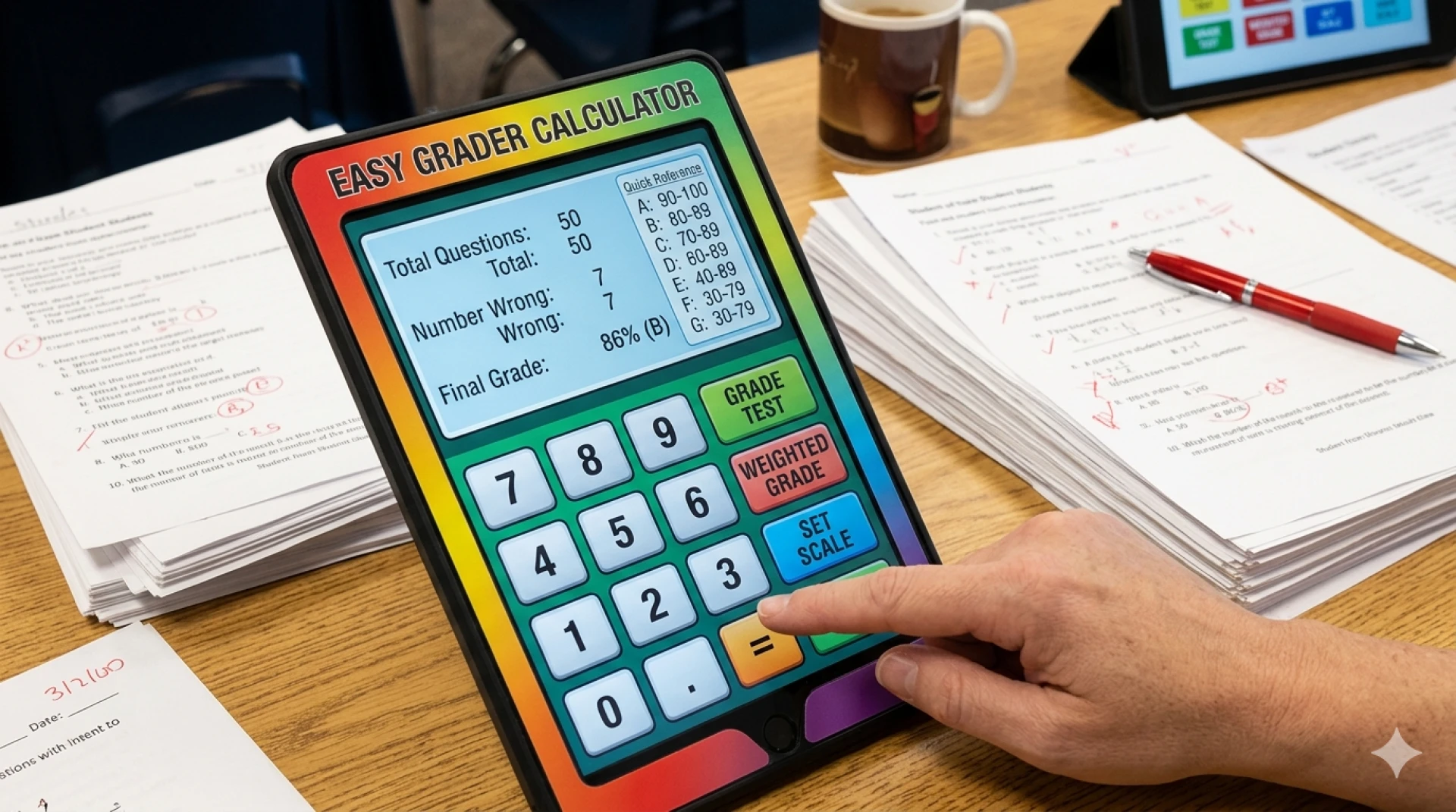
In recent years, education has undergone a massive digital transformation. Schools, colleges, and online learning platforms are increasingly adopting technology to improve teaching efficiency and student performance. One of the most important developments in this shift is the rise of online grading tools.
Traditional grading methods often require teachers to manually calculate scores, percentages, and grade distributions. This process is time-consuming and prone to human error. With the growing number of students and assignments, educators are now looking for faster and more accurate solutions. This is where online grading tools are making a significant impact.
The Limitations of Manual Grading
Manual grading has been used in classrooms for decades, but it comes with several challenges. Teachers often spend hours calculating marks, especially during exam seasons. Even a small mistake in calculation can lead to incorrect grades, which may affect a student’s academic record.
Another issue is consistency. When grading large numbers of assignments, fatigue can lead to inconsistent evaluation. These problems highlight the need for digital tools that can simplify and standardize the grading process.
What Are Online Grading Tools?
Online grading tools are web-based platforms that help teachers calculate grades, percentages, and GPA instantly. Instead of using spreadsheets or manual calculations, educators can simply enter the number of questions and correct answers to generate accurate results.
These tools are designed to be simple, fast, and accessible from any device with an internet connection. Because they run in the browser, users do not need to install any software, making them convenient for both teachers and students.
Benefits of Using Online Grade Calculators
1. Saves Time for Teachers
One of the biggest advantages of online grading tools is the time they save. Tasks that used to take hours can now be completed in seconds. Teachers can quickly calculate grades for entire classes and focus more on lesson planning and student engagement.
2. Improves Accuracy
Online calculators eliminate the risk of mathematical errors. Since grades are calculated automatically, the results are consistent and reliable. This helps maintain fairness and transparency in the evaluation process.
3. Easy to Use for Students
Students can also benefit from online grading tools. They can use these calculators to estimate their grades before submitting assignments or preparing for exams. This helps them understand their academic progress and set realistic goals.
4. Accessible Anytime, Anywhere
Because online grading tools are web-based, they can be accessed from computers, tablets, and smartphones. This flexibility makes them especially useful for remote learning environments where teachers and students may not be in the same location.
The Role of Digital Tools in Modern Classrooms
Digital education is no longer limited to virtual classrooms and online assignments. Tools like grade calculators, plagiarism checkers, and AI-powered learning platforms are becoming part of everyday academic workflows. These tools help educators manage administrative tasks more efficiently while enhancing the overall learning experience.
As classrooms continue to evolve, the integration of such tools is helping bridge the gap between traditional teaching methods and modern technology-driven education systems.
Why Web-Based Tools Are More Efficient Than Software
In the past, teachers relied on installed software or spreadsheets to manage grades. However, these solutions often required updates, file management, and compatibility checks. Web-based tools solve these problems by offering instant access without installation.
For example, platforms like EasyGrader provide a simple interface where users can calculate grades instantly by entering the total number of questions and the number of incorrect answers. This approach reduces complexity and allows educators to focus on teaching rather than technical setup.
Supporting Remote and Hybrid Learning
The rise of remote and hybrid learning models has made online tools even more important. Teachers now need solutions that work across different devices and locations. Online grading tools ensure that grading remains smooth and consistent regardless of where the teacher or student is located.
This flexibility is especially valuable during online exams and digital assignments, where quick and accurate grading is essential.
The Future of Grading in Education
As technology continues to advance, online grading tools are expected to become more intelligent and feature-rich. Integration with learning management systems, automatic performance analytics, and AI-based feedback are some of the features that may become standard in the near future.
These innovations will not only save time but also provide deeper insights into student performance, helping educators make data-driven decisions.
Conclusion
easy grader tools are transforming how educators evaluate student performance. By reducing manual work, improving accuracy, and providing instant results, these tools are becoming an essential part of modern education.
As digital learning continues to expand, educators who adopt online grading solutions early will benefit from increased efficiency and better classroom management. The shift toward web-based academic tools reflects a broader movement toward smarter, faster, and more accessible education systems worldwide.