
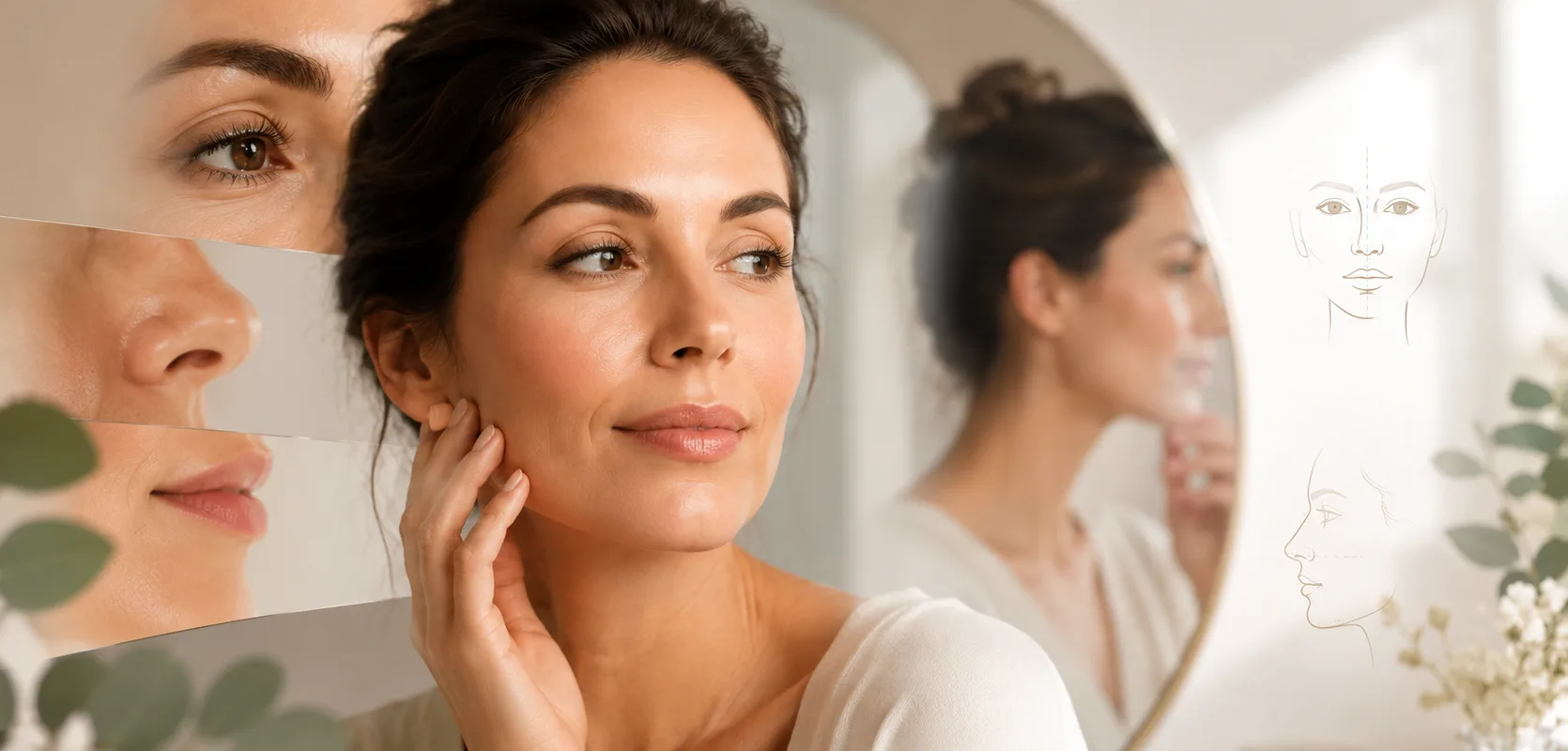
Most people can spot a natural-looking result when they see one. What's harder is explaining why. Two cosmetic outcomes can involve a similar degree of change, yet land completely differently — one reads as harmonious and believable, the other as obvious, even when the technical work behind it is excellent. The difference rarely comes down to how much was changed. It comes down to how that change relates to the person underneath it.
Cosmetic procedures are more common today than ever, and for many people, the goal has shifted. Rather than chasing a dramatic transformation, they want to look refreshed, balanced, and still recognisably themselves. Dramatic before-and-afters still draw attention online, but it's the quiet, understated result that tends to carry more weight in real life.
Why We Notice Faces So Easily
Humans are remarkably attuned to faces. Long before any conscious analysis kicks in, the brain is already registering expression, symmetry, age, emotion, and familiarity. Faces are central to how we communicate — which is exactly why even subtle changes can be so noticeable.
People rarely judge a single feature in isolation. They respond to the overall impression. A change to the nose shifts how the eyes read. The chin governs facial balance. Eyelid changes can make someone look energised or exhausted. Each feature matters, but only ever as part of a whole — which is why procedures focused on a single feature don't always deliver the satisfaction patients expect.
The Shift from Transformation to Balance
Cosmetic surgery was, for years, framed around transformation — the goal was a noticeable, unmistakable difference. That's changed for many patients. The question today is less "how much should I change?" and more "how naturally can this be improved?"
That shift reflects a growing emphasis on proportion. "Individual features never exist in isolation," says Dr. Srinjoy Saha, a senior consultant plastic surgeon based in Kolkata. "The eye reads relationships — nose to lip, chin to jaw, brow to eye. Move one, and you alter the perception of all of them." Experienced surgeons, he notes, evaluate those relationships rather than treating any single structure in isolation. Most successful outcomes work by enhancing what's already there, rather than replacing it.
Why Natural Results Tend to Age Better
Natural-looking results also tend to age more gracefully. The face keeps changing over time — skin quality shifts, fat redistributes, bone structure evolves — and every procedure has to exist within those ongoing processes.
"A result has to survive the next decade of aging, not just the next photograph," Dr. Saha observes. Approaches that respect the underlying anatomy and preserve structural support tend to stay convincing years down the line. Changes that push anatomy past its natural limits, on the other hand, tend to become more noticeable — not less — as the face continues to age. The goal was never to stop time. It's to work with the body's characteristics rather than against them.
What People Really Mean When They Say "Natural"
"Natural" is one of the most common words surgeons hear in consultations — and it means something different to almost everyone who says it. For one patient, it means barely noticeable. For another, it means refreshed but still clearly themselves. Others simply want to look less tired or more confident, without any single feature standing out.
That's exactly why communication matters so much. "Half the consultation is anatomy. The other half is understanding what the patient actually means by natural," Dr. Saha says. The best outcomes happen when the patient and surgeon arrive at a shared, specific picture of the result they're working toward.
The Problem with Chasing Perfection
Modern culture — and social media in particular — pushes a constant stream of comparison, creating the impression that perfectly symmetrical, flawless faces exist somewhere out there. They don't. Real faces are naturally asymmetrical, and those small variations are part of what makes someone recognisable as themselves.
Trying to erase every perceived imperfection often backfires, producing a result that reads as less natural rather than more attractive. That's why harmony, not perfection, tends to be the better goal. A balanced face doesn't need to be flawless — it just needs to feel coherent, healthy, and authentic.
Why the Best Results Are Often the Hardest to Spot
The most successful procedures are frequently the least obvious ones. Friends notice that someone looks refreshed, without being able to name exactly what changed — not because the work was minor, but because the result stayed consistent with that person's identity.
"When balance improves, people stop seeing the feature and start seeing the person again," Dr. Saha notes. As facial balance improves, attention naturally shifts away from individual features and back toward the person as a whole. For many patients, the goal was never transformation — it was refinement. Not becoming someone else, but feeling more comfortable being who they already are.
Final Thoughts
The line between a natural and an obvious result is rarely determined by how much treatment took place. More often, it comes down to the philosophy behind it.
A face isn't built from isolated features — it emerges from the relationships between structures, proportions, and expressions working together. The most satisfying results respect those relationships: preserving identity, improving balance, and working with the individual rather than against them. That, ultimately, is why natural-looking results feel the most human.