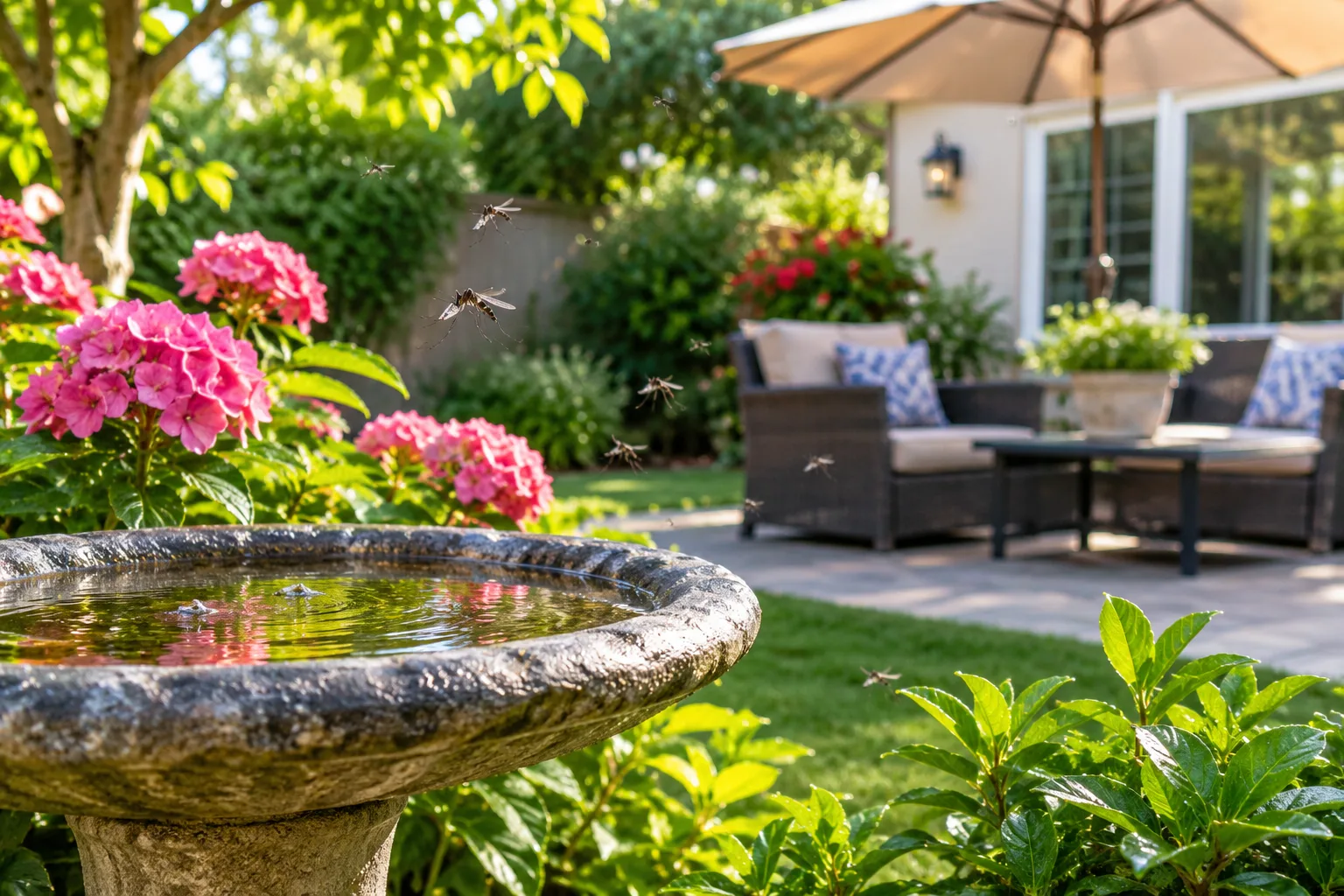
A beautiful garden can make a home feel more welcoming. Flowering plants, green lawns, shaded seating areas, and decorative landscaping create comfortable outdoor spaces where families can relax. However, these same features can sometimes make residential gardens attractive to mosquitoes. Homeowners may notice more mosquitoes around their patios, plants, and outdoor seating areas, especially during warmer months.
Mosquitoes do not need large ponds or noticeable pools of water to become a problem. Small amounts of standing water, damp corners, dense vegetation, and shaded areas can provide suitable conditions for mosquito activity. Understanding why these insects gather around landscaped properties is an important first step toward managing them.
1. Standing Water Creates Ideal Breeding Conditions
One of the biggest reasons mosquitoes thrive in residential gardens is the availability of standing water. Female mosquitoes lay their eggs in or near water, and even small collections can support breeding.
Common places where water collects include flowerpot trays, old buckets, clogged gutters, birdbaths, watering cans, plant containers, and unused garden equipment. Some homeowners overlook these areas because they do not appear large enough to cause concern.
After rainfall or regular garden watering, these spots can remain wet for several days. When they are not emptied or cleaned, they may become breeding locations.
Regularly checking the garden for standing water is one of the simplest ways to limit mosquito development. Empty containers, refresh birdbath water frequently, and make sure drainage areas are working properly.
2. Dense Plants Provide Shade and Shelter
Residential landscaping often includes thick shrubs, ornamental grasses, flower beds, and leafy plants. Although these features improve the appearance of a property, they can also create sheltered spaces where adult mosquitoes rest.
Mosquitoes generally avoid hot, dry, exposed conditions when resting. Shaded areas with moisture and limited air movement offer more comfortable hiding places. Overgrown plants, tall grass, and crowded garden beds can provide exactly these conditions.
Keeping vegetation properly trimmed can make outdoor areas less suitable for mosquitoes. Homeowners should pay attention to spaces around fences, garden borders, sheds, and outdoor furniture. Removing unnecessary plant debris and improving airflow can also help reduce sheltered resting spots.
3. Frequent Watering Can Increase Moisture Around Gardens
Healthy gardens need regular watering, but excessive moisture can contribute to mosquito-friendly conditions. Overwatering may leave certain parts of the landscape consistently damp, particularly in areas with poor drainage.
Water can collect beneath plant containers, around decorative stones, and in low sections of the lawn. Irrigation systems with leaks or incorrectly positioned sprinklers may also create unnecessary wet areas.
A practical approach is to water plants according to their actual needs rather than following an unnecessarily frequent schedule. Checking sprinkler systems, repairing leaks, and improving drainage can help prevent water from collecting around the property.
4. Warm Weather Encourages Mosquito Activity
Temperature plays an important role in mosquito development and activity. Warm conditions can support faster mosquito development when suitable breeding water is available.
In Southern California, residential mosquito activity can become noticeable during warmer periods, especially when seasonal rainfall or irrigation creates additional water sources. Homeowners may experience more mosquitoes around outdoor dining spaces, gardens, and shaded patios.
Weather alone does not explain every mosquito problem. The combination of warmth, moisture, shelter, and accessible breeding sites is often more important.
This is why garden maintenance should continue throughout the year rather than only when mosquitoes become noticeable.
5. Decorative Garden Features May Hold Hidden Water
Many landscaped properties include attractive features such as fountains, small ponds, water bowls, decorative containers, and outdoor ornaments. While these additions improve the garden's appearance, poorly maintained features can sometimes create mosquito breeding opportunities.
Water features that are not circulating properly may develop stagnant areas. Decorative pots and ornaments can also collect rainwater without homeowners noticing.
Regular inspection is essential. Clean water features, maintain suitable circulation, and remove water from decorative objects whenever possible. If a pond is part of the landscape, consider appropriate maintenance methods that prevent mosquito breeding without harming other wildlife.
6. Practical Ways to Reduce Mosquito Populations Outdoors
Managing mosquitoes around a residential property requires attention to several conditions rather than relying on one solution. Consistent maintenance can make a meaningful difference.
Here are some practical steps homeowners can follow:
- Remove standing water from containers, trays, and unused equipment.
- Clean gutters regularly to prevent water accumulation.
- Trim shrubs and remove excessive plant growth.
- Repair leaking outdoor faucets and irrigation lines.
- Improve drainage in low-lying garden areas.
- Maintain birdbaths and decorative water features.
- Check shaded areas after rainfall for hidden water collections.
- Use appropriate outdoor mosquito protection when spending time in the garden.
These habits support effective garden mosquito management and help make outdoor spaces less attractive to mosquitoes.
However, when mosquito activity continues despite regular maintenance, the problem may involve breeding areas or resting locations that are difficult to identify without a closer inspection.
7. When Professional Mosquito Control May Help
Some mosquito problems are more difficult to manage than others. A property may have several breeding locations, hidden drainage issues, or nearby sources that contribute to recurring mosquito activity.
In these situations, professional pest control services can help identify conditions that homeowners may overlook. An experienced technician can assess the landscape, inspect potential breeding areas, and recommend appropriate treatment based on the property's needs.
Professional residential mosquito solutions may include targeted treatments and recommendations for improving outdoor conditions. The right approach depends on the level of mosquito activity, the property layout, and the surrounding environment.
Homeowners looking for reliable pest management can benefit from combining professional guidance with regular garden maintenance. This approach supports long-term efforts toward reducing mosquito populations outdoors instead of simply addressing the insects that are visible at a particular moment.
Conclusion
Residential gardens and landscaped areas can attract mosquitoes when they provide standing water, dense vegetation, excess moisture, and shaded resting places. Even well-maintained properties may have small conditions that encourage mosquito activity without homeowners realizing it.
By checking for hidden water, managing plant growth, improving drainage, and maintaining outdoor features, homeowners can make their gardens less inviting to mosquitoes. When recurring activity becomes difficult to control, professional pest management can help identify the underlying issues and recommend suitable solutions.
A comfortable outdoor space starts with understanding what attracts mosquitoes and taking consistent steps to manage those conditions.
Why Mosquitoes Thrive in Residential Gardens and Landscaped Areas
A beautiful garden can make a home feel more welcoming. Flowering plants, green lawns, shaded seating areas, and decorative landscaping create comfortable outdoor spaces where families can relax. However, these same features can sometimes make residential gardens attractive to mosquitoes. Homeowners may notice more mosquitoes around their patios, plants, and outdoor seating areas, especially during warmer months.
Mosquitoes do not need large ponds or noticeable pools of water to become a problem. Small amounts of standing water, damp corners, dense vegetation, and shaded areas can provide suitable conditions for mosquito activity. Understanding why these insects gather around landscaped properties is an important first step toward managing them.
1. Standing Water Creates Ideal Breeding Conditions
One of the biggest reasons mosquitoes thrive in residential gardens is the availability of standing water. Female mosquitoes lay their eggs in or near water, and even small collections can support breeding.
Common places where water collects include flowerpot trays, old buckets, clogged gutters, birdbaths, watering cans, plant containers, and unused garden equipment. Some homeowners overlook these areas because they do not appear large enough to cause concern.
After rainfall or regular garden watering, these spots can remain wet. When they are not emptied or cleaned, they may become breeding locations.
Regularly checking the garden for standing water is one of the simplest ways to limit mosquito development. Empty containers, refresh birdbath water frequently, and make sure drainage areas are working properly.
2. Dense Plants Provide Shade and Shelter
Residential landscaping often includes thick shrubs, ornamental grasses, flower beds, and leafy plants. Although these features improve the appearance of a property, they can also create sheltered spaces where adult mosquitoes rest.
Mosquitoes generally seek protected areas away from direct sunlight, strong winds, and dry conditions. Shaded areas with moisture and limited air movement can offer comfortable hiding places. Overgrown plants, tall grass, and crowded garden beds may provide these conditions.
Keeping vegetation properly trimmed can make outdoor areas less suitable for mosquitoes. Homeowners should pay attention to spaces around fences, garden borders, sheds, and outdoor furniture. Removing unnecessary plant debris and improving airflow can also help reduce sheltered resting spots.
3. Frequent Watering Can Increase Moisture Around Gardens
Healthy gardens need regular watering, but excessive moisture can contribute to mosquito-friendly conditions. Overwatering may leave certain parts of the landscape consistently damp, particularly in areas with poor drainage.
Water can collect beneath plant containers, around decorative stones, and in low sections of the lawn. Irrigation systems with leaks or incorrectly positioned sprinklers may also create unnecessary wet areas.
A practical approach is to water plants according to their actual needs rather than following an unnecessarily frequent schedule. Checking sprinkler systems, repairing leaks, and improving drainage can help prevent water from collecting around the property.
4. Warm Weather Encourages Mosquito Activity
Temperature plays an important role in mosquito development and activity. Warm conditions can support faster mosquito development when suitable breeding water is available.
In Southern California, residential mosquito activity can become noticeable during warmer periods, especially when seasonal rainfall or irrigation creates additional water sources. Homeowners may experience more mosquitoes around outdoor dining spaces, gardens, and shaded patios.
Weather alone does not explain every mosquito problem. The combination of warmth, moisture, shelter, and accessible breeding sites is often more important.
This is why garden maintenance should continue throughout the year rather than only when mosquitoes become noticeable.
5. Decorative Garden Features May Hold Hidden Water
Many landscaped properties include attractive features such as fountains, small ponds, water bowls, decorative containers, and outdoor ornaments. While these additions improve the garden's appearance, poorly maintained features can sometimes create mosquito breeding opportunities.
Water features with stagnant sections may provide suitable conditions for mosquito development. Decorative pots and ornaments can also collect rainwater without homeowners noticing.
Regular inspection is essential. Clean water features, maintain suitable circulation, and remove water from decorative objects whenever possible. If a pond is part of the landscape, consider appropriate maintenance methods that prevent mosquito breeding without harming other wildlife.
6. Practical Ways to Reduce Mosquito Populations Outdoors
Managing mosquitoes around a residential property requires attention to several conditions rather than relying on one solution. Consistent maintenance can make a meaningful difference.
Here are some practical steps homeowners can follow:
- Remove standing water from containers, trays, and unused equipment.
- Clean gutters regularly to prevent water accumulation.
- Trim shrubs and remove excessive plant growth.
- Repair leaking outdoor faucets and irrigation lines.
- Improve drainage in low-lying garden areas.
- Maintain birdbaths and decorative water features.
- Check shaded areas after rainfall for hidden water collections.
- Use appropriate outdoor mosquito protection when spending time in the garden.
These habits support effective garden mosquito management and help make outdoor spaces less attractive to mosquitoes.
However, when mosquito activity continues despite regular maintenance, the problem may involve breeding areas or resting locations that are difficult to identify without a closer inspection.
7. When Professional Mosquito Control May Help
Some mosquito problems are more difficult to manage than others. A property may have several breeding locations, hidden drainage issues, or nearby sources that contribute to recurring mosquito activity.
In these situations, professional pest control services can help identify conditions that homeowners may overlook. An experienced technician can assess the landscape, inspect potential breeding areas, and recommend appropriate treatment based on the property's needs.
Professional residential mosquito solutions may include targeted treatments and recommendations for improving outdoor conditions. The right approach depends on the level of mosquito activity, the property layout, and the surrounding environment.
Homeowners looking for reliable pest management can benefit from combining professional guidance with regular garden maintenance. This approach supports long-term efforts toward reducing mosquito populations outdoors instead of simply addressing the insects that are visible at a particular moment.
Conclusion
Residential gardens and landscaped areas can attract mosquitoes when they provide standing water, dense vegetation, excess moisture, and shaded resting places. Even well-maintained properties may have small conditions that encourage mosquito activity without homeowners realizing it.
By checking for hidden water, managing plant growth, improving drainage, and maintaining outdoor features, homeowners can make their gardens less inviting to mosquitoes. When recurring activity becomes difficult to control, professional pest management can help identify the underlying issues and recommend suitable solutions.
A comfortable outdoor space starts with understanding what attracts mosquitoes and taking consistent steps to manage those conditions.