Standardization in residential infrastructure production operates under an economic assumption: that sufficient volume justifies the cost of designing solutions that work adequately across broad geographic and property-type ranges. This assumption holds true in some markets and fails spectacularly in others.
When shed install and setup in Washington involves standardized approaches across the state's enormous geographic variety, the efficiency cost accumulates invisibly. Properties requiring site modification, foundation adjustment, and custom engineering get forced into standardized templates. The resulting inefficiency isn't visible in purchase price—it appears later as hidden costs, maintenance burden, and shortened service life.
This standardization inefficiency problem receives almost no attention in market analysis, which tends to celebrate standardization as a cost-reduction mechanism. In reality, standardization creates efficiency gains in some contexts and efficiency losses in others. Regional variation in Pacific Northwest properties creates conditions where standardization systematically fails.
The Misread Signal: Price as Quality Indicator
Market commentary frequently frames standardization as cost-reduction success. Cheaper product prices are attributed to manufacturing efficiency. This interpretation ignores the actual cost structure of residential infrastructure implementation.
Standardized products create low manufacturing cost. But they transfer preparation, modification, and adaptation costs to the customer. A property owner purchasing a standardized solution then pays separately for site leveling, foundation modification, and customization—costs that don't appear in the product price but exceed the manufacturing savings.
The efficiency failure point: in property-constrained markets, total implementation cost for standardized approaches often exceeds total cost for property-specific solutions. Yet market comparison focuses exclusively on product pricing, not implementation cost.
This creates a systematic misvaluation where standardized products appear cheaper than they actually are. Regional property owners making purchase decisions based on product price alone systematically underestimate their actual implementation costs.
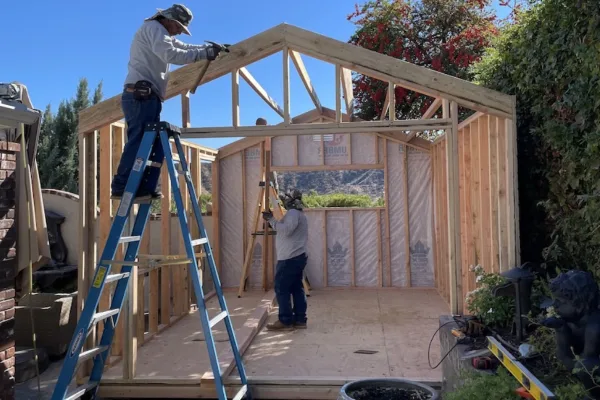
What On-Site Shed Construction Washington Reveals About Efficiency Structure
Examining markets where both standardized and custom approaches operate simultaneously reveals the efficiency trade-offs clearly. Properties that accept standardized solutions standardized incur site preparation costs. Properties that use approaches adapted to their specific characteristics incur higher construction cost but avoid site preparation expense.
When property constraints are minimal, standardized approaches are efficient—preparation costs are low and the solution works adequately. When property constraints are significant, custom approaches are efficient—higher construction cost is offset by eliminated preparation expense and superior performance.
Washington's geographic diversity means properties exist across the entire constraint spectrum. This variation reveals something national markets obscure: the efficiency of standardization depends entirely on property characteristics. It's not a universal principle—it's a context-dependent economic calculation.
The Maintenance Cost Hidden in Standardization Trade-Offs
Standardized solutions often incorporate cost-reduction measures that aren't visible in purchase price but compound over years through maintenance requirements. Material specifications chosen for affordability rather than regional performance create maintenance burden. Undersized ventilation systems chosen for cost-reduction create condensation problems. Foundation approaches optimized for construction speed create drainage issues.
These aren't product defects—they're deliberate efficiency choices made during design. The cost of these choices transfers from manufacturer to owner over the structure's service life.
Custom approaches adapted to property constraints and regional conditions can be engineered to minimize maintenance. Material selection can prioritize durability for regional climate. Foundation design can account for actual soil conditions. Ventilation can be sized for actual humidity exposure.
The economic comparison that matters: initial purchase price plus cumulative maintenance cost plus replacement cost over 30 years. Standardized solutions often lose this calculation dramatically, yet market comparison rarely includes these longer-term cost factors.
Regulatory and Technical Capability Evolution
Building code requirements are tightening in many jurisdictions, raising the technical floor for acceptable residential infrastructure. Standards that were adequate five years ago are becoming inadequate. This regulatory tightening creates particular pressure on standardized solutions because generic approaches often barely meet older standards and struggle to meet newer ones.
Custom solutions adapted to current code requirements and regional performance expectations maintain compliance more easily. Standardized solutions often require modification or don't achieve preferred compliance margins.
This regulatory shift is beginning to change market dynamics. Solutions that were competitive under older standards lose competitive position as standards tighten. The gap between standardization (which degrades relative to rising standards) and customization (which adapts to new requirements) is widening.
Forward Signal: Market Correction Beginning
Early indicators suggest residential infrastructure markets are beginning to correct the efficiency misvaluation created by standardization. Property owners experiencing higher-than-expected implementation costs are becoming vocal about total cost of ownership. Builders specializing in property-specific approaches are increasing market share in property-constrained regions.
The correction happening quietly: standardized approaches are retaining market position in property-unconstrained markets where they remain genuinely efficient. Standardized approaches are losing market position in property-constrained markets where custom approaches deliver superior value.
This market sorting is natural and efficient. It reflects reality asserting itself through economic signals. Expect continued segmentation as markets align their solutions with property characteristics rather than forcing property characteristics to conform to standardized solutions.
The efficiency insight: standardization creates cost reduction in some contexts and efficiency loss in others. Markets that understand this context-dependency operate more efficiently than markets that treat standardization as universally beneficial. On-site shed construction in Washington and standardized approaches serve fundamentally different economic functions depending on property characteristics.