
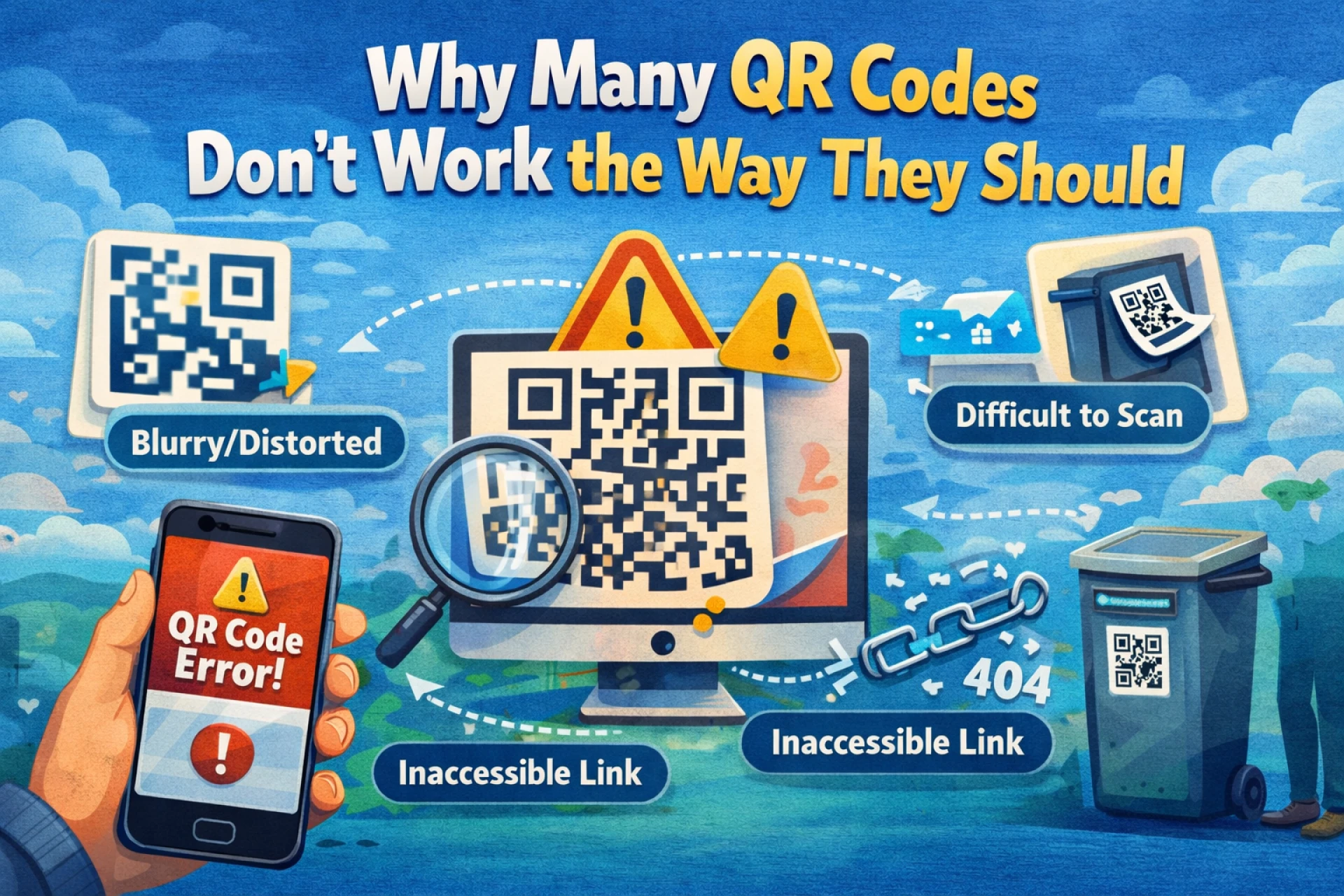
QR codes are often treated as a quick add-on. Someone generates a code, prints it, and assumes the job is done.
In reality, most QR code problems come from what happens around the code — not the code itself. Small oversights can turn a useful shortcut into something people ignore or avoid.
When the Destination Isn’t Obvious
A QR code should answer one question immediately: Why should I scan this?
When people scan a code and land on a generic page with no clear purpose, the experience feels unfinished. QR codes work best when the destination matches the exact reason for scanning.
If the code is about a menu, open the menu.
If it’s about a product, open the product.
If it’s about an event, open the event details.
Relevance removes confusion.
When the Link Was Never Properly Checked
QR codes are often published without enough testing.
A link might work on one phone but not another. It might redirect incorrectly or load slowly on mobile. These issues are easy to miss but obvious to users.
Testing QR codes across devices and connections helps prevent broken experiences and protects trust.
When Scanning Feels Inconvenient
A QR code can be technically correct and still unusable.
Common issues include:
- Small sizes
- Poor contrast
- Placement that requires awkward positioning
If scanning feels uncomfortable or annoying, most people won’t try.
Ease of use matters more than design.
When There’s No Explanation
A QR code without context creates hesitation.
People are far more likely to scan when they know what they’ll get. A short line of text is often enough to remove uncertainty.
“Scan to view the menu.”
“Scan for details.”
“Scan to leave feedback.”
Clear expectations lead to higher engagement.
When the Mobile Experience Falls Apart
QR codes always lead to mobile screens.
If the page is slow, cluttered, or difficult to read on a phone, the experience breaks immediately. Even a perfectly placed QR code can’t compensate for a poor mobile page.
The scan is only the beginning — the page matters just as much.
When QR Codes Are Treated as Temporary
QR codes tend to last longer than expected.
They appear on signs, packaging, menus, and printed materials that stay in use for months or years. Meanwhile, links and content change.
If the destination can’t be updated, the QR code eventually becomes outdated.
Planning for longevity avoids this problem.
When No One Looks at the Results
QR codes are often added and then forgotten.
Without checking how often they’re scanned or what users do afterward, there’s no way to know if they’re helping at all. Even basic awareness can highlight what’s working and what isn’t.
Measurement turns QR codes into something useful.
Creating QR Codes Is the Easy Step
Most QR code problems happen before the code is generated.
Once the destination is clear, the experience is tested, and placement is planned, creating the QR code itself takes seconds. A simple tool like
lets you generate clean, scannable QR codes without unnecessary complexity.
The tool matters less than the thinking behind it.
Final Thoughts
QR codes aren’t unreliable — rushed implementations are.
When QR codes are planned with clarity, tested properly, and paired with a good mobile experience, they quietly do their job. When they’re added without thought, they get ignored.
The difference isn’t technology. It’s attention to detail.