Islam is a religion founded upon divine revelation, preserved scripture, and a clear prophetic finality. For over fourteen centuries, Muslims across the world have shared one united belief: Prophethood ended with Hazrat Muhammad ﷺ. This belief is not cultural or political—it is explicitly Qur’anic and universally agreed upon by Islamic scholarship.
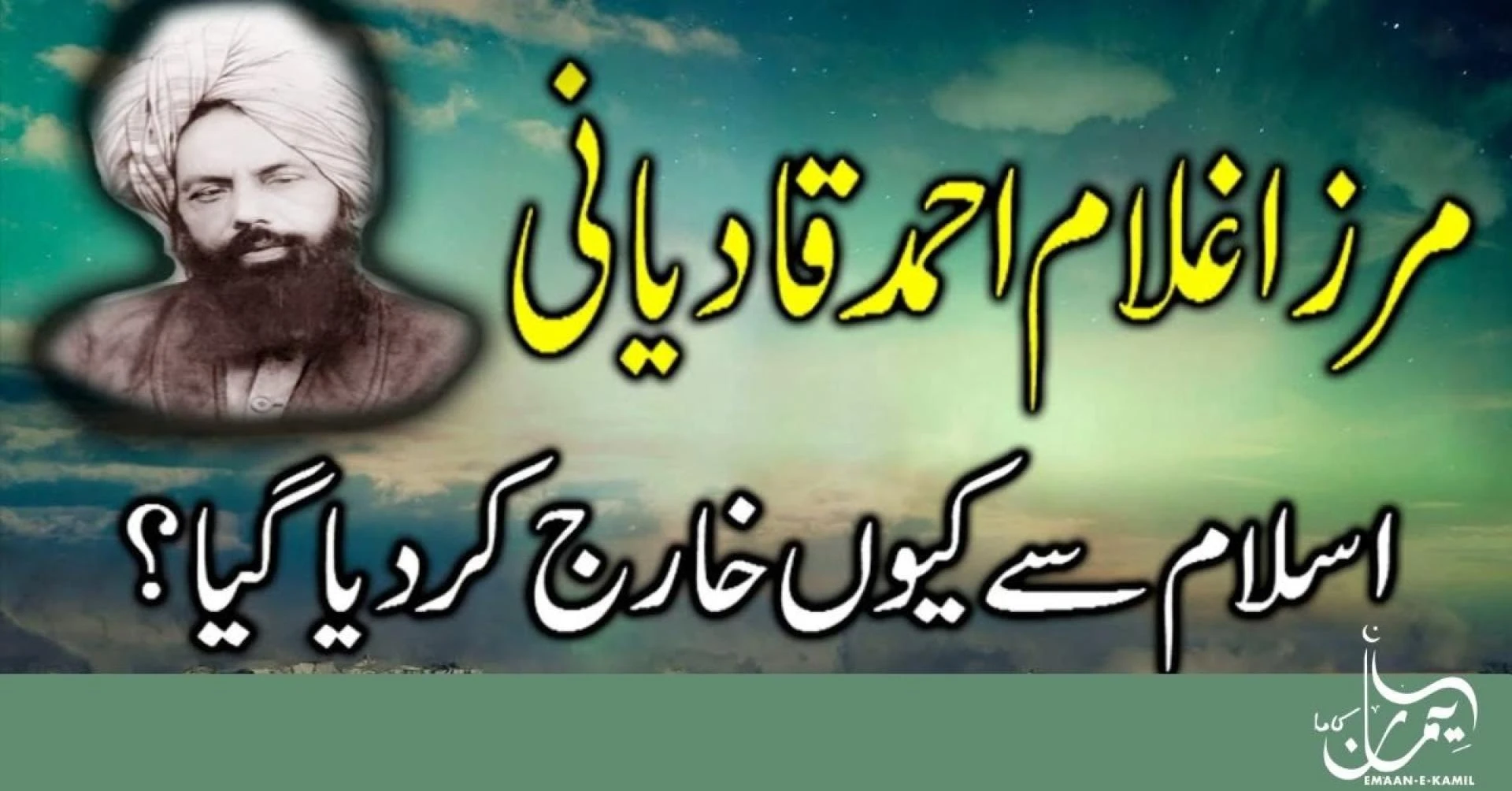
For this reason, mainstream Muslims reject the claim of Mirza Ghulam Ahmad Qadiani, who declared himself a prophet after Prophet Muhammad ﷺ.
The Central Doctrine of Islam: Finality of Prophethood (Khatm-e-Nabuwwat)
One of the core pillars of Islamic belief is Khatm-e-Nabuwwat, the doctrine that Prophet Muhammad ﷺ is the final prophet, with no prophet to come after him.
This belief is not secondary—it is fundamental. Denial of the finality of Prophethood directly contradicts the Qur’an and the teachings of the Prophet ﷺ himself.
Clear Qur’anic Proof That Prophet Muhammad ﷺ Is the Last Prophet
Allah states clearly in the Qur’an:
“Muhammad is not the father of any of your men, but he is the Messenger of Allah and the Seal of the Prophets.”
(Surah Al-Ahzab 33:40)
The Arabic term “Khatam an-Nabiyyin” means Seal and Final of all Prophets. Classical scholars unanimously interpret this verse as absolute finality, not symbolic or metaphorical.
There is no ambiguity in this verse within Islamic theology.
Hadith Evidence Confirming No Prophet After Muhammad ﷺ
The Prophet Muhammad ﷺ himself explicitly stated:
“There will be no prophet after me.”
(Sahih al-Bukhari, Sahih Muslim)
In another narration, he said:
“The chain of Messengers and Prophets has come to an end. There shall be no Messenger nor Prophet after me.”
These authentic hadith leave no room for reinterpretation. Any later claim to prophethood directly contradicts the Prophet’s own words.
Scholarly Consensus (Ijma) of the Muslim Ummah
From the earliest generations of Islam until today, all major Islamic schools—Sunni and Shia alike—agree on the finality of Prophethood.
This includes scholars of:
- Tafsir (Qur’anic exegesis)
- Hadith
- Fiqh (Islamic law)
- Aqeedah (Islamic creed)
There is complete consensus (Ijma) that anyone claiming prophethood after Muhammad ﷺ is false, regardless of how the claim is framed.
Why Muslims Reject Mirza Ghulam Ahmad Qadiani’s Claims
Mirza Ghulam Ahmad Qadiani claimed various religious titles, including:
- Mujaddid (reformer)
- Mahdi
- Messiah
- Prophet (in his later writings)
From the Islamic perspective, any claim of prophethood after Muhammad ﷺ—literal or reinterpretive—is unacceptable.
Muslims reject these claims because they:
- Contradict the Qur’an
- Contradict authentic Hadith
- Contradict 1400 years of scholarly consensus
This rejection is theological, not personal or cultural.
Difference Between Respectful Disagreement and Religious Boundaries
Islam teaches respect, justice, and dignity for all people. However, it also sets clear boundaries in matters of belief.
Rejecting a theological claim does not mean promoting hatred. Muslims are instructed to:
- Speak with wisdom
- Avoid injustice
- Maintain moral conduct
But they are not permitted to accept beliefs that contradict the foundations of Islam.
The Muslim Belief About Jesus (Isa عليه السلام) and the End Times
Islam teaches that:
- Jesus (Isa عليه السلام) was not crucified
- He was raised alive
- He will return before the Day of Judgment
- He will return as a follower of Muhammad ﷺ, not as a new prophet
Any claim that replaces or redefines this belief outside Qur’an and Sunnah is rejected by mainstream Islam.
Conclusion: Why Muslims Stand Firm on the Finality of Prophethood
Muslims reject Mirza Ghulam Ahmad Qadiani’s claims because Islam itself rejects any prophet after Muhammad ﷺ.
This belief is:
- Qur’an-based
- Hadith-confirmed
- Scholarly-unanimous
- Historically continuous
Prophet Muhammad ﷺ is the Final Messenger of Allah, and this belief defines Islamic identity itself.
“Today I have perfected your religion for you…”
(Surah Al-Ma’idah 5:3)
Islam is complete. Prophethood is complete. There is no prophet after Muhammad ﷺ.