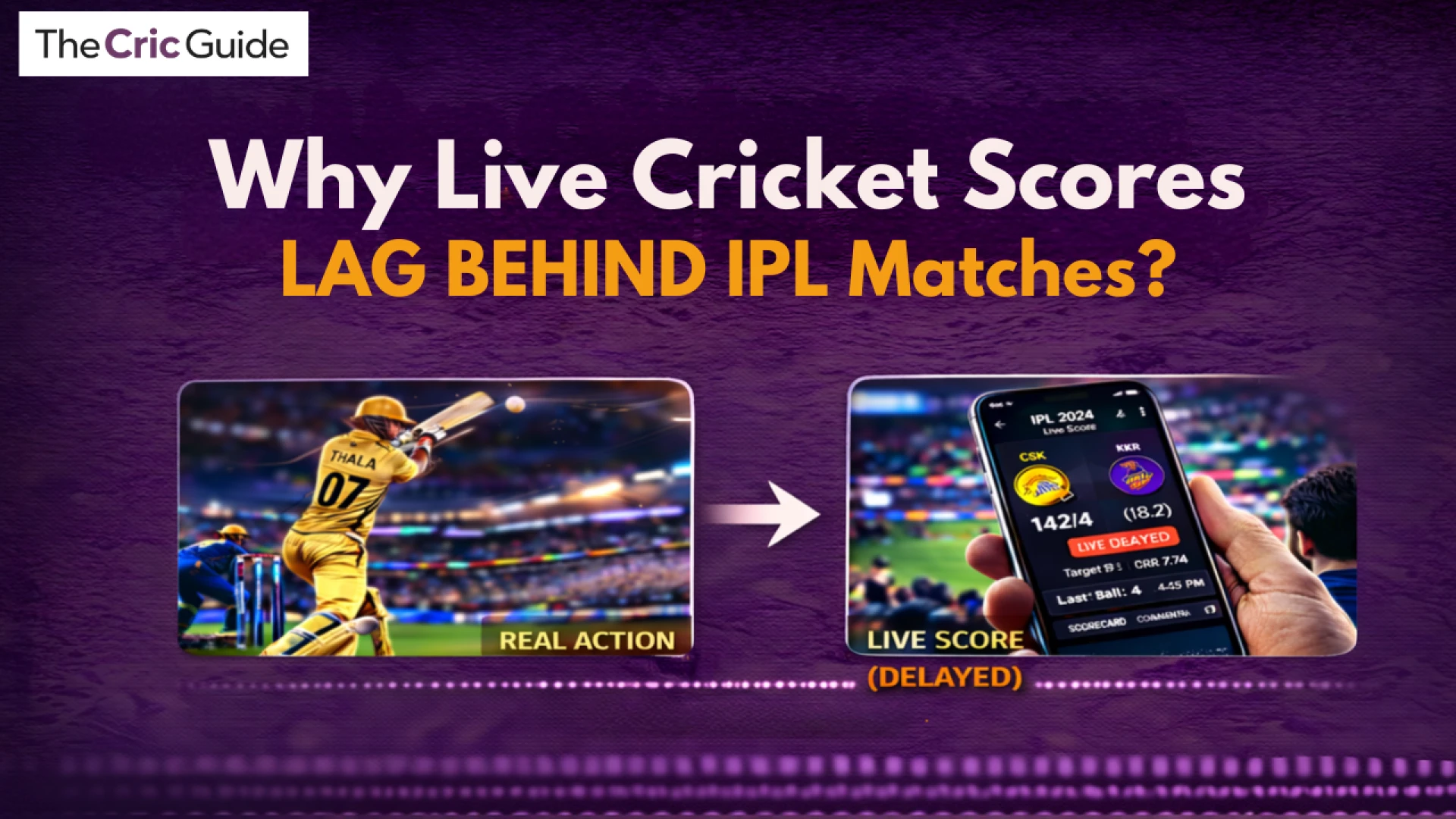
Imagine this, it’s the IPL final, the 19th over is going on, 3 wickets needed, 2 balls left. You’re trying to catch the live score on a live score app every 2 seconds, and it’s been stuck on the same delivery for a while. Sounds frustrating? It happens to thousands of users every year.
If you've ever wondered why live cricket score is delayed specifically during IPL matches, you're not alone. Throughout the entire IPL season, millions of fans suffer from the same problem. The score update lag isn't random - it’s real, and there are reasons behind it that most users don’t know.
Let’s break these down in this TheCricGuide article.
IPL Viewership Causes Lag
Before we dive deep into live cricket score lag reasons, we’ll first address the massive viewership that IPL has.
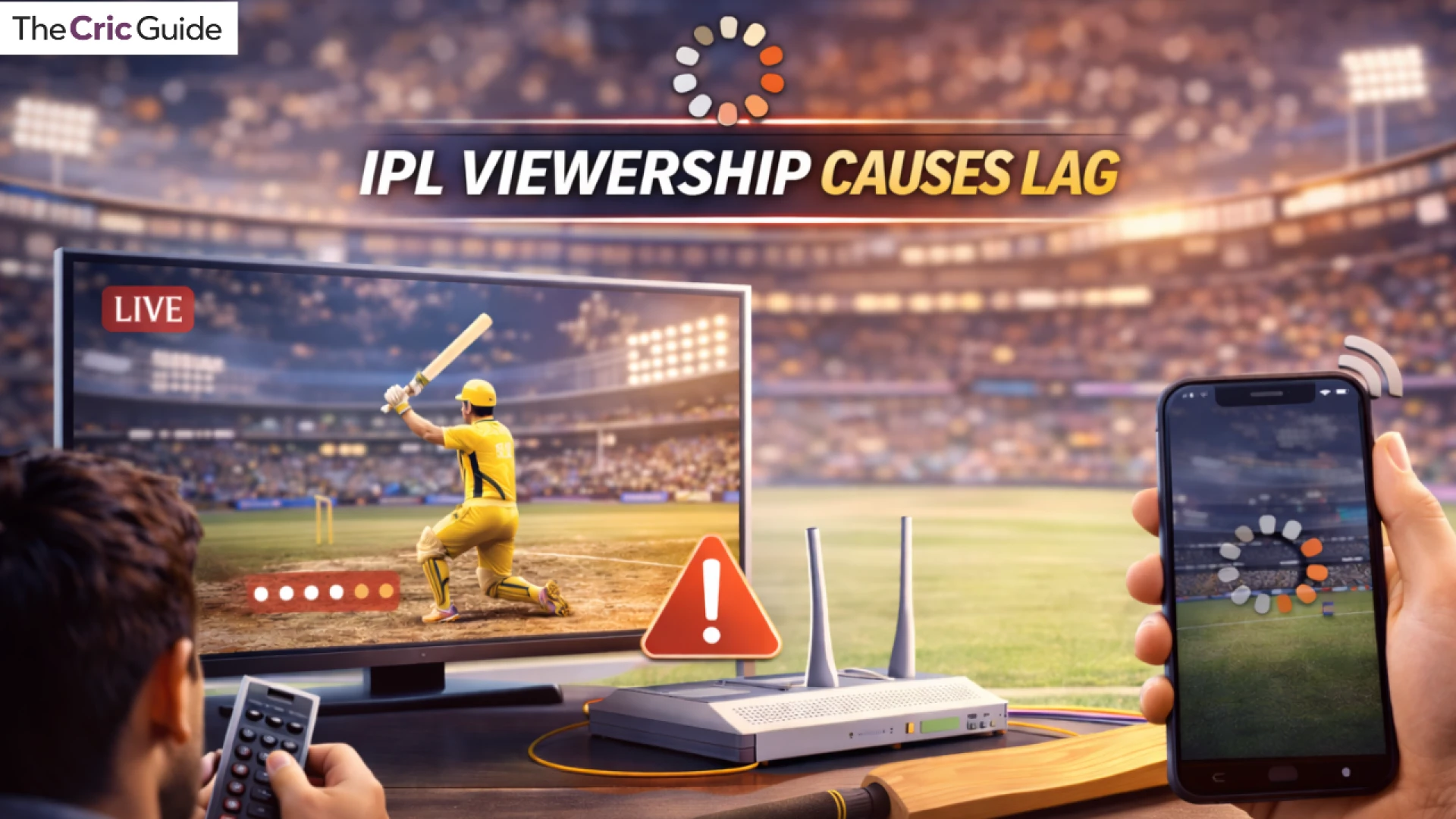
Not just the final; even during the group stages and peak IPL moments, such as a Dhoni finish, a Kohli century, or a Super Over, more than 400 million people are following the match simultaneously.
A huge chunk of those fans are not watching the game live, but just refreshing score apps, live score websites, and social media to keep track of the game.
This massive user base is the core of the cricket score delay issue. IPL has millions of fans watching every day, and the massive volume of concurrent requests hitting servers at once causes lag.
When 50 million users ping a scoring platform in the same 30-second window, even the most state-of-the-art infrastructure can start to lag. A huge amount of requests can cause the pages to slow down, data to stall, and eventually freeze the score you’re trying to fetch.
Server Load: The Biggest Problem

Most platforms are designed to handle a specific number of user requests at any given time. During domestic tournaments or regular international games, these servers are easily able to handle the traffic.
But when it comes to peak events like IPL finals, domestic tournament finals, or World Cups, the platforms buckle under the enormous pressure of requests. The live score not updating problem you see during IPL is almost always a server load issue.
When millions of users are submitting requests to the server every second, it starts overloading the servers, and the requests are queued. Which means your request is waiting in a line that has millions of other requests. That’s why you see the lag that you experience.
Some platforms invest heavily in scalable cloud infrastructure to handle IPL-level traffic spikes. Many don't have the money to do so. The ones that don't are the ones that freeze on you during the most important deliveries.
API Delays: The Middle Layer
Apart from server overloads, there’s a technical issue that most fans don’t even know about. That technical layer is also what causes delay in live cricket updates.
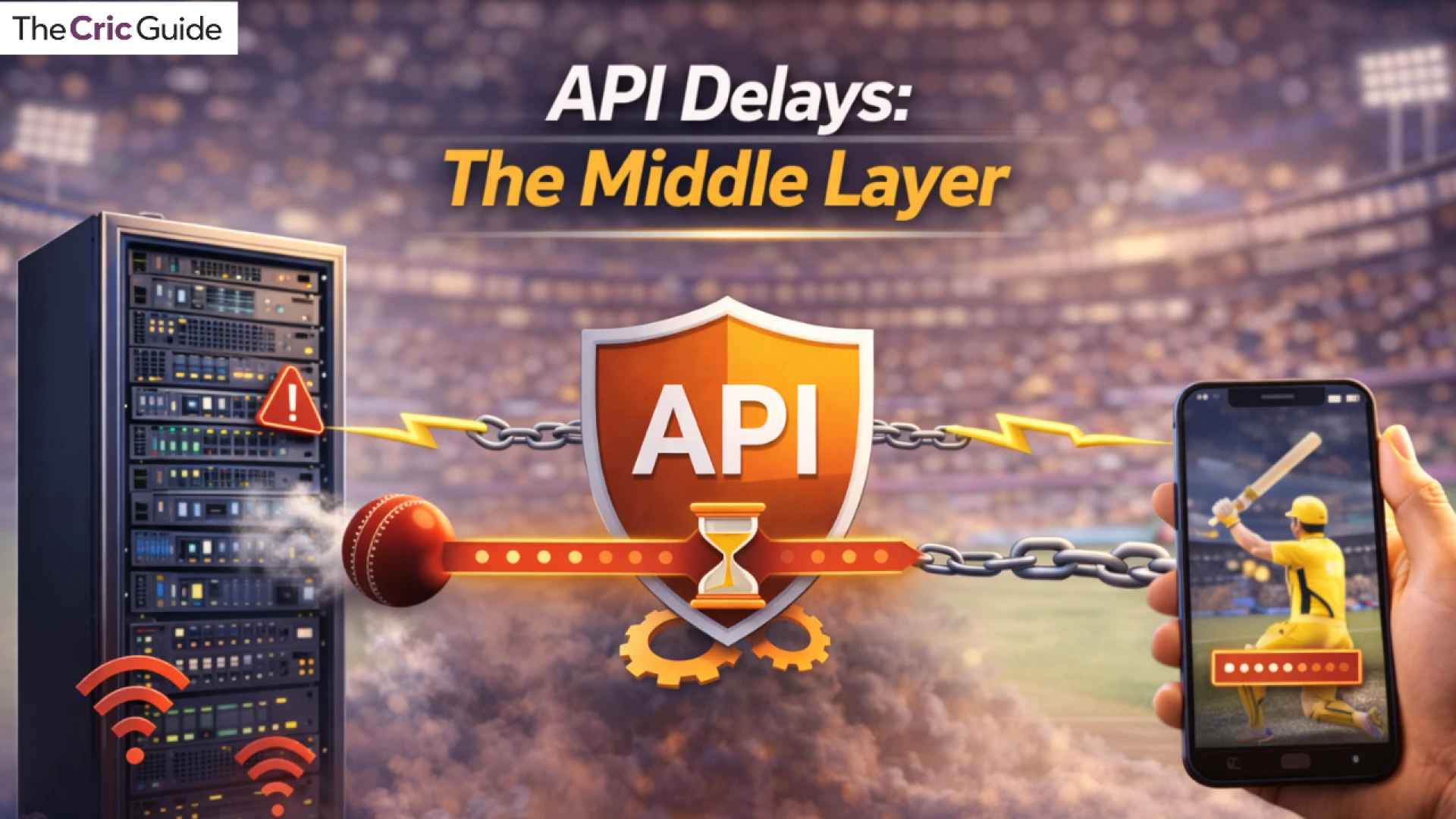
Most score apps and websites don't collect match data themselves. They pull the data through APIs. The data comes from official scoring services.
So, the score update chain goes like this - the scorer at the ground inputs a delivery > that data goes to the official feed > the feed sends it to the API, the API pushes it to the platform, and then the user sees it on their device.
Every step of the process adds milliseconds to the request. If the API requests are also overloaded with thousands of requests, all pulling data from the same source, combine that with server overloads, and you’ll understand why these lags happen so often.
When that happens, the end result is a slow cricket live score update platform that is running 2-3 minutes behind the live score.
Network Congestion
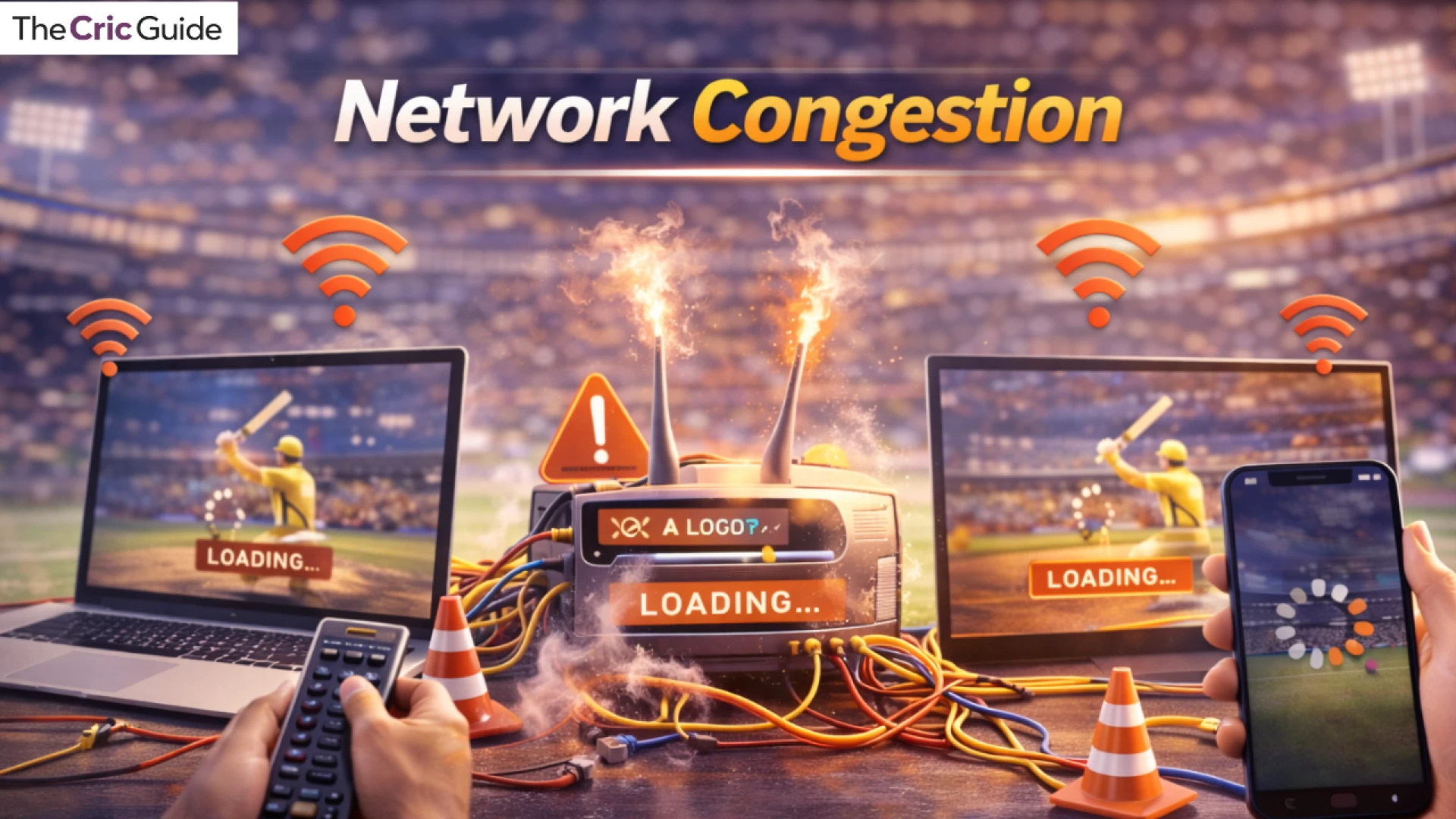
Sometimes, the problem can be on the user’s end, too. If you’re at a place where thousands of users are trying to access the service in a small area, it puts a load on the network service as well. This causes delays, especially during IPL season.
If a match is happening at Wankhede Stadium, thousands are sitting in the stadium, and millions across Mumbai are streaming, updating live scores on social media, and browsing simultaneously. Mobile towers and local networks get congested. Your 5G signal that works perfectly at 9 AM can feel like 2G during a 7:30 PM IPL match just because there are too many users on the same server.
This is a layer of the why live cricket score is slow during IPL problem that can’t be solved by improving the server or API infrastructure. It’s entirely dependent on your network provider, the congestion in the area, and where you are physically.
How to Fix Live Score Delay Problem
There are a few practical things you can do to reduce the lag on your end.
First, switch to lighter platforms. Platforms like Google's live score widget or live line platforms tend to update faster because they carry less overhead. If the platform you’re using right now has too many additional interface elements (animations, ads, videos, music), then they will add to the delay you’re facing.
Second, use a reliable platform that specifically invests in IPL-scale infrastructure. TheCricGuide (thecricguide.com) is a solid option for live score updates, ball-by-ball match updates, and the latest cricket news. It’s built for fans who need accurate, fast information without a bloated interface getting in the way.
Third, switch to a faster internet connection during peak times. Turn off mobile data and connect to WiFi to get on a less congested network. This will make your requests go through the server quicker and solve the scorecard delay issue you may be facing.
Final Take
Due to the popularity of IPL in the country, there will always be some level of lag while you’re trying to fetch live information. The data has to travel from the ground to a scorer, through an API, across servers, and onto your screen. That process takes time.
However, you can minimize the delay you’re facing by making some small changes. Choose a lightweight platform, use WiFi, and keep 2-3 options handy. How to fix live score delay problem isn't one single answer; it’s a combination of the right tools, ideal platforms, and the right type of internet connection.