
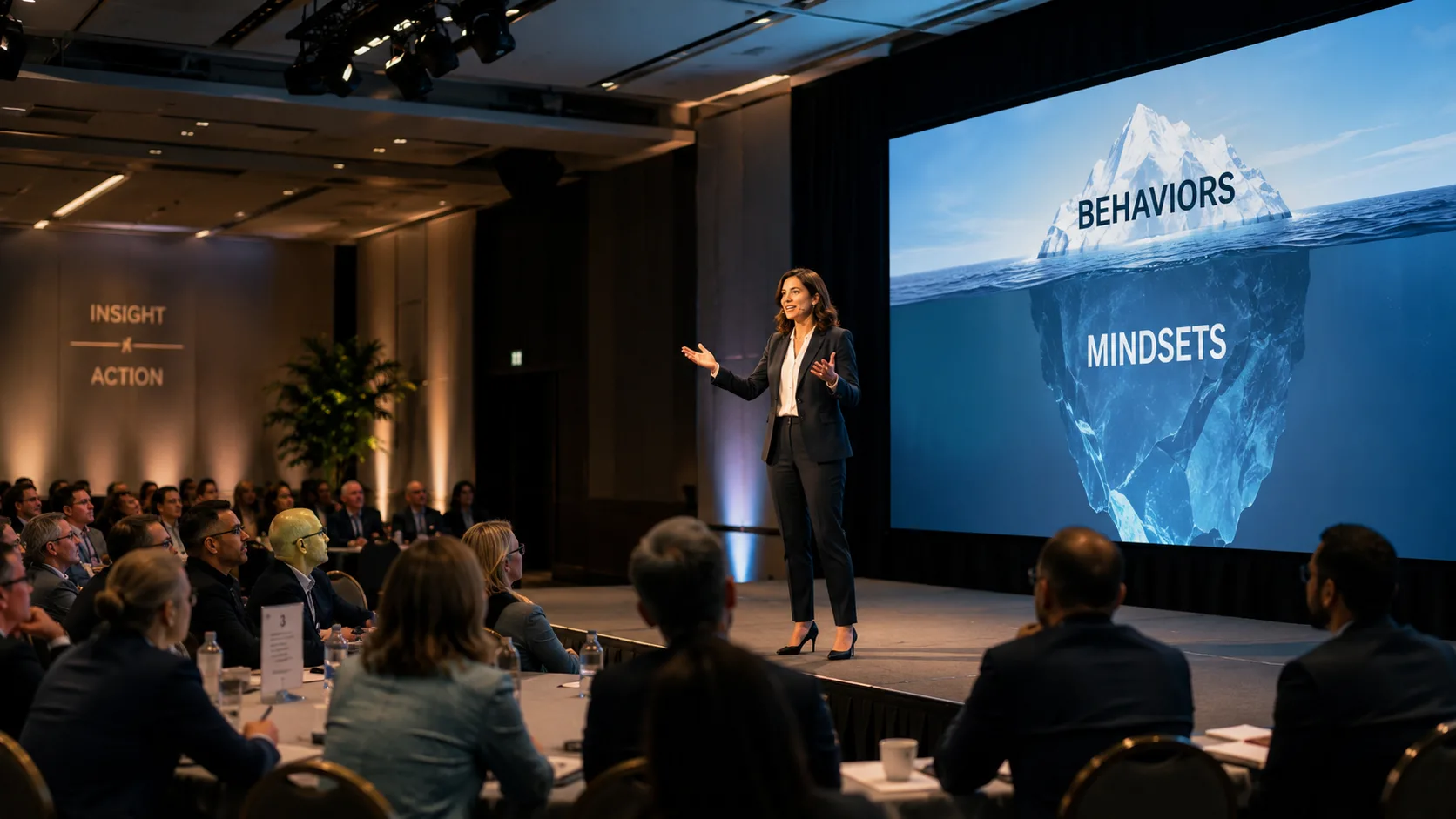
For a period, the corporate keynote was written off. A generation of event organisers and HR professionals grew tired of big-name speakers who delivered polished stories, received a standing ovation, and left audiences with a warm feeling but nothing actionable. Budgets tightened. Virtual events took over. And the argument that a single speaker could shift culture or behaviour started to feel difficult to defend.
That scepticism was understandable. But it was also based on a particular kind of keynote, not the format itself.
Today, leadership keynotes are returning to corporate events in a serious way, and the reasons behind that return say a lot about how organisations are thinking about leadership development right now.
What Changed in Corporate Events
The shift began during and after the pandemic. Organisations that had spent years running training programmes, sending leaders on courses, and measuring development through completion rates found themselves facing a harder question: were their leaders actually changing how they led?
In many cases, the honest answer was no. Knowledge was being acquired. Behaviours were not shifting. And as organisations navigated remote teams, burnout, rapid change, and the complexity of a genuinely uncertain business environment, the gap between what leaders knew and how they actually showed up became very visible.
When in-person events returned, the appetite for something different was real. Event organisers stopped looking for speakers who could fill time or generate applause. They started looking for speakers who could change how their audience thought about a specific leadership challenge, and give them something concrete to take back to work.
That distinction matters enormously.
The Difference Between Inspiration and Insight
There is nothing wrong with a keynote that inspires. But inspiration alone has a short shelf life. Leaders leave the room feeling energised, return to a full inbox, and by Thursday the talk is a distant memory.
The keynotes that are generating interest now are structured differently. They use storytelling not as an end in itself but as a vehicle for delivering genuine insight. They draw on research from organisational psychology, behavioural science, or neuroscience to make a point that the audience can actually apply. And they are built around a central idea that challenges how the audience currently thinks, not just how they currently feel.
This shift in expectation has changed who event organisers are booking. There is now a much stronger preference for speakers who bring real leadership experience alongside the ability to translate that experience into frameworks, language, and perspective shifts that stick.
Speakers who have held senior roles, navigated organisational complexity at scale, and developed a genuine understanding of why leaders behave the way they do are commanding attention in ways that purely motivational figures no longer can.
Topics That Are Landing Right Now
The themes gaining most traction in corporate events reflect where organisations are actually struggling.
Emotional intelligence in leadership has become one of the most requested keynote topics across industries. For years it was treated as a secondary concern, something softer than strategy or operations. That perception has shifted significantly. Organisations are now seeing directly how a leader's emotional intelligence affects team performance, retention, and culture. Audiences want frameworks they can apply, not just validation that EQ matters.
Values-driven leadership is another theme gaining ground, particularly in the Middle East and GCC, where organisations are navigating significant cultural and economic transitions. Leaders who understand their own values and can align their behaviour accordingly are proving far more effective in these environments than those who lead purely by KPIs and hierarchy.
Women in leadership continues to grow as a conference topic, and the quality of the conversation is improving. The most effective keynotes on this subject have moved beyond surface-level empowerment and into the more nuanced territory of how women can lead with authenticity, navigate complex organisational dynamics, and build presence without compromising themselves.
Authenticity in leadership is perhaps the most frequently misunderstood topic on this list. It has become a corporate buzzword, deployed so widely that it has started to lose meaning. The keynotes that are cutting through are the ones that challenge what authenticity actually means in a leadership context, and offer a more rigorous and actionable understanding of the concept.
Why the Format Still Works
The argument against keynotes was always partly about format. A single talk, even a very good one, cannot replace a sustained development process. That is true. But it was also a false comparison.
A keynote is not meant to do what a six-month coaching programme does. What it can do is shift the frame. It can change how a room of leaders thinks about a topic, open a conversation that continues long after the event, and create the kind of shared language and reference points that accelerate development across an organisation.
When a leadership keynote is well-matched to the audience and the organisation's goals, it creates a before and an after. Leaders leave thinking differently about something that matters. That is a real return on the investment, and organisations that understand how to use keynotes as part of a broader development strategy are getting value from them consistently.
What Event Organisers Are Looking For
The brief has changed. Event organisers booking leadership speakers today are asking different questions than they were ten years ago.
They want to know what the audience will be able to do differently as a result of the session. They want speakers who will customise their content to the specific challenges the organisation is navigating, rather than delivering a standard talk with the company logo inserted at the beginning. They want speakers who can read the room, adapt in real time, and engage a diverse audience across cultures, functions, and seniority levels.
They also want credibility. Not just credentials, but genuine experience. A speaker who has held senior leadership roles, built teams, navigated conflict, led through change, and made real decisions under pressure speaks to executive audiences differently from someone who has only studied those experiences.
This is exactly why speakers who combine lived C-suite experience with a grounding in behavioural science are increasingly in demand. This profile of a leadership keynote speaker illustrates the kind of combination organisations are now looking for: real-world experience across global industries, frameworks rooted in organisational psychology, and the ability to tailor content to specific audiences and events.
The Longer View
The return of leadership keynotes is not simply a post-pandemic rebound in in-person events. It reflects something more substantive about how organisations are thinking about leadership development.
The companies investing in high-quality keynote speakers are often the same ones investing in executive coaching, leadership academies, and structured development programmes. They are not treating keynotes as a substitute for deeper work. They are using them as a catalyst, a way to open conversations, shift perspectives, and create the shared context from which deeper development can follow.
When the keynote is right, it earns its place in that ecosystem. And right now, the demand for keynotes that are genuinely right is higher than it has been in years.