Every measurement that's made with light starts with one question: how pure is the beam? In atomic physics laboratories and on wind energy sites, the quality of the laser source sets the ceiling for the quality of the data. For instance, a Doppler wind LiDAR infers wind speed from a frequency shift so small that only a spectrally clean source can resolve it.
Laser purity is incredibly important because the narrower a laser's spectral line is, the more precisely it can lock onto an atomic transition or detect the minute shift imparted by moving air.
How A Single Frequency Laser Guarantees Purity?
Most lasers look like one color but are really a crowd of slightly different frequencies. On the other hand, a single-frequency laser squeezes that crowd into one razor-thin line, with linewidths in the kilohertz range. To understand how single-frequency lasers work, you can think of a choir singing one steady note versus a crowd humming, and when you add polarization-maintaining fiber, the light also keeps a stable orientation, which matters more than most buyers expect.
Why Do Atoms Care So Much About Wavelength?
If there's one thing true about atoms, it's that they act like picky eaters. For example, Rubidium responds near 795 nanometers, so a 795nm single frequency fiber laser is a natural fit for experiments built around rubidium. On the other hand, cesium work often centers on 852 nanometers, where a 852nm single frequency laser referenced to a gas cell can hold its frequency steady for long runs.
These sources support atom cooling and trapping, optical lattices, quantum storage, and precision metrology, so when a laser misses the atomic line by a hair, the entire experiment simply doesn't respond.
How Does Light Measure the Wind?
Tiny particles drift along with the air, and when a pulse of light bounces off them, the returning light shifts in frequency depending on how fast they move toward or away from you. Here is the surprising part: that shift is measured in millions of cycles per second, while the laser itself oscillates hundreds of trillions of times per second. A noisy source would bury the signal completely. A spectrally clean one lets the instrument read wind speed and direction with real confidence.
To clarify things further, here's a comparison table:
Questions Atom Lab Laser Wind Sensing Laser
What it Needs Lock onto one exact atomic line Stay clean enough to expose a tiny shift
What goes wrong Atoms stop responding Wind signal drowns in noise
What you get Stable cooling, trapping, timing Speed and direction profiles
Conclusion:
Atom labs and wind sensors look like unrelated fields, yet they rest on the same principle: a measurement can never be better than the light that produces it. In atomic research, a narrow and stable beam decides whether atoms can be cooled, trapped, and controlled at all. In wind sensing, the same spectral cleanliness decides whether a faint Doppler shift can be separated from background noise and turned into a dependable wind profile.
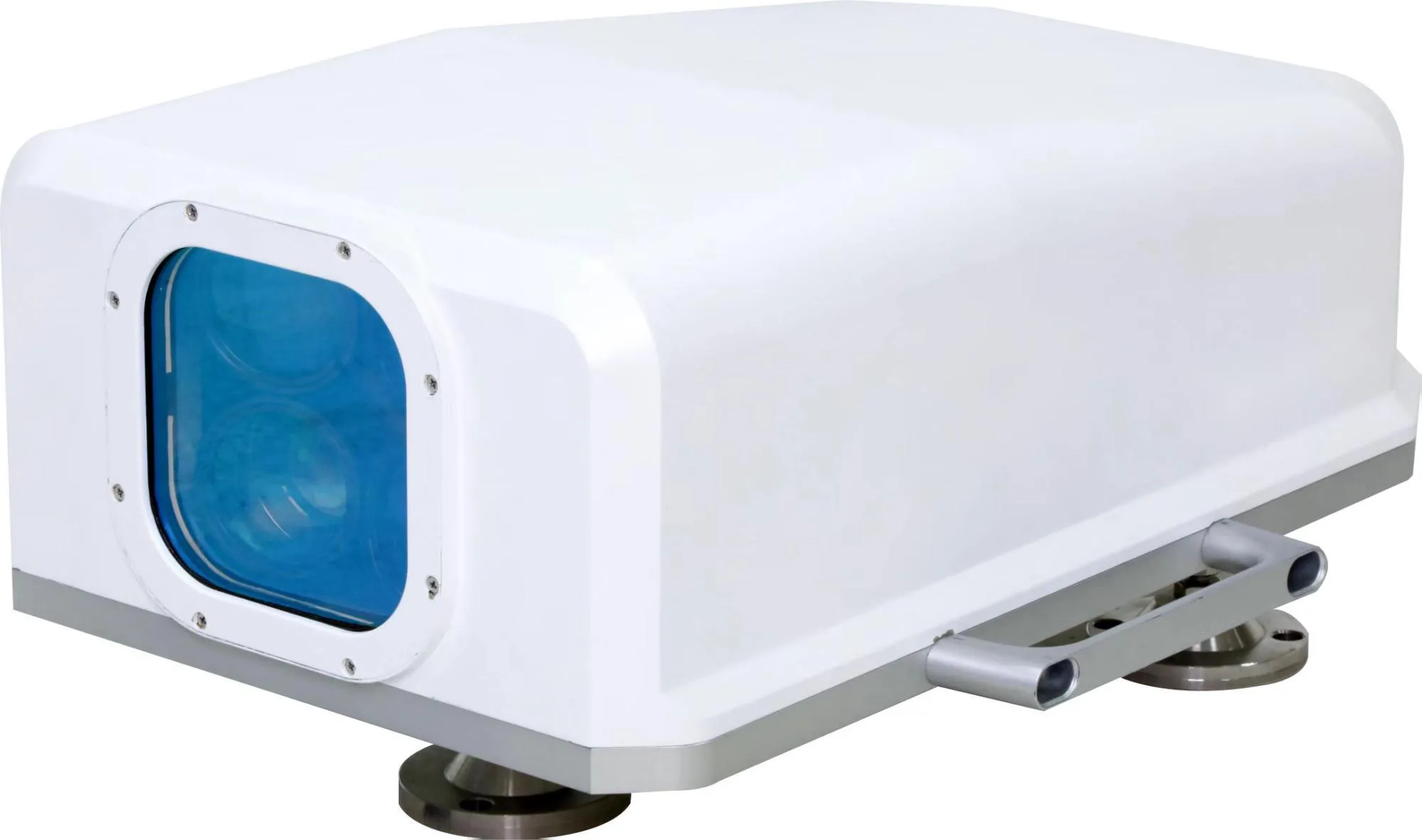
If you are planning a research setup or a wind site assessment and need a ground-based wind LiDAR, this changes how a specification sheet should be read.