A long weekend around the federal holidays is a good time to finish a project you keep putting off. Thanksgiving and the December break give you a few extra hours at home, and a lampshade project fits that window well.
Handmade shades have a reputation for being hard. They don't have to be. A boxed set with the frame, fabric, trim, and instructions removes most of the guesswork. This guide explains how Lampshade Kits work, what to check before you buy, and how to finish your first shade without wasting materials.
What Is a DIY Lamp Shade Kit and What Comes in It?
A DIY lamp shade kit bundles the materials for one shade, so you don't have to hunt down each piece on your own. Most include a wire frame, fabric, trim, and step-by-step directions. Some list tools you still need to supply, such as scissors and a glue gun.
The real benefit is matching. The fabric suits the frame, and the trim suits the fabric. That saves beginners from the trial and error that usually costs the most money.
Why Choose a Handmade Victorian Lampshade Kit Over a Store-Bought Shade?
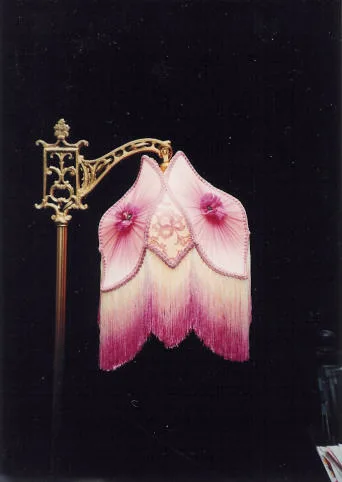
Store-bought shades are quick to buy, but many of them look the same. A handmade Victorian lampshade kit lets you pick the shape, fabric, and trim, so the finished piece looks like your own.
Here are the main reasons people go this route:
- You control the look: Choose gathered, pleated, tulip-style, or fringed designs.
- You learn a reusable skill: Once the first shade is done, the next one goes faster.
- You get a shade that fits: You build it around the frame, so sizing is part of the process.
- You make a gift with meaning: A handmade shade says more than a gift card.
How Do You Choose Affordable Lampshade Kits for Decorative Lamp Shades?
Shoppers often search for Affordable Lampshade Kits for Decorative Lamp Shades, but price is only part of the picture. A low sticker price means little if you must buy fabric, trim, and a frame separately afterward.
Check these points before you order:
- What is included: Look for the frame, fabric, trim, and written or video instructions.
- Skill level: Pick a simple design for a first project.
- Instruction quality: Clear photos or video save you from costly mistakes.
- Seller experience: A maker who teaches the craft can answer your questions.
At the time of writing, the two kits in the LampShadeLady collection, Flower Tulip and Victorian Beauty, are listed at $149 and $169. Compare that with the cost of buying every piece alone, and you can judge the value yourself.
What Skill Level Do You Need to Start?
None. Beginner lampshade making is mostly patience, not talent. If you can measure, cut, and follow directions, you can finish a shade.
Video helps more than most people expect. Watching someone stretch fabric over a frame shows you things a printed page can't. Mary Maxwell, the maker behind LampShadeLady, has taught handmade Victorian lampshades for nearly 40 years, and her lampshade making DVD collection walks through the techniques step by step.
Which Supplies Should You Have Ready Before You Start?
Keep these on your table before you open the box:
- Sharp fabric scissors
- A glue gun and glue sticks
- Straight pins and small clamps
- A measuring tape
- An iron for pressing fabric
If you want to practice beyond your first shade, browse lampshade making supplies and Victorian lampshade wire frames. Extra frames are handy for test shades.
How Do You Make a Lampshade From a Kit, Step by Step?
Always follow the instructions in your own kit, since each design has its own method. The general flow looks like this:
- Lay out all pieces and check them against the list.
- Press the fabric so wrinkles don't show later.
- Prepare the frame, usually by wrapping or taping it.
- Attach the fabric, working slowly from one seam to the next.
- Add the trim along the top and bottom edges.
- Check the finish in good light and fix loose spots.
Take breaks. Rushed glue lines are the most common reason first shades look uneven.
How Can You Fit a Lampshade Project Into a Holiday Weekend?
The federal holidays this season create natural windows. Thanksgiving on November 26 and Christmas on December 25 both sit next to a weekend, which gives you two to four days in a row.
Here is a simple plan:
- Day 1: Unpack the kit, gather tools, and press the fabric.
- Day 2: Prepare the frame and attach the fabric.
- Day 3: Add trim, check the finish, and let the glue set.
How Do You Match New Decorative Lamp Shades to Your Room?
Start with scale. A common guideline says the shade should be wider than the lamp base at its widest point and should hide the bulb and socket at eye level.
Next, think about color. Light passing through fabric takes on its tint. Warm tones such as cream or gold make a room feel cozy, while cooler tones feel crisper.
If you're shopping for decorative lamp shades as holiday gifts, pick a style that suits the recipient's room, not just your own taste.
Where Can California Crafters Find Local Help and Materials?
LampShadeLady is based in Roseville, California, and teaches handmade lampshade making in Northern California. If you live nearby, the contact page is the place to ask about kits or supplies.
For extra fabric and trim, local craft and fabric stores around Sacramento and the Bay Area help you match colors in person. Bring a swatch from your room so you can compare.
FAQs
1. Is a DIY lamp shade kit good for beginners?Yes. The materials are matched and the directions are included, which removes the hardest guesswork. Start with a simple design.
2. How long does it take to finish a shade?It depends on the design. Many first-timers need a weekend or more. Leave extra time for trim.
3. What tools do I need besides the kit?Scissors, a glue gun, pins, clamps, a measuring tape, and an iron cover most projects. Check the product description for extras.
4. Do I need to know how to sew?Not always. Many shade techniques rely on glue, clips, and simple hand stitching. Read the product details for the exact method.
5. Can I use my own fabric?You can, but choose a similar weight. Slippery or very thick fabrics are harder to control around a frame.
6. Which light bulb is safe for a fabric shade?LED bulbs run cool and are a safe choice. Avoid high-wattage incandescent bulbs, which can overheat the fabric.
7. How do I know the shade fits my lamp?Check the fitter type on your lamp and match it to the frame. Measure the base and height before you start.
8. Can I make decorative lamp shades as gifts?Yes. Finish the shade a week early so you have time to fix small flaws.
9. How do I clean a handmade fabric shade?Dust it with a soft brush or lint roller. For spots, dab gently with a barely damp cloth and test a hidden area first.
10. Where can I learn the techniques?Instructional videos are a good start. You can pause and replay each step as you work.