
Every reinforced concrete structure in the UAE, from a residential tower in Abu Dhabi to a bridge deck in Sharjah, depends on one hidden component to hold everything together: reinforcement steel bars, or rebar. Yet not all rebar is created equal, and the difference often comes down to a set of standards most site engineers never think twice about — ISO certification.
The Real Cost of Uncertified Steel
Construction projects across the UAE operate under strict building codes, and for good reason. The Gulf’s climate, seismic considerations, and rapid urban growth put enormous demand on structural materials. Rebar that doesn’t meet recognized manufacturing standards can suffer from inconsistent tensile strength, poor bonding with concrete, or corrosion vulnerabilities that only surface years after a project is completed — when the cost of fixing it is exponentially higher than the cost of sourcing it right the first time.
This is where ISO certification stops being a paperwork formality and starts being a practical safeguard. ISO 9001, for instance, verifies that a manufacturer has a documented, repeatable quality management system — meaning the rebar in batch one performs the same way as the rebar in batch one hundred. For contractors and consultants signing off on structural work, that consistency is not optional.
What to Look for Beyond the Certificate
A certificate alone doesn’t guarantee quality; it’s a starting point for due diligence. When evaluating a steel supplier in the UAE, project teams should look for:
- Traceable raw material sourcing, so the origin and composition of the steel can be verified.
- In-house testing facilities for tensile strength, bend tests, and chemical composition — not just third-party lab reports.
- Compliance with local and international codes, including standards referenced by Emirates Authority for Standardization and Metrology (ESMA) alongside ISO frameworks.
- A track record on comparable projects, since theoretical compliance and real-world performance aren’t always the same thing.
Manufacturing Consistency Is a Competitive Advantage
For steel manufacturers operating in the UAE’s construction sector, certification isn’t just about opening doors with larger contractors — it’s about reducing liability across the entire supply chain. A manufacturer with decades of production history and consistent third-party audits has effectively de-risked one of the most critical decisions a project team makes: what goes inside the concrete.
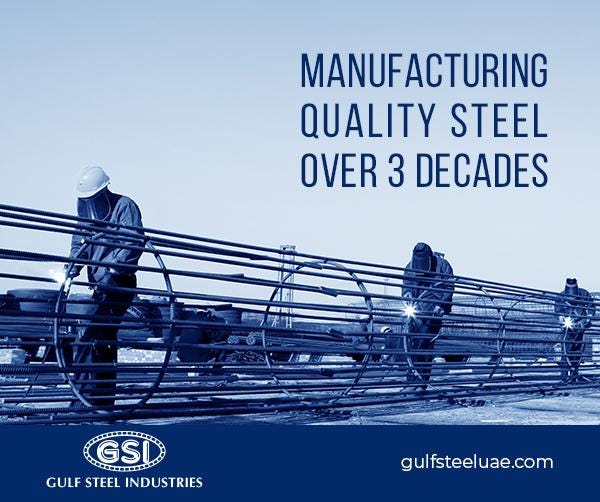
Gulf Steel Industries, based in Mussafah, Abu Dhabi, has been manufacturing reinforcement steel bars since 1992 and holds multiple quality certifications, including ISO and Emirates Quality Mark recognition, alongside in-house quality control and R&D divisions dedicated to continuous product improvement. As part of the Al Nasser Industrial Enterprises Group, the company supplies rebar, serrated bars, flat bars, and cut-and-bend reinforcement steel to construction projects across the region.
The Takeaway for Project Teams
Choosing a rebar supplier isn’t just a procurement decision — it’s a structural one. In a market as fast-moving as the UAE’s construction sector, working with a certified, established manufacturer reduces long-term risk and keeps projects aligned with the codes regulators and insurers expect to see.
Learn more about certified reinforcement steel manufacturing at Gulf Steel Industries.