Melbourne's warm summers and love of outdoor living mean that thousands of homeowners across the city depend on their backyard pools for relaxation, family fun, and entertaining guests throughout the season. With so many Melbourne households investing in their pool experience, water quality issues like persistent cloudiness have become one of the most common and frustrating problems pool owners face. The suburbs of Melbourne are home to families, retirees, and busy professionals who want nothing more than to dive into a sparkling clean pool after a long day. Cloudy pool water doesn't just look uninviting — it can signal dangerous chemical imbalances, hidden bacterial growth, and filtration failures that pose real health risks, making it essential to seek prompt assistance from a trusted Pool Cleaning Melbourne specialist before the problem worsens.
Understanding Why Your Pool Water Stays Cloudy After Cleaning
There's nothing quite as deflating as spending an afternoon cleaning your pool only to find the water remains stubbornly cloudy and dull no matter what you do. That persistent milky, hazy, or murky appearance isn't just an aesthetic problem — it is almost always a symptom of an underlying issue that surface-level cleaning simply cannot fix. Whether you own a pool in Brighton, Ringwood, or anywhere across Melbourne's sprawling suburbs, cloudy water that refuses to clear is a clear sign that something deeper within your pool's chemistry or filtration system requires professional attention.
The problem presents itself in varying degrees of severity. Some pool owners notice a mild haze that reduces water clarity without completely obscuring the pool floor. Others deal with severely cloudy water so opaque that the bottom of the pool is completely invisible — a genuine safety hazard for families with young children swimming. Some find the cloudiness develops rapidly after heavy rain or a pool party, while others watch it creep in slowly over days despite regular maintenance. Regardless of how the cloudiness appears, persistent murky water after cleaning is a definitive sign that your pool needs more than a basic clean from a professional Pool Cleaning Melbourne service.
Why Melbourne Pool Owners Need Professional Pool Care Support
Melbourne's climate creates unique challenges for pool owners throughout the year. Hot dry summers cause rapid water evaporation and chemical concentration, while autumn brings falling leaves and organic debris that overwhelm filtration systems. Winter rains dilute pool chemicals and alter pH balances, and spring winds carry dust, pollen, and algae spores directly into pool water. Managing a pool through Melbourne's four distinct seasons requires consistent monitoring, proper chemical knowledge, and reliable equipment — challenges that many busy homeowners simply don't have the time or expertise to handle alone.
Common Reasons Your Pool Water Stays Cloudy After Cleaning
Chemical Imbalance in Your Pool WaterThe most frequent cause of persistent cloudiness is a chemical imbalance in your pool water. Pool water requires precise levels of chlorine, pH, alkalinity, and calcium hardness to remain clear and safe. When any one of these parameters falls out of the correct range, the water loses its clarity almost immediately. Low chlorine allows bacteria and algae to multiply, causing cloudiness. High pH reduces chlorine's effectiveness even when levels appear normal on a test strip. Incorrect alkalinity causes pH to fluctuate wildly, making it nearly impossible to maintain stable water chemistry. Achieving and maintaining the correct chemical balance is the foundation of a consistently clear pool.
Insufficient or Poorly Timed FiltrationYour pool's filtration system is responsible for physically removing the fine particles that make water appear cloudy. If your filter is not running for enough hours each day, or if it is running at the wrong time, suspended particles never get fully removed from the water. During Melbourne's summer months, most pools require a minimum of eight to ten hours of filtration daily to maintain clarity. Running your filter during off-peak electricity hours in the early morning or overnight ensures continuous particle removal throughout the day.
Dirty or Damaged Filter MediaEven when your filter runs for the correct number of hours, a dirty or degraded filter cannot clean effectively. Sand filters need regular backwashing to remove accumulated debris from the sand bed. Cartridge filters require periodic removal and thorough hosing down. DE filters need fresh diatomaceous earth added after each backwash. When filter media becomes clogged or worn out, fine particles pass straight through and remain suspended in the water, causing persistent cloudiness that no amount of chemical adjustment will fully resolve.
Algae Growth in Early StagesCloudy water is frequently the first visible sign of an algae bloom before it develops into the green or black discolouration most pool owners recognise. In its earliest stages, algae creates a fine haze throughout the water rather than obvious green patches on walls and floors. Without prompt treatment, this early-stage cloudiness rapidly progresses into a full algae outbreak that is significantly more difficult and expensive to treat. Shocking the pool with a high dose of chlorine at the first sign of cloudiness is critical for stopping algae before it takes hold.
High Calcium Hardness or Total Dissolved SolidsOver time, pool water accumulates dissolved minerals, chemicals, and organic matter that collectively raise the total dissolved solids level beyond what the water can hold in solution. When calcium hardness levels become excessively high, calcium particles precipitate out of the water and create a cloudy, milky appearance that is impossible to clear with standard chemical treatments. The only effective solution for severely elevated TDS or calcium hardness is a partial or complete pool water replacement combined with thorough filter cleaning.
Heavy Bather Load or Environmental ContaminationAfter a large pool party or a period of heavy use, the combined effect of sunscreen, body oils, sweat, and other organic contaminants can rapidly overwhelm your pool's chlorine and filtration capacity, causing cloudiness to develop within hours. Similarly, heavy rain washes dust, soil, fertilisers, and organic debris directly into pool water, dramatically altering chemical balance and introducing fine suspended particles that take days to filter out without intervention.
A Local Melbourne Story
Kezza, a mum of three from Glen Waverley, had been struggling with persistently cloudy pool water for most of the summer despite cleaning the pool regularly and adding chlorine every week. With her children's school holiday pool parties fast approaching, she was at her wit's end. She contacted The One Pool Care for a professional assessment. The technician conducted a full water test and discovered that while her chlorine levels appeared adequate, her pH was significantly elevated and her sand filter had not been backwashed in over three months, rendering it almost completely ineffective. After a thorough filter backwash, a precise chemical rebalance, and a pool shock treatment, the water was sparkling clear within forty-eight hours. "I had no idea the filter needed attention so regularly," Kezza says. "The One Pool Care explained everything clearly and my pool has never looked better. The kids were absolutely thrilled for their party."
Practical Solutions You Can Try at Home
Test Your Water Chemistry ThoroughlyPurchase a reliable pool water test kit or test strips and check your chlorine, pH, total alkalinity, and calcium hardness levels carefully. Compare your results against the ideal ranges — pH between 7.2 and 7.6, chlorine between 1 and 3 ppm, alkalinity between 80 and 120 ppm, and calcium hardness between 200 and 400 ppm. Adjust each parameter methodically, starting with alkalinity first, then pH, and finally chlorine.
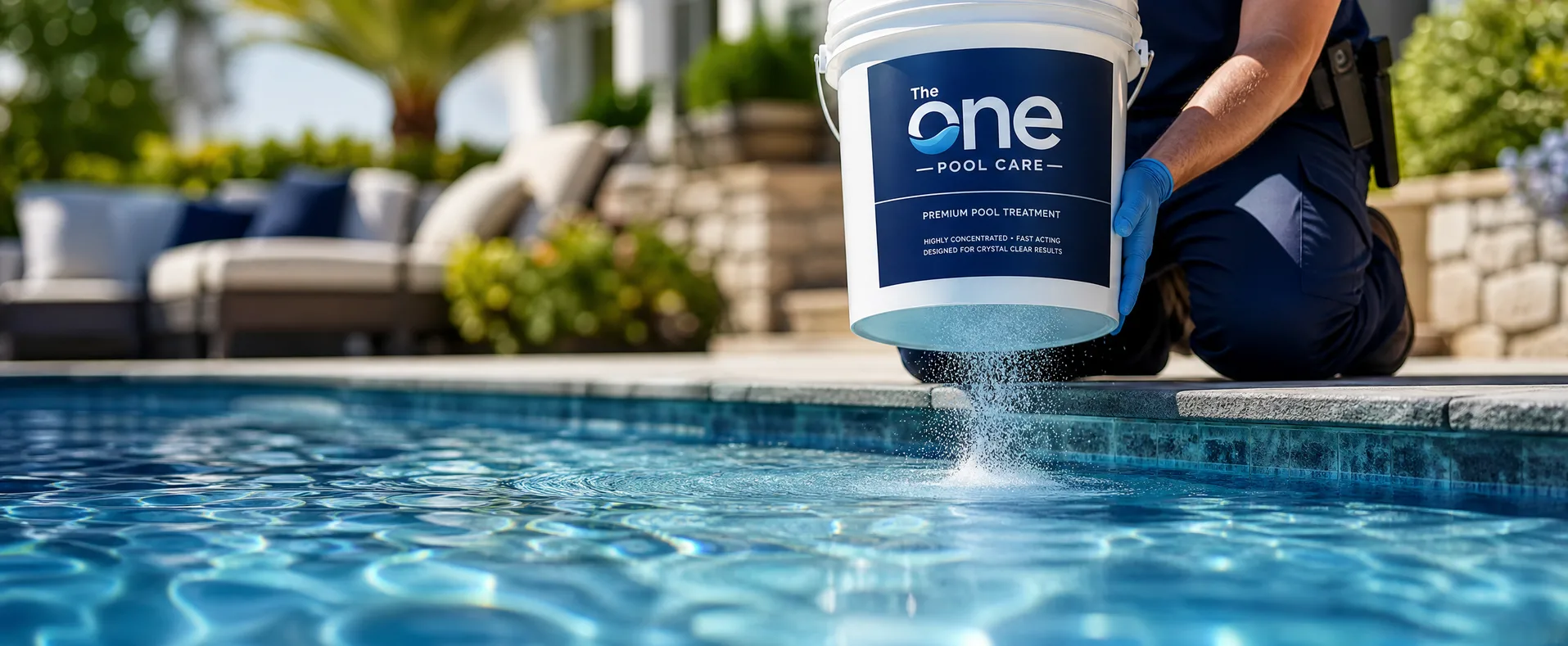
Shock Your Pool With a High Chlorine DoseAdd a pool shock treatment — typically a high dose of granular chlorine — to your pool in the evening when the sun is not actively degrading the chlorine. Shocking breaks down chloramines, kills early-stage algae, and rapidly clears mild to moderate cloudiness. Run your filter continuously for at least twenty-four hours after shocking to remove the dead particles from the water.
Backwash or Clean Your Filter ImmediatelyIf you cannot remember the last time your filter was cleaned or backwashed, do it now. For sand filters, run the backwash cycle until the sight glass runs clear. For cartridge filters, remove the cartridge and hose it down thoroughly from top to bottom. A clean filter working at full capacity is one of the most powerful tools you have for clearing cloudy water quickly.
Increase Your Daily Filtration Run TimeTemporarily increase your filter's daily run time to a minimum of twelve hours until the cloudiness clears. Ensure the filter is running during the hottest part of the day when sunlight is most active and contamination risk is highest. Once the water clears, reassess your standard daily run time to ensure it is adequate for your pool size and usage level.
Use a Pool Clarifier or FlocculantA pool clarifier works by binding fine suspended particles together into larger clumps that your filter can capture more effectively. Add the recommended dose and run your filter continuously. For severe cloudiness, a flocculant causes particles to sink to the pool floor where they can be vacuumed directly to waste, bypassing the filter entirely for a faster result.
When to Seek Professional Help
If you have worked through these steps and your pool water remains cloudy, or if the cloudiness is accompanied by strong chemical smells, visible algae growth, or skin and eye irritation in swimmers, it is time to call in a professional. Persistent cloudiness that resists home treatment often indicates a more complex underlying issue such as severely imbalanced water chemistry, a failing filtration system, or a structural problem with the pool itself that requires specialist diagnosis and treatment.
Preventative Measures for a Consistently Clear Pool
To maintain crystal clear pool water throughout Melbourne's swimming season, test your water chemistry at least twice per week during summer and once per week during cooler months. Clean or backwash your filter regularly according to the manufacturer's schedule. Run your filtration system for adequate hours every day without exception. Shower before swimming to reduce the introduction of body oils and contaminants. Keep your pool covered when not in use to minimise debris, evaporation, and chemical degradation from direct sunlight.
Conclusion
Cloudy pool water that persists even after cleaning is never something to ignore or simply hope will resolve itself over time. Whether the cause is a chemical imbalance, a clogged filter, early-stage algae, or environmental contamination, every case of persistent pool cloudiness has a clear and treatable solution. Melbourne pool owners who are battling stubborn cloudy water should work through the practical steps outlined in this guide, but never hesitate to reach out to an experienced Pool Cleaning Melbourne professional when the problem proves too complex for home treatment alone. With the right diagnosis, targeted treatment, and consistent ongoing maintenance, your pool water will be sparkling clear and safe for your family to enjoy all season long. Don't settle for a cloudy pool — take action today and reclaim the backyard oasis you deserve.