
How has the Abu Dhabi real estate market changed since it opened to foreigners in April 2019?
— This is amply illustrated by the results of 2025 in Abu Dhabi: apartment and villa prices showed an average annual increase of 8%, with some projects on Saadiyat Island and in the Al Raha Beach area seeing increases of up to 10%. Premium villas are consistently in high demand, with some seeing a price increase of nearly 25% since 2020.
Both under construction and completed villas are particularly in demand in the form of high-quality cottage communities, and the shortage of such properties for sale in Abu Dhabi is driving further price increases. Last year, approximately 8,500 apartments were launched in the emirate, with approximately 5,000 planned for 2023. The situation in the villa segment is unique: very few were built last year, literally a single community, while approximately 1,000 units are planned for 2023, indicating that Abu Dhabi has significant potential for growth in the average price of completed homes.
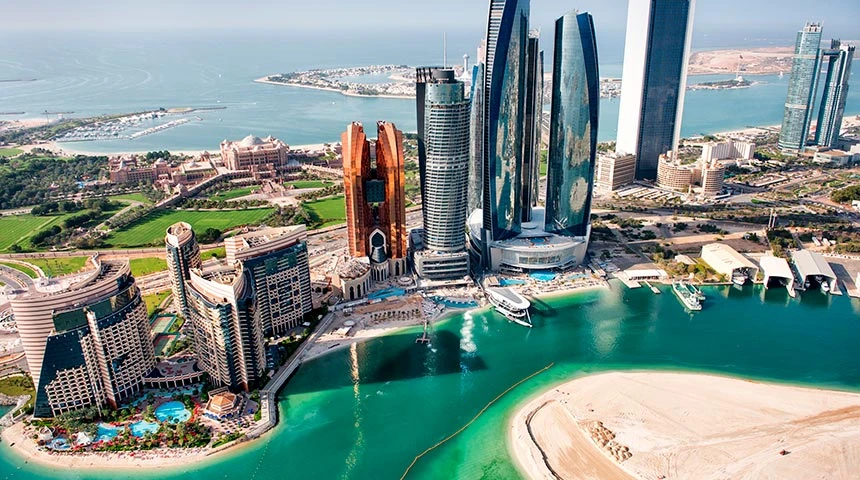
I would like to note the established, stable trend toward purchasing luxury real estate and the high demand for waterfront properties: Abu Dhabi boasts a 700-kilometer coastline with some of the best beaches in the UAE. It boasts soft, white sand, crystal-clear water, and 283 islands.
There is increased interest in acquiring large plots of land for the construction of their own projects among Dubai developers, as well as investors from Russia, Italy, the UK, Saudi Arabia, and other countries. This is due to the emirate's still-large undeveloped territories, including islands, and relatively low land prices, coupled with well-developed infrastructure.
However, overall, real estate investors' attention is still focused on Dubai. Why? And what has driven the increase in interest and sales in 2025?
— Indeed, nine out of ten foreigners considering buying property in the UAE are looking toward Dubai. Abu Dhabi remains largely unnoticed and is much less popular—to the point that not everyone knows it is the country's capital. Abu Dhabi occupies 87% of the UAE's total territory and is the wealthiest of the seven emirates, home to over 90% of the country's oil reserves.
Until recently, Abu Dhabi was a place where 90% of real estate transactions were driven by the domestic market—citizens and residents—that is, people who are born and spend all the key stages of their lives here: studying, working, starting a family, retiring, and therefore interested in investing in their own country.
Consequently, a key advantage of the Abu Dhabi real estate market is the high returns for investors (net returns on investment are 7-8% per annum), as housing here has traditionally enjoyed stable demand.
Today, the balance has shifted. The turning point occurred two years ago. Foreign investors and end users from neighboring emirates now account for approximately 25% of transactions. And the upward trend continues. According to our data, the number of foreign buyers increased by 50% in the last nine months of 2025 alone, and 90% of them are moving to Abu Dhabi with their families.
How many foreigners currently live in this emirate?
— According to DXB Interact, currently no more than 40% of the total population, and in this respect, Abu Dhabi differs significantly from Dubai, which is known as the city of expats. This significant gap explains the completely different nature of real estate demand and market growth rates in these emirates. However, starting around 2021, like Dubai, the emirate experienced several significant growth periods and subsequently expanded at a rate that has been unprecedented since 2015.
How does the local market differ in terms of supply and demand?
— The weakest sectors here are still the commercial real estate and residential rental segments, as long-term rentals dominate in the capital. Short-term rentals in Abu Dhabi have yet to establish an upward trend, as they are a relatively new phenomenon and popular among tourists, workers, and business representatives.
Its expansion should become a powerful driver for the real estate market as a whole, with areas near cultural attractions, unique entertainment venues, international educational institutions, luxury hotels, luxurious beaches, residential complexes, and premium business centers benefiting the most from this type of demand growth.
The emirate is currently moving toward this very transformation, becoming a unique destination in every sense. Large-scale megaprojects, modern infrastructure for business and leisure, and cultural and artistic centers are already being implemented here.
Investors from the EU and the UK are actively investing in Abu Dhabi real estate. What attracts Europeans to this market?
— As I already mentioned, the Emirates in general, and Abu Dhabi in particular, are focused on comprehensive development. Real estate is far from the only growth area. The service, manufacturing, and logistics sectors are declining. Central banks in all major countries are working to combat rising inflation, which in turn is leading to a decline in business activity.
Analysts are confident that this trend will not reverse in the coming years; the world needs to recover and weather the consequences of the pandemic. Meanwhile, the UAE real estate market maintains positive momentum, as evidenced by the Purchasing Managers' Index (PMI). This index is calculated for non-oil industries: values above 50 indicate market expansion, while values below indicate contraction. In March 2023, the UAE PMI was 55.9, higher than the previous month (54.3), and indicates robust growth.
As for Abu Dhabi, according to a global study by the Economist Intelligence Unit, Abu Dhabi was recognized as the most livable city in the Middle East and North Africa for three consecutive years—from 2020 to 2022. The capital of the UAE is an ideal place for work and investment. The Abu Dhabi Statistics Centre reports that the emirate's GDP grew by 11.2% in the first half of 2022 compared to the same period in 2021. This clearly demonstrates Abu Dhabi's strong performance and its resilience to global economic challenges.