
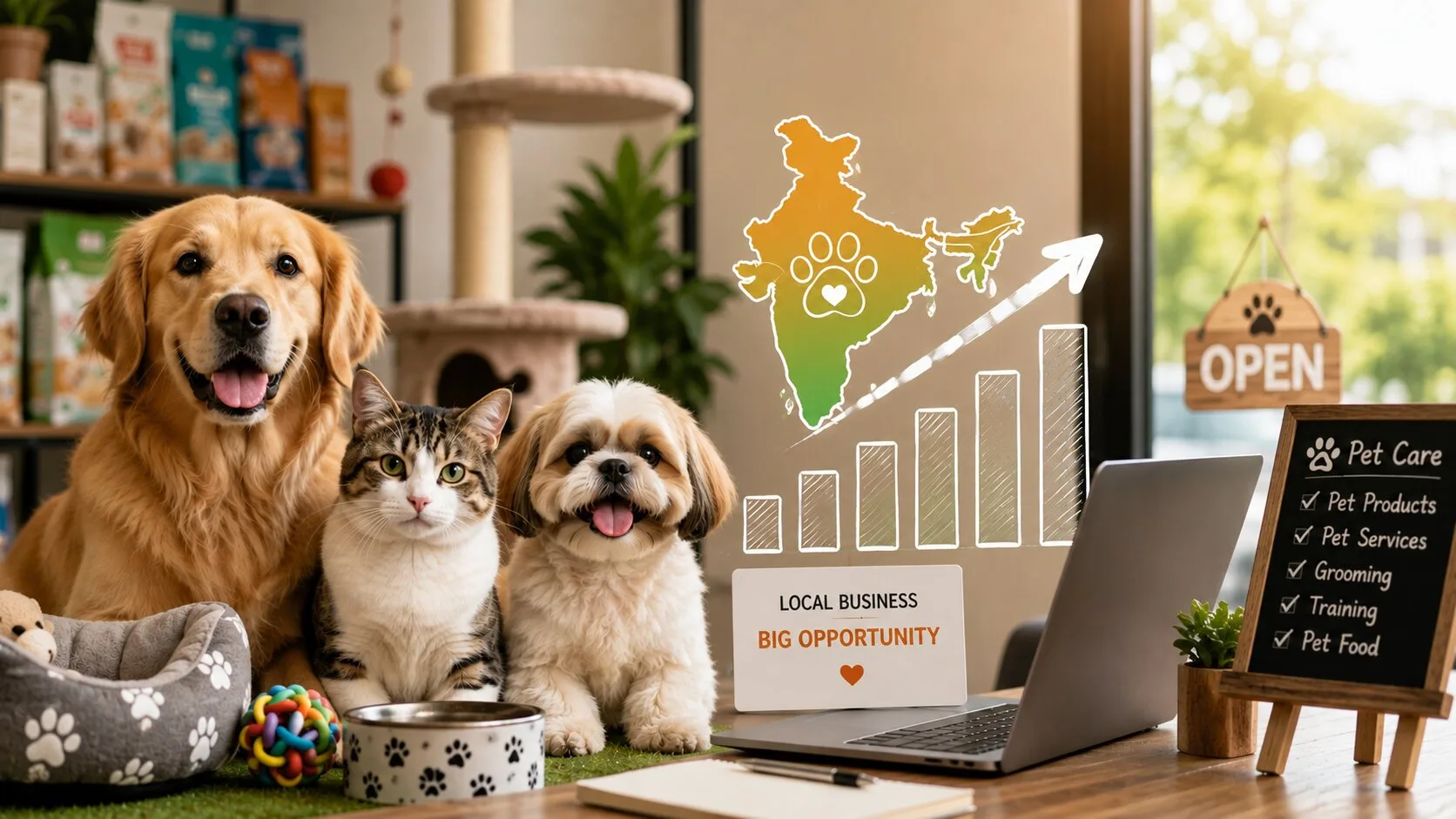
India added more pet owners in the last five years than in the two decades before that. Yet most people trying to build a business around this boom make the same mistake: they try to build "the next big national pet website" and compete head-on with giants that already have millions of users. There's a smarter way in, and it starts with thinking smaller, not bigger.
India's Pet Ownership Boom, By the Numbers
Before deciding whether this space is worth entering, it helps to look at what's actually happening on the ground.
- India's overall pet population grew by roughly 5% in 2024 and is expected to touch around 39 million in 2025, according to Euromonitor.
- The country is expected to have close to 43 million pet dogs by 2026, up sharply from about 21 million in 2019 (Dogster).
- Nearly 70% of Indian pet parents in 2024 were first-time owners, and Gen Z is leading this shift (Expert Market Research).
- The broader Indian pet care and products market is projected to grow at a CAGR of over 20% through the next decade, with premium and specialty products growing fastest.
- Quick-commerce delivery for pet products now reaches more than 40 Indian cities, shortening how often people restock and shop online for their pets (Mordor Intelligence).
- Pet ownership is no longer just a metro phenomenon — tier-2 and tier-3 cities are now driving a growing share of new pet adoptions and spending.
Put simply: demand is real, it's growing fast, and it's spreading well beyond Delhi, Mumbai, and Bangalore.
The Problem With "One Big National Website" Thinking
Here's a mistake a lot of first-time founders make. They see the market size — billions of dollars, tens of millions of pets — and assume the opportunity is to build one giant platform that serves the entire country, competing directly with well-funded, well-known players.
That approach usually fails for a simple reason: trust in the pet world is local.
- A buyer in Pune wants to see a puppy in person, meet the breeder, and check the home it came from — not scroll through listings from a state they'll never visit.
- Adoption and rescue groups operate city by city, often through word of mouth and local volunteer networks.
- Pet services — walkers, groomers, boarding, vets — are inherently local by definition. Nobody books a dog walker three states away.
This is exactly the pattern that shows up again and again in founder discussions about classified-style businesses: trying to out-scale an established national player rarely works for a newcomer with limited budget. What does work is picking one city, one region, or one specific pet-owner community, and becoming the obvious, trusted go-to place there first.
Why Tier-2 and Tier-3 Cities Are the Real Opportunity
This is where the opportunity gets interesting for India specifically.
Underserved but growing fast
Most established pet platforms are optimized for the big metros. Meanwhile:
- Domestic pet food production has expanded, cutting kibble costs by an estimated 14% and making pet ownership more affordable in smaller towns.
- Insurance-linked reimbursement for pet care is expanding, making it easier for middle-income households in smaller cities to justify spending on their pets.
- North India already holds the largest regional share of the pet care market, anchored by growth outside just the capital region.
Less competition, more loyalty
A platform built specifically for, say, Jaipur, Coimbatore, or Nagpur pet owners doesn't need to out-market a national brand. It just needs to be the place local breeders, shelters, and pet parents already trust and recommend to each other. That kind of loyalty is much harder to build at national scale, but far more achievable city by city.
What a Local Pet Marketplace Actually Needs
Once you've picked your city or niche, the next question is what people actually expect from the platform itself. Based on how pet owners behave (and what they complain about on existing sites), a few things matter far more than flashy design.
Core features pet owners look for
- Clear categories — dogs, cats, birds, small pets, and services kept separate so browsing feels simple, not cluttered.
- Real photos and short videos — pet buyers are far more cautious than typical online shoppers; a blurry stock-style photo kills trust instantly.
- Location and breed filters — people want to filter by city, breed, age, and price without digging through irrelevant listings.
- Direct messaging — buyers and sellers need to talk without exchanging phone numbers on the first message.
- Mobile-friendly browsing — the majority of pet searches in India now happen on phones, especially in tier-2 and tier-3 cities.
Trust and safety essentials
Because pets aren't ordinary products, a few extra safeguards go a long way toward building a credible platform:
- Basic seller verification (phone number, sometimes ID) before a listing goes live.
- A simple reporting system so users can flag suspicious sellers or overpriced "pure breed" claims.
- Space for vaccination records or health notes on each listing — something Indian buyers increasingly ask for after several viral scam stories involving sick puppies sold online.
- An easy way for shelters and NGOs to post adoption listings for free, separate from paid breeder listings — this builds goodwill and community trust early.
How to Validate the Idea Before You Build Anything
A common regret among first-time platform builders is spending months on development before confirming anyone actually wants what they're building. A lighter starting approach works better:
- Join local pet groups first. Facebook groups, WhatsApp communities, and city-specific pet forums already exist in most Indian cities — spend a few weeks there before building anything.
- List a handful of test posts manually. Even a simple Google Form or WhatsApp catalog can tell you whether people respond to your categories and pricing structure.
- Talk to five local vets or groomers. They usually know exactly what pet owners in that city are frustrated about — long waits, fake breeders, no service directory — and their frustrations often point straight to your first feature list.
- Check for existing city-specific competitors. If Chandigarh or Lucknow already has a small but active pet Facebook group, that's not competition — it's proof of demand you can partner with instead of fighting.
- Start with one strong category. Dogs still make up the overwhelming majority of pet listings in India; nailing that category first, then expanding to cats, birds, and services, tends to work better than launching everything at once.
Getting Started Without Overbuilding
The biggest risk for a first-time founder in this space isn't competition — it's spending too much time and money building a full-featured national platform before confirming local demand. The founders who succeed tend to follow a simpler path:
- Start in one city or a small cluster of nearby towns.
- Keep the feature set focused on browsing, filtering, and messaging — the essentials pet owners actually use.
- Build trust early through shelters, local vets, and community groups rather than paid ads.
- Expand to a second city only after the first one has real, repeat activity.
- Once you've validated demand locally, launching on a ready-made pet classified script is usually faster and cheaper than building a platform from scratch, since the core browsing, filtering, and messaging features are already in place.
India's pet ownership numbers make the long-term opportunity clear. But the businesses that actually win it won't be the ones trying to out-build national giants on day one — they'll be the ones that become the trusted local name in pet adoption, sales, and services, one city at a time.