
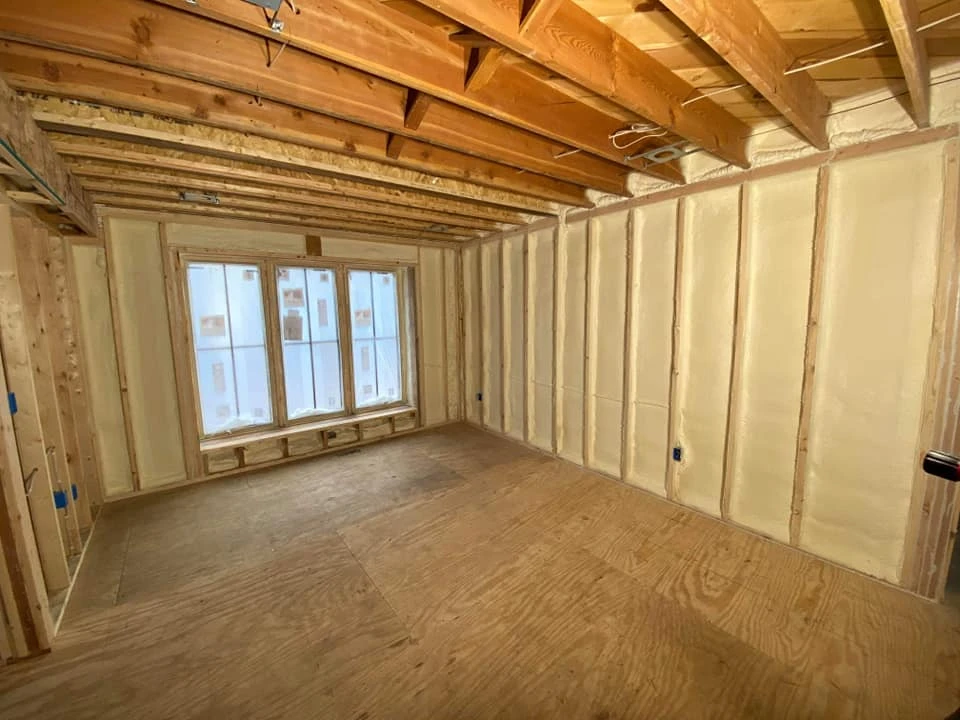
Homeowners are increasingly choosing residential spray foam insulation for humidity control because it directly combats both air leakage and vapor diffusion, the two primary ways moisture gets into a house. While many think of insulation just for temperature control, its role in creating a dry, healthy home is just as important. By creating a superior air seal and, in the case of closed-cell foam, a vapor barrier, this comprehensive approach stops condensation, prevents mold, and helps a home's HVAC system manage humidity more effectively.
How Spray Foam Blocks Moisture in Two Ways
To understand why spray foam is so effective, it's important to know the two main ways water vapor gets into a home's structure. Spray foam is unique in its ability to address both.
Stopping Moisture Carried by Air Leaks
The vast majority of moisture that enters a home's walls or attic is carried by moving air. A tiny 1-inch by 1-inch hole can allow over 30 quarts of water to pass through it in the form of vapor over a single heating season. Traditional insulation materials like fiberglass batts do little to stop this airflow, leaving countless gaps and cracks for humid air to travel through.
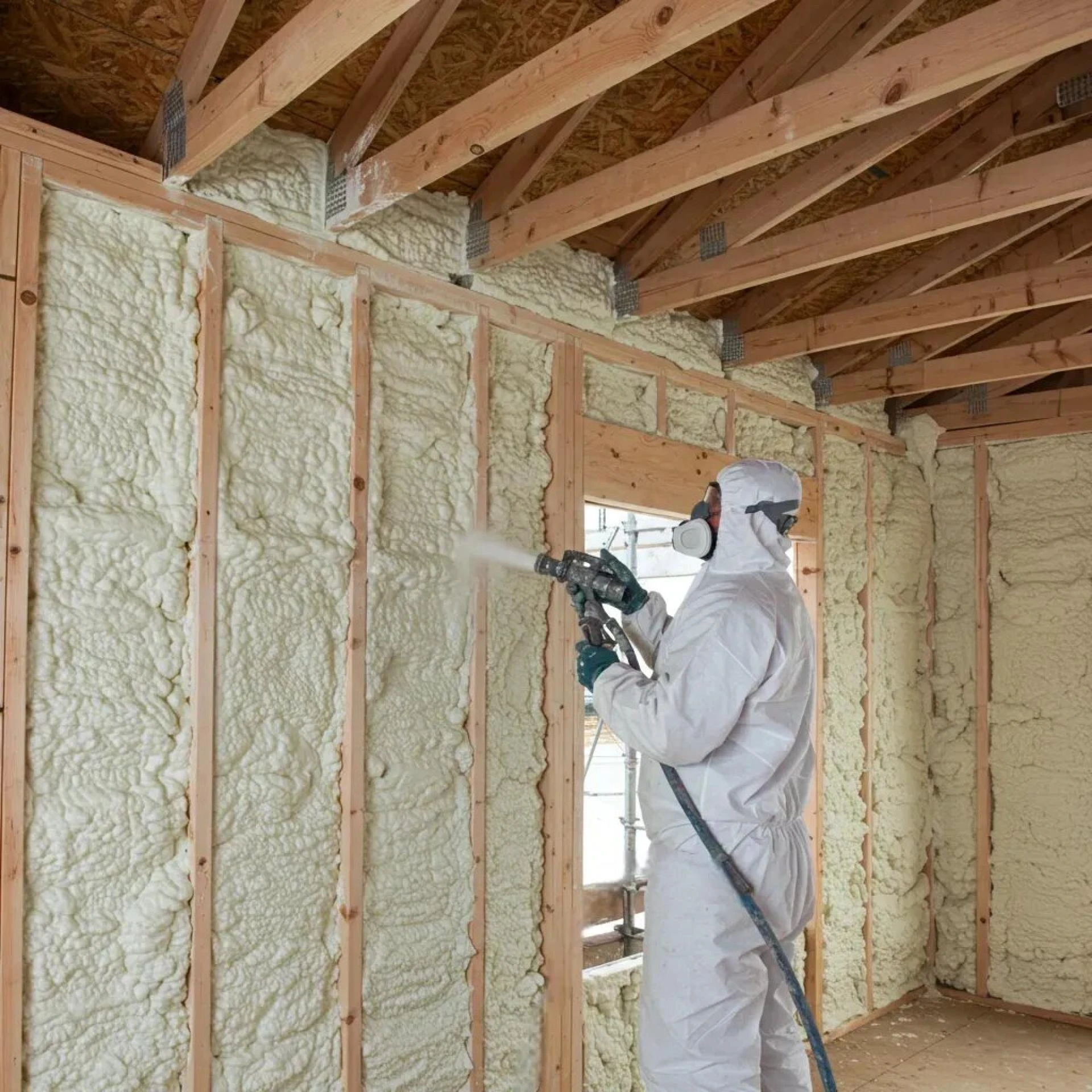
A professional spray foam insulation is applied as a liquid and expands to fill every single gap, creating a solid, airtight barrier. This stops air leakage in its tracks. By creating this seal, spray foam prevents humid summer air from getting into the home and stops warm, moist indoor air from getting into the attic or wall cavities during the winter. This air-sealing quality is the first and most powerful line of defense against humidity problems.
Blocking Moisture Through Vapor Diffusion
The second way moisture moves is through a process called vapor diffusion, where water vapor passes directly through solid materials. This is a much slower process than air leakage, but over time, it can still introduce a lot of moisture into a building assembly.
Closed-cell spray foam is a "vapor impermeable" material, meaning it functions as a vapor barrier. It has a very low perm rating, which is the measurement of how easily water vapor can pass through a material. When applied in walls or crawl spaces, it completely blocks moisture from diffusing through, keeping the building structure dry and safe.
Preventing Condensation and Mold Growth
One of the most common humidity-related problems in a home is condensation. This happens when warm, moist air comes into contact with a cold surface, causing the water vapor to turn back into liquid. This is often seen as "sweating" on windows or damp spots on ceilings.
Because spray foam has a high R-value and creates a complete air seal, it keeps the interior surfaces of a home's walls and ceilings warm. When the surface temperature stays above the "dew point," condensation simply cannot occur. This is a proactive approach that stops the problem at its source. Since mold needs moisture to grow, preventing condensation is also one of the most effective ways to prevent mold. A dry home is a healthy home.
Bonus Tip: In humid climates, crawl spaces are a major source of moisture. Encapsulating a crawl space with closed-cell spray foam on the walls and a vapor barrier on the ground is a proven method to stop this moisture from entering the rest of the house.
Because stopping this moisture is so critical, choosing the right type of spray foam for a specific area is the next step.
The Right Foam for the Right Humidity Challenge
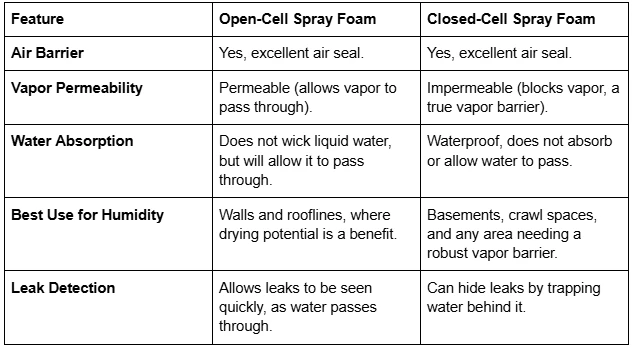
Both open-cell and closed-cell spray foam are excellent for humidity control, but they work differently and are suited for different applications.
Comparing Foam Types for Moisture Management
This table breaks down the specific moisture-handling properties of each type of foam.
Supporting Your HVAC System
A home's air conditioning system is its primary dehumidifier during the summer. By creating a super-insulated and airtight building envelope, spray foam drastically reduces the heat load on the house, allowing the HVAC system to work more efficiently. However, this high performance can sometimes cause "short-cycling" if the AC unit is oversized for the home's new, lower energy needs. The unit may cool the house so quickly that it shuts off before running long enough to remove a significant amount of humidity, leaving the air feeling cool but damp. For this reason, it's wise to have an HVAC professional perform a "Manual J" load calculation after a full spray foam retrofit to ensure the equipment is sized correctly for both temperature and humidity management.
Things to Consider Before Making a Decision
- Address Existing Leaks First: Spray foam is a powerful tool for preventing moisture problems, but it is not a solution for an active water leak from a faulty roof or foundation. Any existing water intrusion issues must be fully repaired before insulation is installed.
- Plan for Mechanical Ventilation: Because spray foam makes a home so airtight, it is essential to have a plan for mechanical ventilation, such as an energy recovery ventilator (ERV). This ensures a constant supply of fresh air, which is critical for maintaining healthy indoor air quality.
- Hire a Qualified Professional: The success of spray foam in controlling humidity is entirely dependent on the quality of the installation. An improperly installed job can actually trap moisture and create problems. Homeowners should only work with certified, experienced, and reputable contractors.
Questions People Ask About Spray Foam and Humidity
Can spray foam get rid of a musty smell in my basement or crawl space?
Yes, it is often a key part of the solution. Musty smells are caused by mold and mildew, which thrive in damp environments. By air sealing and acting as a vapor barrier, closed-cell spray foam can stop the source of the moisture, which eliminates the conditions that cause those odors.
Do I still need to run a dehumidifier if my house is insulated with spray foam?
In most cases, a properly sized HVAC system in a spray-foamed home can handle the normal humidity load. However, in very humid climates or in below-grade basements, a supplemental dehumidifier may still be beneficial to maintain optimal indoor comfort.
Is open-cell or closed-cell foam better for a humid climate?
Both can be used effectively, but they are used in different ways. Closed-cell is often preferred for foundations and crawl spaces because of its vapor barrier properties. In a "hot-humid" climate, building science professionals often use a combination of materials and strategies tailored to the specific home.
What happens if spray foam gets directly wet from a leak?
Open-cell foam will allow the water to pass through it, revealing the leak, and will then dry out without damage. Closed-cell foam is waterproof and will not be affected, but it may trap the water behind it, making the leak harder to find.
Will spray foam stop my windows from getting condensation in the winter?
It can help significantly. By reducing the overall humidity level inside the home, there is less moisture in the air to condense on cold window panes. However, window condensation is also related to the quality of the windows themselves.
Ultimately, spray foam insulation offers a robust and proactive solution to humidity problems. By addressing both airflow and vapor diffusion, it helps maintain a dry, comfortable, and healthy indoor environment, all while supporting the efficiency of a home's mechanical systems.
Getting a Professional Humidity Assessment
The most effective way to solve a home's humidity issues is to start with a professional assessment. An experienced insulation contractor can identify the sources of moisture intrusion and design a spray foam solution that is tailored to the home's specific needs and the local climate.
For homeowners, the team at a company like Supreme Spray Foam-Fresno can provide a comprehensive consultation. They can be reached by email at [email protected] or by phone at (559) 545-0800 to schedule an appointment.
Reviewer: Emma Robinson contributed her knowledge from 8 years working with the spray foam industry. Her review helped shape this content with ideas grounded in what contractors and homeowners actually value.