For the modern Western traveler, India is often a choice between the high-energy cities of the North and the serene landscapes of the South. In 2026, that choice has become clearer than ever. Kochi was recently named one of the "Top 10 Global Destinations for 2026", and its historic soul, Fort Kochi, is the primary reason why. If you are planning kerala holidays this year, this walkable, artsy enclave is no longer just a transit point—it is the destination itself.
The Cultural Hub: Where Europe Meets the Arabian Sea
Walking through Fort Kochi feels less like a standard city tour and more like wandering through an open-air museum of global history. As a former major maritime hub, this neighborhood is a fascinating patchwork of Portuguese, Dutch, and British influences. For Western visitors, there is a comforting familiarity in the colonial architecture—with its gabled roofs and pastel-colored, lime-plastered walls—yet it is seasoned with the unmistakable, vibrant soul of India. This was the first European township in India, and that legacy is visible in every cobblestone. You’ll find 500-year-old bungalows that have survived empires, many of which have been beautifully restored into boutique hotels and contemporary art galleries.
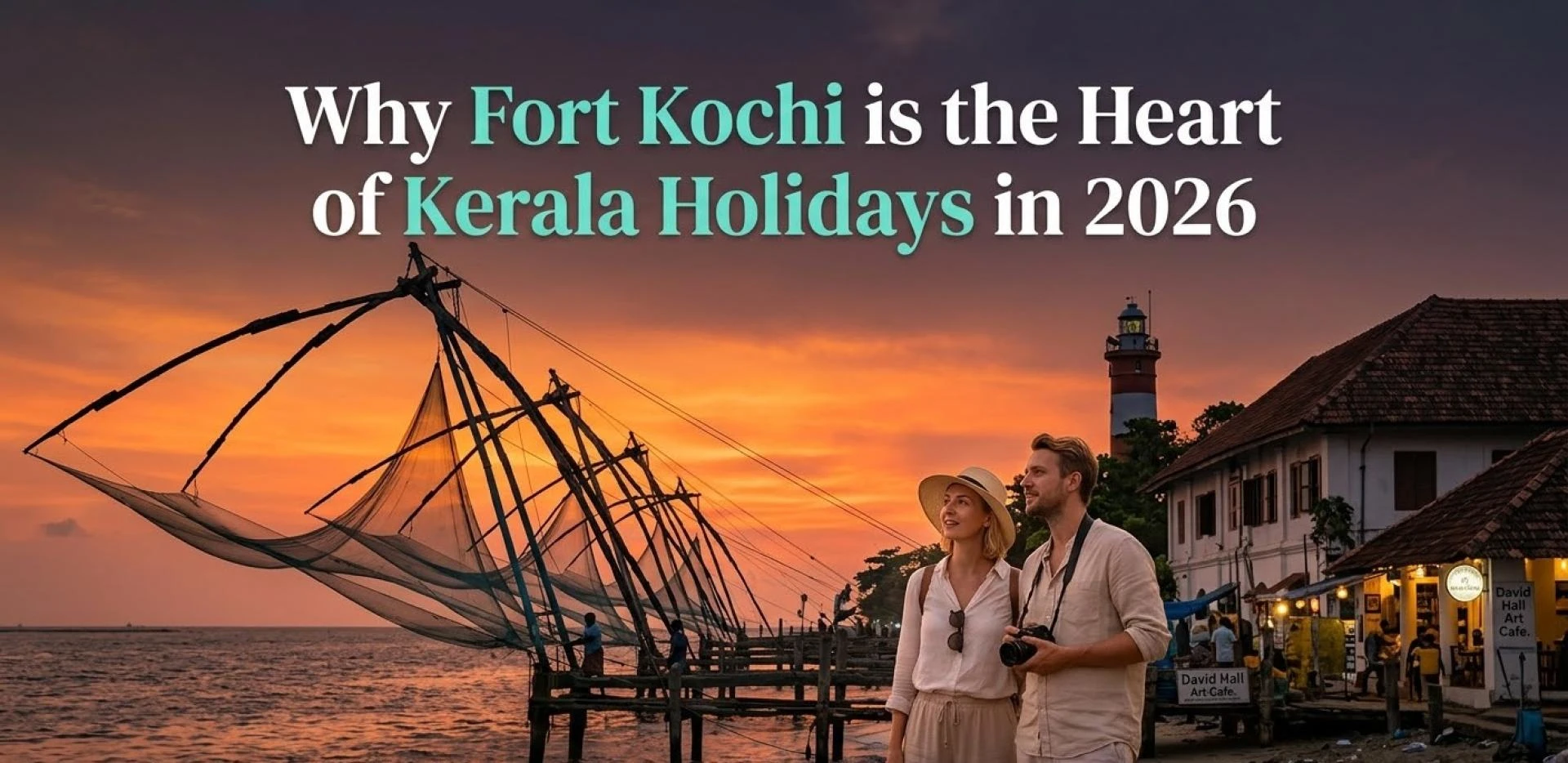
The cultural energy of 2026 is anchored by the Kochi-Muziris Biennale, running until March 31, 2026. Often called the "Venice Biennale of South Asia," this event transforms weathered colonial warehouses into world-class art spaces. Beyond the galleries, the iconic Chinese Fishing Nets offer a silent, rhythmic silhouette against the sunset—a 14th-century fishing technique that remains a living testament to the ancient spice trade. A short tuk-tuk ride away lies Jew Town, home to the 16th-century Paradesi Synagogue and aromatic markets where the scent of ginger and cardamom still fills the air. This unique intersection of ancient trade, colonial history, and modern creativity is what makes holidays to kerala India so compelling for the sophisticated traveler.
Top Things to Do in Kochi
While the history draws you in, the immersive experiences are what truly define kerala India holidays. A "must-do" is witnessing a Kathakali performance at the Kerala Kathakali Centre. We recommend arriving an hour early to observe the Chutti, or makeup process; watching actors transform into deities and demons using natural pigments is as mesmerizing as the dance-drama itself. For those who prefer active exploration, a guided cycling tour at dawn is the best way to navigate the narrow lanes of Princess Street and Burger Street before the midday heat. You’ll pass St. Francis Church—the original burial site of Vasco da Gama—and the Dutch Cemetery, capturing the quiet beauty of the town before it fully wakes.
Sustainability is a major theme for 2026, and the new Kochi Water Metro is the perfect way to experience it. These eco-friendly, air-conditioned electric boats connect the various islands of the Kochi archipelago, offering a scenic and sustainable alternative to road traffic. If you are a foodie, a traditional cooking class with a local family is essential. Learning the art of Meen Pollichathu (fish marinated in spices and grilled in banana leaves) provides a sensory connection to the land that a restaurant meal simply cannot match. Finally, leave time for "Slow Travel" in the local café scene. Iconic spots like the Kashi Art Gallery allow you to sit with a Malabar coffee, surrounded by contemporary sculptures, providing a perfect space to reflect on your journey.
Best Time to Visit Kochi (2026 Edition)
Timing is critical when planning holidays to kerala India. To get the most out of the coastal breeze and the cultural calendar, the Peak Season (October to March) is the gold standard. During these months, the weather is exceptionally dry and pleasant, with temperatures ranging from 18°C to 30°C. This window aligns perfectly with the Kochi-Muziris Biennale and the high-octane Cochin Carnival in December, where the streets erupt in music and parades. Because this is the busiest time, we recommend booking your heritage stays at least six months in advance to secure the best boutique options.
For travelers seeking a different perspective, the Monsoon Glow (June to September) offers a unique kind of magic. While there are frequent heavy showers, the landscape turns a vivid, impossible shade of emerald. This is the traditional season for Ayurvedic wellness; according to ancient Indian medicine, the body’s pores are most receptive to herbal oils during the cool, moist monsoon months. Many high-end retreats offer "Green Season" discounts, making it a great time for luxury at a lower price point. Lastly, the Summer Value (April to May) is for the heat-resilient traveler. While it is humid, the crowds vanish, allowing for a private experience of the monuments. By planning your sightseeing for the early morning and retreating to air-conditioned galleries by noon, you can enjoy a peaceful version of the city that most tourists never see.