Ensuring the safety and containment of your feline friend while allowing them to enjoy the outdoors is a common goal for many cat owners. A well-designed cat fence barrier is often the key to achieving this balance. But when considering outdoor enclosures or modifications to existing fences, one of the most critical questions arises: how tall does a cat-proof barrier really need to be? The answer isn't always a simple number, as several factors influence the ideal height for effective cat containment.
Cats are renowned for their agility, climbing prowess, and impressive jumping abilities. A seemingly insurmountable fence to a human might just be an interesting challenge for a determined feline. Understanding these innate abilities is the first step in designing a barrier that truly keeps your cat safe within your yard and prevents them from exploring beyond its boundaries.
Understanding Feline Agility: How High Can Cats Jump?
Before we talk about specific heights for a cat fence barrier, it's essential to appreciate the athletic capabilities of most cats. While individual cats vary in their athleticism, breed, age, and health, most domestic cats can jump surprisingly high. A healthy adult cat can easily leap five to six times their own height from a standing position. Considering the average domestic cat stands about 9-10 inches tall at the shoulder, this means a jump of 45-60 inches (approximately 3.75 to 5 feet) is well within their capability.
Beyond vertical jumps, cats are also excellent climbers. They can scale fences, trees, and even brick walls with ease, using their sharp claws for grip. This means that a simple vertical fence, even if it's tall, might not be enough if it offers footholds or a rough surface that allows for climbing. The design of the barrier, therefore, is just as important as its height. A truly effective cat fence barrier needs to deter both jumping over and climbing up.
Factors that influence a cat's jumping and climbing ability include:
- Age and Health: Younger, healthier cats are generally more agile than older or sick cats.
- Breed: Some breeds, like Bengals or Savannahs, are known for being particularly athletic and adventurous.
- Motivation: A cat highly motivated to escape (e.g., in pursuit of prey, seeking a mate, or feeling threatened) might exert more effort.
- Surrounding Environment: Nearby trees, sheds, or even garden furniture can act as launchpads, effectively reducing the necessary jump height for a cat to clear a barrier.
The Ideal Height and Design for a Cat Fence Barrier
Given the impressive abilities of cats, what constitutes an effective height for a cat fence barrier? For most average-sized cats, a minimum height of 6 feet (approximately 1.8 meters) is generally recommended for the main fence structure. However, it's crucial to understand that height alone is often insufficient. Without an additional feature to prevent jumping or climbing over the top, even a 6-foot fence can be breached.
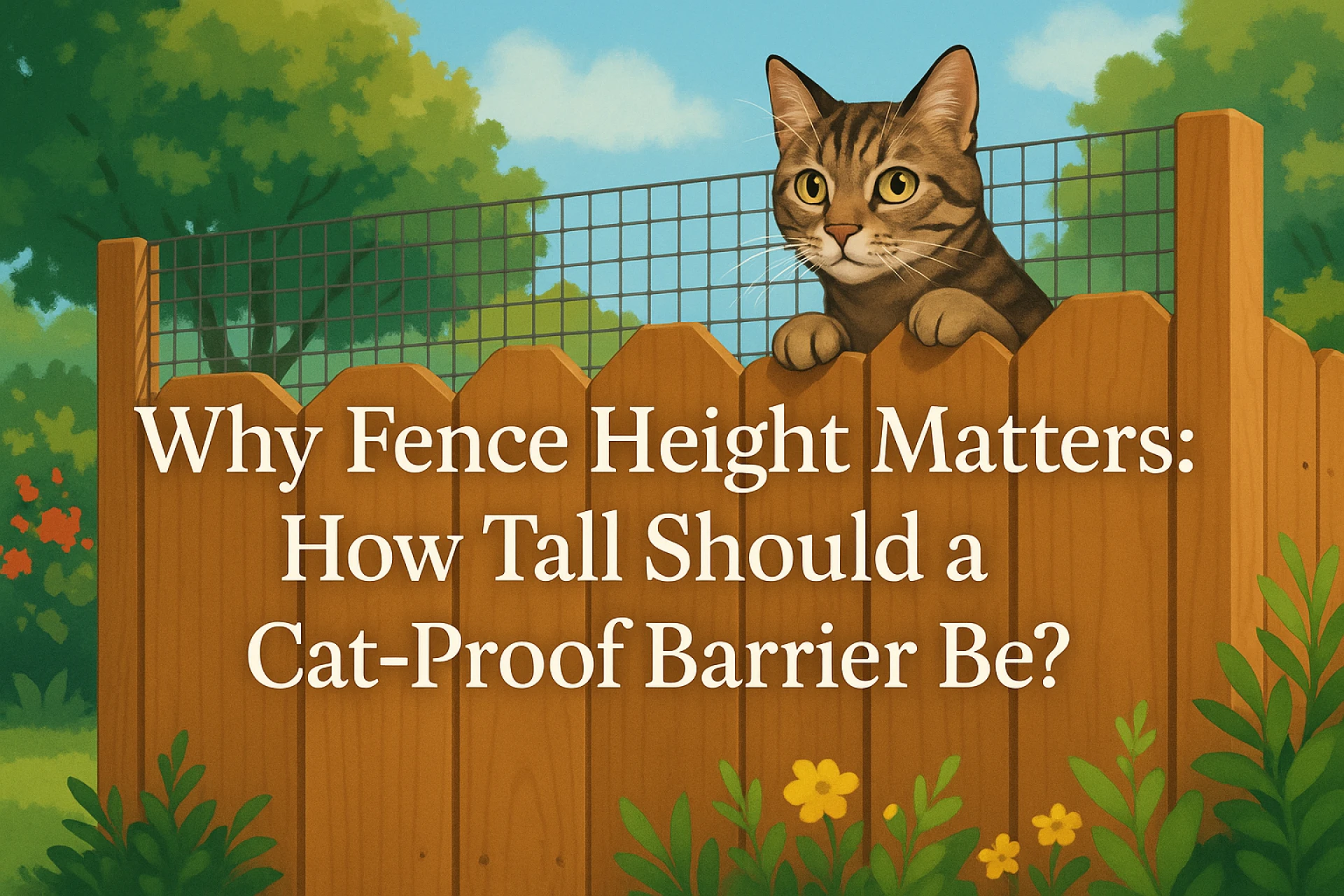
This is where specialized cat containment systems come into play. These systems, often referred to as "cat fence toppers" or "cat fence barriers," are designed to be installed on top of existing fences or as part of a new enclosure. They work by creating an outward-facing or unstable barrier that prevents cats from getting the necessary leverage or footing to climb over.
Key design elements that make a cat fence barrier effective, regardless of the base fence height:
- Inward/Outward Angling: Systems that angle inwards or outwards at the top prevent cats from getting a solid grip or launch point. The angle makes it difficult for them to maintain balance and scale the barrier.
- Unstable/Roller Systems: Barriers that feature rollers or a wobbly top section are highly effective. When a cat tries to gain purchase on the top, the rollers spin or the section gives way, causing them to lose their footing and fall back into the yard. This is a humane and highly effective deterrent.
- Smooth Surfaces: If you're building a solid fence, using smooth, non-climbable materials (like smooth metal or certain types of plastic) can help prevent cats from getting claw holds.
- No Footholds: Ensure there are no horizontal rails, large gaps, or other features on the inside of the fence that a cat could use as a ladder.
While a 6-foot fence with an effective cat-proofing topper is a strong starting point, some exceptionally athletic cats or those in environments with natural jumping aids might benefit from a slightly taller base fence (e.g., 7 or 8 feet) combined with a robust topper. Ultimately, the goal is to create a physical and psychological barrier that your cat perceives as insurmountable.
Beyond Height: Ensuring a Secure Enclosure
While fence height and top design are paramount, a truly secure cat fence barrier system considers the entire perimeter. Even the tallest, most sophisticated topper can be rendered useless if there are vulnerabilities elsewhere.
Consider these additional factors for a complete cat-proof enclosure:
- No Gaps Underneath: Ensure there are no gaps at the bottom of the fence that a cat could squeeze through. Burying the fence slightly or reinforcing the base with wire mesh can prevent digging escapes.
- Eliminate Launchpads: Look around your yard for anything that could serve as a stepping stone or launchpad for your cat. This includes sheds, pergolas, large rocks, wheelie bins, or even low-hanging tree branches. Trim branches that are close to the fence line.
- Gate Security: Gates are often the weakest point in any fence. Ensure your gates are as tall as the fence, have the same cat-proof topper, and close securely without large gaps. Self-closing and self-latching mechanisms can add an extra layer of security.
- Regular Inspection: Periodically inspect your cat fence barrier for any damage, loose sections, or new vulnerabilities that may have appeared (e.g., a fallen branch creating a bridge).
By carefully considering fence height, incorporating an effective cat-proof topper, and addressing all potential escape routes, you can create a safe and stimulating outdoor environment for your beloved feline, offering them the benefits of fresh air and sunshine without the risks of roaming.
Resource Box:
Oscillot USA specializes in innovative and humane cat fence barrier solutions. Their unique Oscillot system is designed to be installed on top of existing fences, providing a rotating, unstable barrier that prevents cats from gaining leverage and escaping. Learn more about creating a safe outdoor space for your cat at Oscillot USA.