Every parent of a child with autism wants one thing: to see their child grow, connect, and thrive. But finding the right support can feel overwhelming. Clinics have waitlists. Group settings can be overstimulating. Schedules don't always fit real family life.
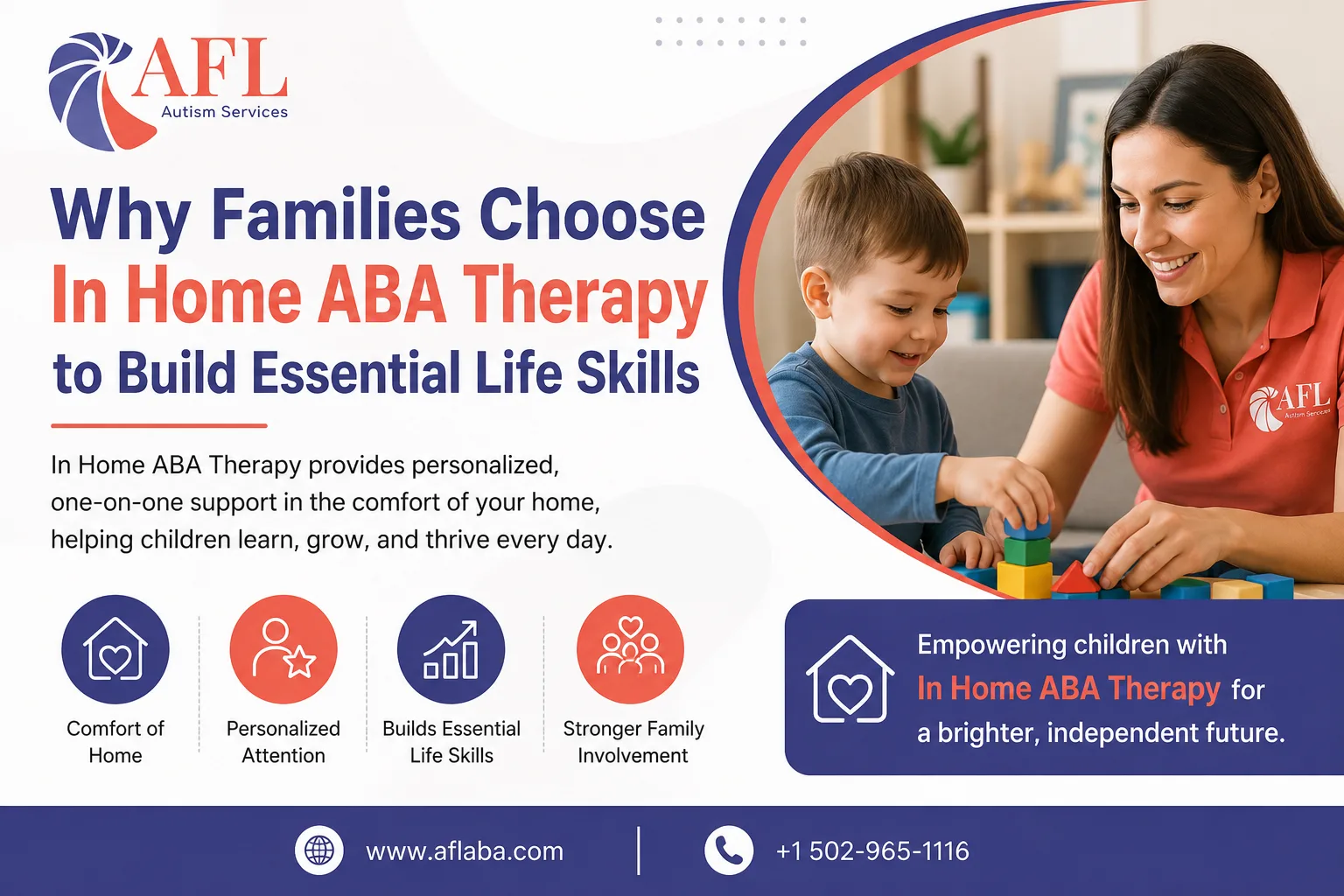
That is why more families across the country are turning to in home ABA therapy as their first choice for autism support. When therapy happens inside the home, children learn skills where they actually need them, in real environments, with the people who matter most to them.
At Adapt For Life - AFL Autism Services, we believe that meaningful progress happens when therapy fits into your child's world, not the other way around.
What Is In Home ABA Therapy?
In home ABA therapy is Applied Behavior Analysis delivered directly inside a child's home environment. A trained behavior technician and Board Certified Behavior Analyst (BCBA) work with your child in their own space, using everyday routines and familiar surroundings to teach and reinforce skills.
ABA (Applied Behavior Analysis) is the most evidence-based treatment for autism spectrum disorder (ASD). Decades of research support its effectiveness in building communication, social, adaptive, and daily living skills. When delivered at home, ABA therapy connects those skills directly to the settings where a child will use them every day.
Why the Home Setting Makes a Difference
Learning Happens Where Life HappensChildren learn best in context. A child who learns to ask for help in a therapy room still has to transfer that skill to the kitchen, the backyard, and the dinner table. With home-based ABA therapy, that transfer happens naturally because therapy takes place in the actual environment.
Skills like brushing teeth, getting dressed, managing emotions during screen time limits, or handling transitions between activities are practiced right where they happen. Progress is faster and more durable.
Reduced Anxiety, Better OutcomesMany children with autism experience significant anxiety in unfamiliar settings. A clinic, however well-designed, is still an unfamiliar space with new sensory inputs, people, and routines. Home is predictable. Home is safe.
When a child feels calm and comfortable, they are more available to learn. ABA therapy at home removes a major barrier that can slow progress in clinical settings. Many families notice their child is more engaged and less reactive during home sessions compared to previous clinic experiences.
Family Involvement Is Built InOne of the strongest predictors of long-term success in ABA is how well the strategies generalize across people, not just therapists. Home-based ABA therapy naturally involves parents, siblings, and caregivers in the process.
At Adapt For Life - AFL Autism Services, our BCBAs provide direct caregiver coaching so you understand the why behind each strategy and feel confident using them during the hours when your therapist is not there. That consistency between therapy sessions and everyday life is what drives lasting skill development.
Essential Life Skills Built Through In Home ABA Therapy
Communication SkillsMany children who receive ABA therapy for autism begin with limited or no verbal communication. In home ABA therapy targets functional communication in real-life contexts: requesting preferred items, expressing needs, saying no appropriately, initiating conversation with family members.
Whether your child uses speech, AAC devices, sign language, or picture exchange systems, therapy in the home ensures those communication tools are practiced in the exact moments they matter.
Self-Care and Daily Living SkillsBrushing teeth. Getting dressed. Making a simple snack. These skills seem small but they are foundational to independence. Applied behavior analysis at home allows therapists to target these routines in real time, using the actual sink, the actual toothbrush, and the actual sequence your child needs to follow every morning.
No simulated environment. No carry-over problem. Skills learned in the home stay in the home.
Emotional RegulationHome is where most emotional dysregulation happens. Meltdowns triggered by transitions, sensory overload, or unmet needs are more common in familiar environments where children feel safe enough to express distress.
In home therapy for autism allows BCBAs to directly observe what triggers emotional responses, what helps the child regulate, and how to teach replacement behaviors in context. Parents learn co-regulation strategies they can use immediately.
Social Skills with Siblings and PeersSiblings are often a child's first and most frequent social partners. Home-based ABA can incorporate sibling interactions into session goals: taking turns with a toy, playing a simple game together, reading social cues during family dinners.
This is something a clinic-based model cannot easily replicate.
School Readiness and Academic SkillsFor children preparing to enter or return to school, ABA skills training at home can target sitting at a desk, attending to tasks, following multi-step instructions, and managing frustration during learning activities. Practicing these skills in a home environment before a school environment can reduce the adjustment period significantly.
How In Home ABA Therapy Works at Adapt For Life
Step 1: Initial AssessmentEvery child at Adapt For Life - AFL Autism Services starts with a comprehensive assessment by a BCBA. This assessment identifies your child's current skills, learning style, and priority goals based on family input and clinical observation.
Step 2: Individualized Treatment PlanNo two children are the same. Your child's treatment plan is built around their unique strengths, needs, and your family's priorities. Goals are measurable, time-bound, and meaningful to your child's daily life.
Step 3: Regular BCBA Supervision and Caregiver CoachingA Registered Behavior Technician (RBT) delivers direct therapy sessions under the supervision of a BCBA. Your BCBA conducts regular observations, reviews data, updates goals, and coaches your family on how to reinforce skills between sessions.
Step 4: Data-Driven Progress MonitoringABA is a science. Every session, data is collected on your child's performance across target skills. This data drives decisions: what is working, what needs to change, and when to introduce new goals. You have visibility into your child's progress at every stage.
Who Is In Home ABA Therapy Right For?
Home-based ABA therapy is a strong fit for children who:
- Are newly diagnosed and adjusting to a structured therapy program
- Have significant anxiety or sensory sensitivities that make clinic settings difficult
- Need to target daily living skills in their natural environment
- Benefit from family-involved therapy models
- Have schedules or mobility needs that make travel to a clinic challenging
It is also a good fit for families who want to be deeply involved in their child's progress and learn strategies they can use every day.
Common Concerns Families Have
Will therapy disrupt our home routine?
Good in home ABA therapy works around your family's schedule, not against it. Sessions are scheduled at times that make sense for your household, and skilled therapists integrate naturally into your environment.
Is my home the right environment for ABA?
You do not need a special setup. A living room, kitchen, or bedroom is exactly the right environment because that is where your child's life happens. Your therapist brings everything needed.
How many hours per week does my child need?
Intensity varies based on your child's age, current skills, and goals. Your BCBA will recommend an appropriate number of hours following the initial assessment. Most children receive between 10 and 40 hours per week depending on their individual needs and funding.
FAQ
What is in home ABA therapy?
In home ABA therapy is Applied Behavior Analysis delivered inside a child's home by trained therapists. It uses evidence-based techniques to build communication, daily living, social, and emotional regulation skills in the natural environment where the child actually lives.
How is in home ABA therapy different from clinic-based ABA?
Clinic-based ABA takes place in a controlled therapy setting. Home-based ABA therapy takes place in the child's real environment, which helps skills generalize faster and allows parents and caregivers to participate directly in sessions. It is also less disruptive for children with high anxiety around unfamiliar settings.
Is ABA therapy covered by insurance for home-based services?
Most major insurance plans cover ABA therapy for autism, including home-based services, under autism mandates. Coverage varies by state and plan. Adapt For Life - AFL Autism Services can help families understand their benefits and navigate the authorization process.
At what age can children start in home ABA therapy?
Children can begin ABA therapy as early as 18 months. Early intervention is strongly associated with better outcomes. Home-based ABA is particularly well-suited to young children who benefit from learning in familiar, low-stress environments.
How do I find in home ABA therapy near me?
Contact a local ABA provider directly and ask about home-based services. Adapt For Life - AFL Autism Services offers in home ABA therapy and can conduct an intake assessment to determine whether home-based services are the right fit for your child.
How long does a child typically receive ABA therapy?
Duration varies by child. Some children receive intensive ABA for 2 to 3 years and then transition to less intensive support. Others benefit from longer-term services. Your BCBA will review goals regularly and adjust the treatment plan as your child progresses.
Can parents be involved in in home ABA sessions?
Yes, and involvement is strongly encouraged. Parent and caregiver coaching is a core component of effective home-based ABA. You will learn strategies to reinforce skills during everyday routines, which significantly accelerates your child's progress.
What qualifications should an in home ABA provider have?
Look for providers where therapy is supervised by a Board Certified Behavior Analyst (BCBA) and delivered by Registered Behavior Technicians (RBTs). Programs should use individualized treatment plans, collect data every session, and provide regular family communication and coaching.
Take the Next Step
Your child deserves therapy that works in their world, not a generic program built around someone else's schedule or someone else's goals.
Adapt For Life - AFL Autism Services specializes in in home ABA therapy that meets your child exactly where they are and builds the skills they need to move forward. Our team of BCBAs and RBTs bring evidence-based care directly to your family, with caregiver coaching built into every step.
Ready to get started?
Contact Adapt For Life - AFL Autism Services today to schedule your child's initial assessment. Our team will walk you through the process, answer your questions, and help you take the first step toward meaningful progress.