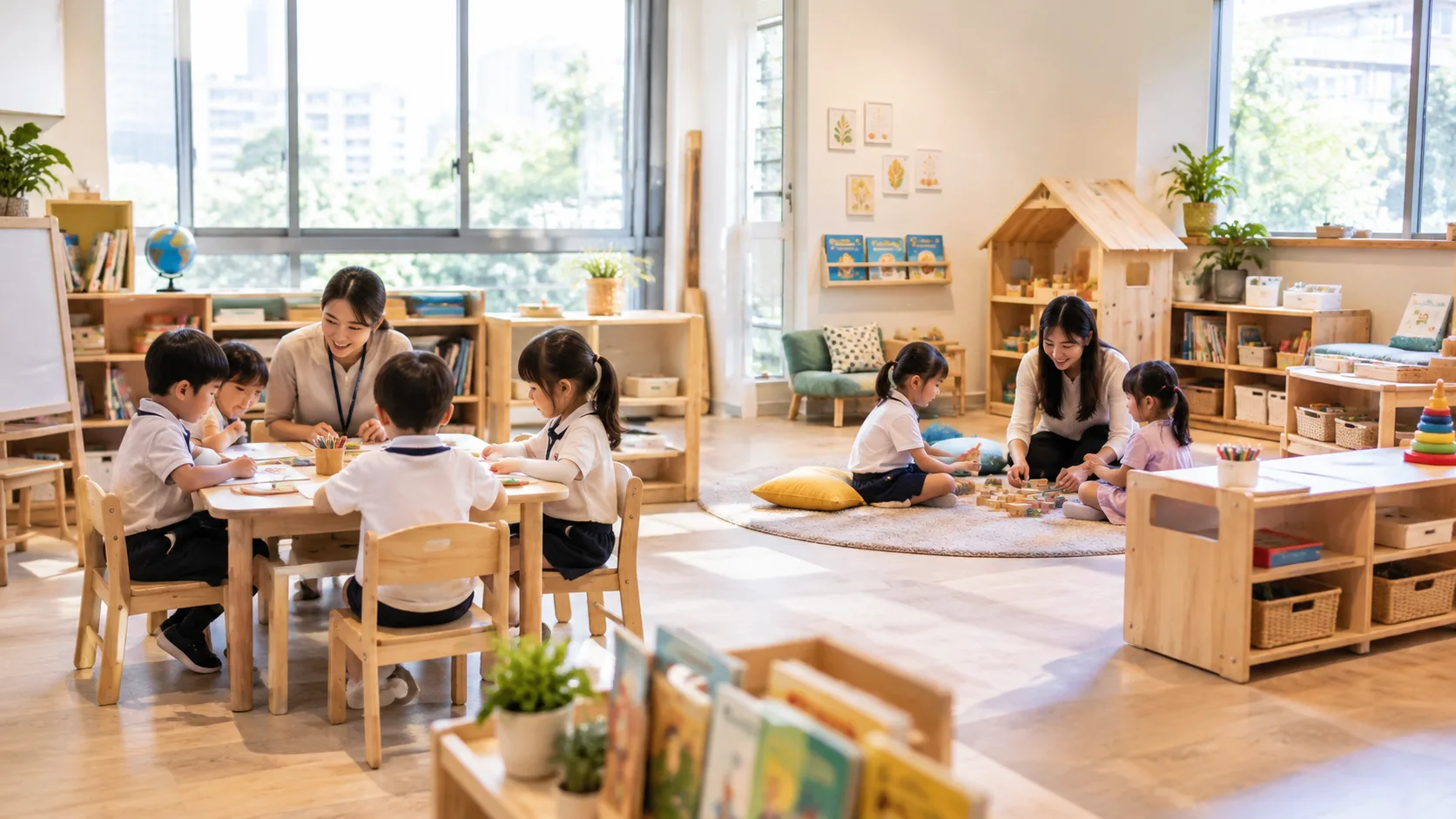
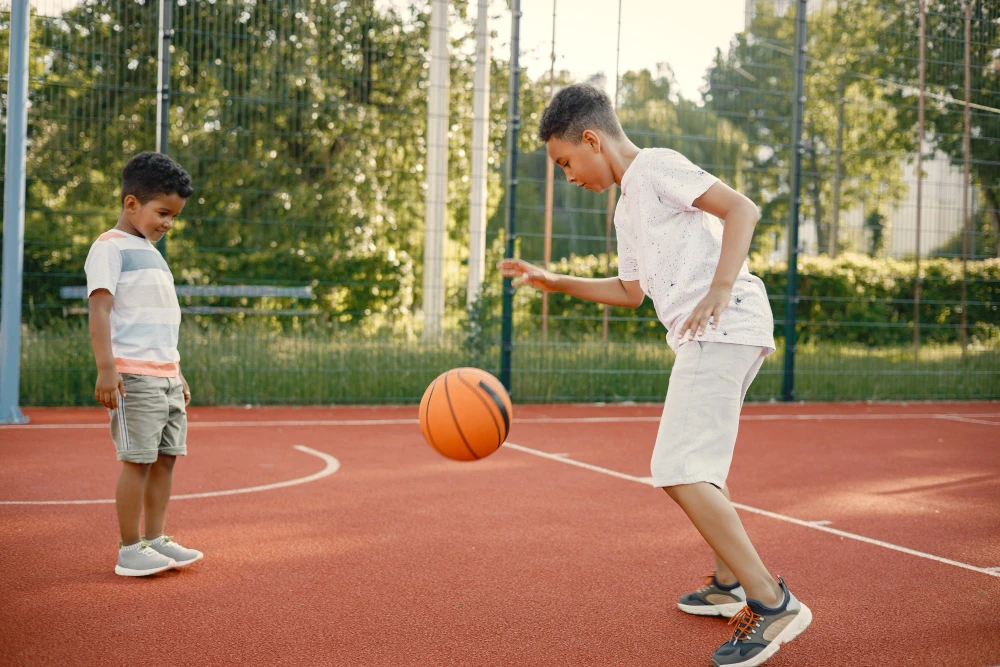
If you ask any child what their favourite part of the school day is, almost every single one of them will say the same thing. They will not say mathematics class or English period. They will say recess. They will say the time they get to go outside. And honestly, as adults, if we think back to our own school days, most of our happiest memories are also from outside the classroom. There is something about the open air, the open space and the freedom to move that children are naturally drawn to and that feeling is not just about fun. It is about something much deeper and much more important for their growth.
Today I want to talk to you about outdoor activities and why they matter so much for your child's overall development. Not just their physical health but their mind, their confidence, their friendships and their future.
The Simple Truth About How Children Learn Best
Here is something that every parent quietly knows but rarely hears said out loud. Children do not learn best by sitting still. They learn by doing, by exploring, by moving and by experiencing the world with all their senses. A child who touches the soil in a garden learns something about nature that no diagram in a textbook can fully explain. A child who works with a group of friends to complete an outdoor challenge learns about teamwork in a way that no classroom discussion can replicate.
Outdoor activities connect children to real learning in the most natural way possible. When a child goes on a nature walk they start asking questions on their own without anyone telling them to. They notice a bird and want to know its name. They see a plant and wonder why its leaves are shaped a certain way. This kind of self driven curiosity is the foundation of genuine intelligence and it blooms most naturally outside the four walls of a classroom.
Schools that include regular outdoor activities in their schedule are not taking time away from education. They are actually deepening it in ways that will stay with children far longer than anything written on a blackboard.
What Outdoor Time Does for a Child's Mind and Mood
Let me ask you something. Have you ever noticed how your child behaves after they have spent an afternoon outside playing compared to an afternoon spent indoors in front of a screen? Most parents who think about this honestly will tell you the same thing. The child who played outside is calmer, happier, more talkative and more ready to sit down for dinner and homework. The child who spent hours on a screen is often irritable, restless and difficult to settle.
This is not a coincidence. Spending time outdoors has a very real and very powerful effect on the mood and mental state of children. Natural light, fresh air and physical movement all work together to lift a child's mood, reduce their anxiety and help their brain function better. Children today carry a surprising amount of stress. Exam pressure, social comparisons and the constant noise of a digital world weigh on them more than we sometimes realise. Outdoor activities give their minds a genuine rest and a reset that nothing else can quite provide.
If you are searching for the best CBSE school in Narnaul for your child, one of the most telling things you can observe when you visit a school is how much outdoor time children actually get and how alive and happy they look when they are outside.
Outdoor Activities and the Skills That Shape a Child's Character
Some of the most important qualities a human being can have are not taught in classrooms. They are built through experience. Qualities like resilience, patience, leadership, empathy and the ability to handle failure with grace are all things that children develop most naturally through the kind of unstructured, real world experiences that outdoor activities provide.
When a child falls while climbing and gets back up they learn something about themselves that no teacher could have told them. When a team loses an outdoor game and the children have to shake hands and walk away with their heads held high, they are practising one of the hardest and most important life skills there is. When a quieter child suddenly steps up and guides their group through a challenge outdoors they discover a side of themselves that may have stayed hidden inside a classroom forever.
These moments of discovery and growth happen naturally and regularly in outdoor settings and they quietly build the kind of character that makes a child not just a good student but a good human being.
The Growing Problem of Screens and Why the Outdoors is the Answer
There is no point pretending that screens are not a part of our children's lives because they absolutely are. Phones, tablets, televisions and computers are everywhere and children are spending more time on them every year. As parents we worry about this and we are right to worry because the effects of too much screen time on children are very real. Poor sleep, weak eyesight, reduced attention span, social withdrawal and increased anxiety are all things that too much screen time contributes to.
Outdoor activities are not just a nice alternative to screens. They are genuinely the best antidote to all the things that too much screen time does to a child. When a child is outside they are using their body, engaging with real people and experiencing real textures, sounds and sensations. Their eyes are focused on things at a natural distance rather than a bright screen held inches from their face. Their mind is engaged with real problems rather than passive entertainment.
School should actively creates opportunities for children to step away from screens and step into the outdoors because they understands that protecting a child's attention and wellbeing is just as much a part of their job as teaching them mathematics.
How Outdoor Activities Bring Children Together
One of the most beautiful things about outdoor activities is what they do to friendships. Inside a classroom children sit in assigned seats, follow a structured schedule and interact in fairly controlled ways. But outside, something different happens. The structure loosens, children choose how to engage with each other and real friendships begin to form in a much more natural and genuine way.
When children play together outside they learn to negotiate, to include others, to manage small conflicts on their own and to celebrate together. They learn to read each other's moods and to adjust how they behave based on how others around them are feeling. These are the foundations of emotional intelligence and children develop them most naturally when they are outside together without too much adult intervention.
Children who have strong friendships at school are also more motivated to come to school, more happy during the day and more emotionally settled at home in the evenings. Outdoor activities are one of the most effective ways a school can nurture those friendships and by extension the overall happiness of every child in their care.
What You As a Parent Can Do Right Now
You do not have to wait for the perfect school or the perfect circumstances to give your child the benefits of outdoor activity. There are small and simple things you can start doing right now that will make a real difference in your child's life.
Make it a rule in your home that every day your child spends some time outside. It does not have to be organised or structured. It can be as simple as a walk around the neighbourhood, playing in the garden or joining a few friends for an informal game in an open area. The important thing is that they are outside, they are moving and they are away from screens for that time.
When you are choosing a school for your child, give real weight to the outdoor facilities and the outdoor culture of that school. Visit in person and notice whether children look happy and active outside. Ask about the sports facilities, the playground, the nature spaces and how much time is dedicated to outdoor learning every day. The best school in Narnaul will be the one where outdoor activity is treated as a genuine priority and not as an afterthought.
And most importantly, when your child asks you if they can go outside to play, try to say yes as often as you possibly can. That one small yes, repeated day after day, adds up to a childhood full of health, confidence, friendships and joy. And that is honestly the best gift any parent can give.