
In the modern digital age, our homes and commercial buildings in Thailand are increasingly reliant on sensitive electronic equipment—from smart home systems and high-efficiency air conditioners to complex industrial controls and IT servers. This reliance means that the electrical systems powering these devices must be cleaner and more stable than ever before. However, the tropical environment of Southeast Asia, characterized by intense monsoon seasons and frequent lightning activity, presents a constant threat to electrical stability: voltage surges.
A voltage surge, or transient overvoltage, is a sudden, massive spike in electrical potential that lasts for only a few microseconds, but carries enough energy to instantly destroy or severely damage unprotected electronics. Protecting against these rapid energy spikes requires a dedicated defense mechanism, which is why a surge protector is not a luxury, but an essential component for every modern building. Ignoring this defense system invites costly equipment failure, data loss, and unnecessary maintenance headaches, particularly in a region where electrical transients are a common occurrence.
1. Understanding the Threat: The Sources of Surges
Voltage surges are defined by their speed and intensity. They are classified into two main categories based on their origin: external (lightning) and internal (switching events).
External Surges: Lightning Strikes
Lightning is the most destructive and well-known source of surges, and Thailand's storm seasons make this a highly relevant threat.
- Direct Strikes: While rare, a direct lightning strike to a building or power line connection near the property delivers massive amounts of energy (often measured in hundreds of thousands of Amperes) that overwhelm almost all electrical components.
- Indirect Strikes (Coupling): Far more common is an indirect strike where lightning hits the ground or an adjacent utility pole. The intense electromagnetic field generated by the strike couples onto nearby electrical and data lines, inducing a high-voltage surge that travels into the building. These surges are powerful enough to damage electronic circuits hundreds of meters away from the strike point.
Internal Surges: The Hidden Danger
The majority (around 80 percent) of damaging surges originate inside the building itself. These are typically lower in magnitude but occur far more frequently, causing cumulative damage over time.
- Motor and Compressor Switching: Large electrical loads with inductive components, such as air conditioning compressors, refrigerators, elevators, or heavy machinery (common in commercial buildings), create momentary voltage spikes every time they switch off. This happens dozens or even hundreds of times a day.
- Transformer Switching: Utility companies performing routine switching operations on nearby transformers can also induce transients that travel into the building. Over time, these daily internal and external transients degrade the sensitive microprocessors and circuit boards of modern electronics, leading to premature failure.
2. The Solution: How a Surge Protector Works
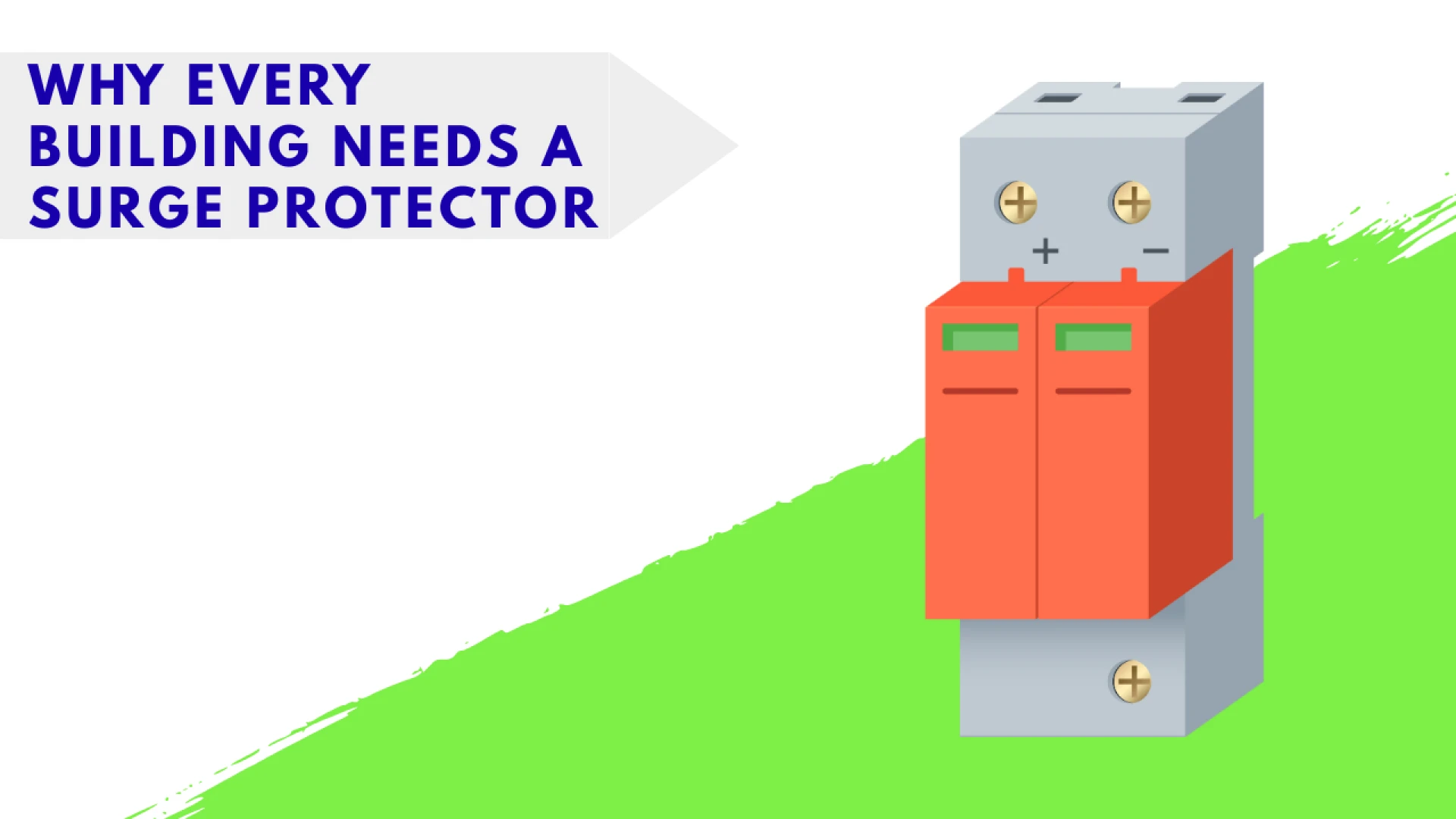
A Surge Protector, formally known as a Surge Protective Device (SPD), is designed to divert the dangerous excess voltage away from the equipment and safely into the ground (earth) wire.
The Metal Oxide Varistor (MOV)
The core technology in most SPDs is the Metal Oxide Varistor (MOV). This component acts as a pressure relief valve for electricity.
- High Impedance in Normal State: Under normal operating conditions (220 Volts), the MOV has extremely high impedance (resistance), acting like an open circuit. It allows virtually no current to flow through it.
- Low Impedance in Surge State: When a surge occurs, and the voltage suddenly spikes (e.g., above 330 Volts), the MOV's internal structure changes instantly. Its impedance collapses to near zero, effectively becoming a short circuit for the excess energy.
- Diverting the Surge: The MOV shunts the massive surge current away from the protected equipment and safely to the ground wire. Once the transient voltage spike has passed, the MOV's impedance immediately returns to its high-resistance state, allowing the normal 220 Volt power to continue flowing.
Key SPD Ratings and Terminology
When selecting an SPD, two ratings are most critical for ensuring adequate protection:
- Maximum Continuous Operating Voltage (MCOV): This is the maximum AC voltage the SPD can withstand continuously without degrading or failing. It must be well above the normal 220 Volt line voltage.
- Nominal Discharge Current (In): This specifies the magnitude of surge current (measured in kiloamperes, kA) that the SPD can withstand and divert multiple times. For main panel protection, a high 20 kA or 40 kA rating is often recommended.
- Voltage Protection Rating (VPR): This is the measured voltage that the SPD allows through to the equipment during a surge event. A lower VPR (e.g., 600 Volts) indicates better protection, as less excess voltage makes it to the connected devices.
3. Tiered Protection: The Multi-Layer Defense Strategy
Relying on a single line of defense is insufficient for critical equipment. A comprehensive strategy employs tiered protection to suppress surges as they enter the system.
Tier 1: Service Entrance (Main Panel SPD)
This is the first and most critical line of defense for the entire building.
- Location: Installed at the main electrical distribution board (DB) or load center, where the utility power enters the building.
- Function: This high-capacity SPD is designed to handle the largest external surges (lightning and utility transients). It reduces the initial surge from tens of thousands of Amperes to a manageable few thousand Amperes, preventing catastrophic damage to the main wiring and circuit breakers. This is mandatory for protecting sensitive equipment in large Thai commercial and industrial facilities.
Tier 2: Distribution Panels (Sub-Panels)
This tier provides localized protection for specific wings or floors within a large building.
- Location: Installed at sub-distribution panels feeding sensitive areas like an IT server room or a hospital wing.
- Function: It clamps down any residual surge energy that passed the Tier 1 protector, reducing the transient further before it reaches the end devices.
Tier 3: Point-of-Use Protection
These are the final line of defense, typically used for the most valuable and sensitive individual devices.
- Location: These are the familiar surge protector power strips or dedicated wall outlets where equipment like computers, televisions, and audio systems are plugged in.
- Function: They provide the final clamping action right at the equipment terminals. While essential, these devices have a limited diversion capacity and should always be used downstream of Tier 1 and Tier 2 protection.
4. Why Protection is Crucial in the Thai Context
The environmental and usage factors in Thailand make robust surge protection a necessity rather than an optional feature.
High Lightning Density
Thailand experiences some of the highest lightning flash densities in the world, particularly during the rainy season (monsoon).
- Increased Risk: This significantly increases the frequency of indirect strikes and utility line transients, putting all connected electronics at risk throughout the year. High-quality, high-kA rated SPDs are essential to withstand these frequent, intense events.
Protecting Inverter Technology
Modern Thai homes and businesses rely heavily on energy-efficient inverter-based equipment.
- Vulnerability: Variable Refrigerant Flow (VRF) air conditioners, inverter drives for water pumps, and modern appliance motors use complex electronic control boards (PCBs). These microprocessors and control circuits are highly vulnerable to voltage spikes. A single surge event can instantly destroy the expensive main PCB of an inverter AC unit, leading to high repair costs. Surge protection is the only cost-effective insurance against this type of failure.
Data Integrity and Business Continuity
For commercial hubs like Bangkok, continuous operation is directly linked to profitability and reputation.
- Server and Data Loss: In data centers, banks, and manufacturing floors, a power surge can corrupt data, crash servers, or halt production processes. The cost of downtime for critical Thai businesses far outweighs the cost of installing comprehensive, multi-tiered surge protection.
The Cost of Prevention vs. Repair
A reliable surge protector is the necessary investment that safeguards the valuable electronic components and continuity of operation of any modern building, particularly within the climatically challenging environment of Thailand. By implementing a tiered protection strategy—starting with a high-capacity SPD at the main service entrance, and supplementing it with localized protection—homeowners and facility managers can effectively divert the constant threat of lightning-induced and internally generated voltage transients. Protecting your building is about more than just preserving hardware; it is about preserving data integrity, minimizing costly downtime, and ensuring the long-term reliability of your entire electrical infrastructure.
FAQs
What is the difference between a surge protector and a circuit breaker?
A Circuit Breaker protects against sustained overcurrent (overload and short circuit), which can cause fires by overheating wires. A Surge Protector (SPD) protects against transient overvoltage (brief, massive spikes in voltage) that destroy sensitive electronics. Both are essential, but they protect against entirely different electrical threats.
Do I still need a UPS if I have a main panel surge protector?
Yes, you need both. A main panel surge protector handles voltage spikes. A UPS (Uninterruptible Power Supply) handles sustained power loss (outages) and voltage sags/dips. The UPS cleans power and provides battery backup; the SPD provides instantaneous surge diversion. They perform two separate, necessary functions to ensure stable power.
How often should a main panel SPD be replaced?
A quality main panel SPD does not typically need periodic replacement under normal conditions. However, its effectiveness relies on its MOVs. If the building sustains a major event, like a direct or near-direct lightning strike, the SPD should be inspected immediately. Most modern SPDs feature a visual indicator (usually an LED light) that shows if the protection components are still active. If the indicator light is off, the unit has likely sacrificed itself to absorb a surge and must be replaced.
Why is surge protection also needed on data and telephone lines?
Surges often enter a building not only through the main AC power lines but also through data communication cables (e.g., Ethernet, telephone, cable TV lines). These lines also carry conductors that can pick up induced voltage spikes. For complete protection of connected equipment (like routers, modems, and surveillance systems), a dedicated data line SPD must be used to divert surges from these communication lines to the ground as well.