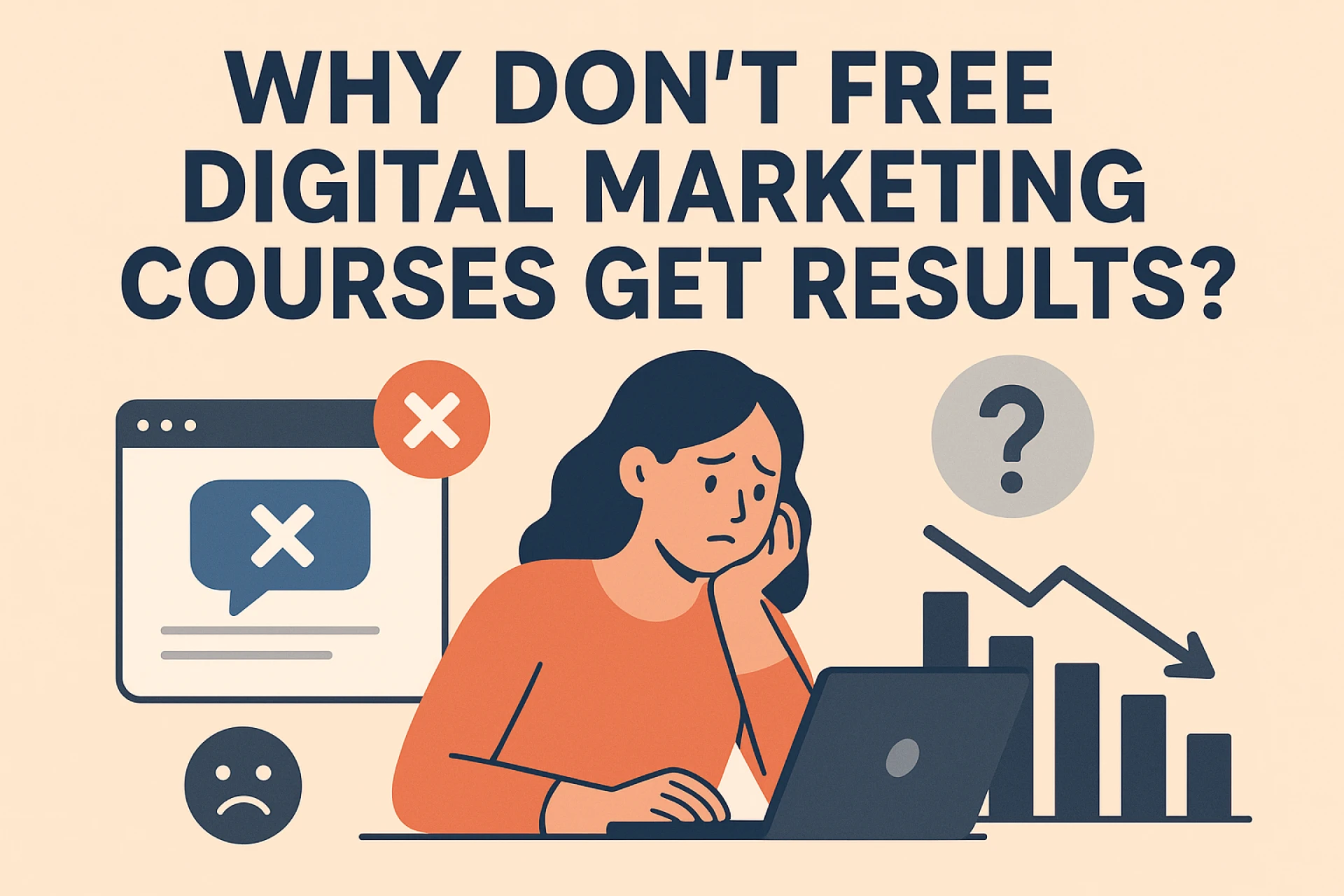
Free digital marketing courses have become extremely popular, especially among beginners who want to start learning without spending money. While these resources seem convenient, they usually fail to deliver real growth. Most learners realize this when they compare their progress with students from structured programs like the best digital marketing course in Surat, where guided training, assignments, feedback, and practical exposure accelerate skill development from day one.
The major issue is that free content provides only basic knowledge, not industry-ready capabilities. Today’s market demands practical experience, hands-on tools, AI integration, and strategic thinking—elements that free digital marketing courses rarely offer.
As a result, students who depend solely on free videos or tutorials often struggle to get clarity, confidence, or long-term career results.
Free Courses Only Teach Theory, Not Real Execution
Most free digital marketing courses focus on surface-level theory rather than real project work. Learners may understand what SEO, content strategy, or social media marketing mean, but they never learn how to execute them professionally.
This becomes a problem when they apply for jobs or internships. Recruiters expect candidates to know how to run campaigns, use analytics tools, build reports, and optimize content. Free resources do not provide live tools, campaign dashboards, or guided practice, leaving students underprepared.
Since marketing is a performance-based field, only those who can apply concepts get hired quickly. Free courses leave a gap between what learners know and what they can actually do.
Lack of AI Integration Makes Learning Outdated
AI in digital marketing is now one of the most in-demand skill sets. Companies use AI tools for content creation, ad optimization, audience targeting, predictive analytics, keyword research, and personalization.
However, most free digital marketing courses do not cover AI tools at all, or they teach outdated methods that no longer match current industry standards. Without AI-driven learning, students fall behind quickly.
Modern marketers must understand ChatGPT, Gemini, Jasper, Canva AI, SurferSEO, automation tools, and more. Free lessons do not go deep into these topics, leaving learners confused when compared to students who train with proper AI-based modules.
Free Courses Do Not Provide Structured Roadmaps
Another major reason free digital marketing courses fail is the lack of step-by-step progression. Learners jump from one random video to another without understanding what to study first and how lessons are connected.
Digital marketing requires a learning path such as:
– Basics → Strategy → Tools → Execution → Analytics → Reporting → Portfolio Building
Free content ignores this structure. Without guidance, students miss important topics, skip advanced concepts, and struggle to complete their learning journey. This incomplete knowledge leads to slow career growth and weak confidence.
No Mentorship or Feedback Slows Down Growth
Real skill improvement only happens when learners receive feedback on their work. Free digital marketing courses cannot provide assignments, evaluations, or personalized guidance. Students don’t know whether they are doing tasks correctly or making mistakes.
This leads to:
– Slow learning
– Repeated errors
– Weak technical skills
– No portfolio development
Institutes like ASDM are known for offering mentorship, live projects, and guided practice, which help students identify gaps and improve quickly. Free courses simply cannot match that level of professional training.
Lack of Practical Tools and Campaign Access
A major limitation of free content is that it does not provide access to:
– Google Ads dashboards
– Meta Ads Manager
– SEO tools
– Email automation software
– AI-driven marketing systems
Without using these tools, students cannot understand how real digital marketing campaigns work. The industry expects hands-on experience, not just theory. Free courses usually explain only concepts, not application.
This becomes a big drawback when beginners try to freelance or apply for jobs because practical exposure is the first thing companies look for.
Real Career Growth Requires Professional Guidance
Students who complete structured training often learn essential practical skills that free content completely ignores. This is why many learners explore how industry-trained students grow, especially after seeing real progress in others. In the middle stage of learning, many discover Top Skills Learned by ASDM Students That Boosted Their Careers, which helps them understand why guided programs produce better results than free videos.
Professional courses provide clarity through:
– Mentorship
– Assignments
– Real campaigns
– Strategy-building sessions
– Interview preparation
These elements make a huge difference when learners start applying for roles in SEO, social media marketing, performance marketing, and content strategy.
Free courses simply cannot offer this depth or support.
Free Courses Do Not Build Confidence for Real Jobs
The biggest complaint beginners have after watching free digital marketing content is that they still feel unsure when working on projects. They may know concepts but lack the confidence to execute them.
Confidence comes from:
– Practice
– Mistake correction
– Industry tools
– Regular tests
– Expert evaluations
Since free courses do not provide these, learners struggle during interviews and practical tasks. Confidence cannot be developed with theory alone.
No Placement Support or Career Guidance
Even after learning the basics, students need help with:
– Portfolio development
– Resume building
– Interview preparation
– Choosing a specialization
– Finding freelance clients
Free digital marketing courses do not offer placement support or mentorship. This leaves learners on their own, unsure of what to do next. Structured courses provide career teams, mock interviews, and job assistance, which is essential for fresher-level candidates.
Why Paid Courses Outperform Free Digital Marketing Courses
Paid programs offer a complete learning experience with certification, mentors, tools, and projects, while free courses only offer fragmented information. The difference becomes clear when students start applying for jobs—companies immediately prefer trained candidates because they require less additional training.
This becomes even more important in competitive cities, where opportunities are growing fast. Students often explore digital marketing classes in Surat to gain structured learning and hands-on guidance that free content lacks.
How Practical Learning Improves Job Results
Digital marketing is a skills-based field. Employers expect candidates to show real results such as:
– Improved website traffic
– Higher conversions
– Social media growth
– Ad ROI improvement
– Content performance insights
Free courses do not train students to track, analyze, or improve these metrics. Practical programs involve real businesses, campaigns, and tools, making students job-ready. This is why structured training consistently delivers better outcomes.
AI Tools Make Paid Courses More Relevant
AI-focused modules give learners real competitive advantage. When students use advanced tools during training, they build stronger portfolios and complete tasks faster. Free courses rarely offer this because AI tools require premium access and expert explanation.
Institutes like ASDM integrate AI-driven marketing tools in their syllabus to prepare students for the future. This ensures students stay relevant even as the industry evolves.
Final Thoughts
Free digital marketing courses are useful for basic awareness, but they cannot replace structured learning, practical projects, or personalized mentoring.
Students who want real career growth need hands-on training, a clear learning path, and expert guidance to succeed.