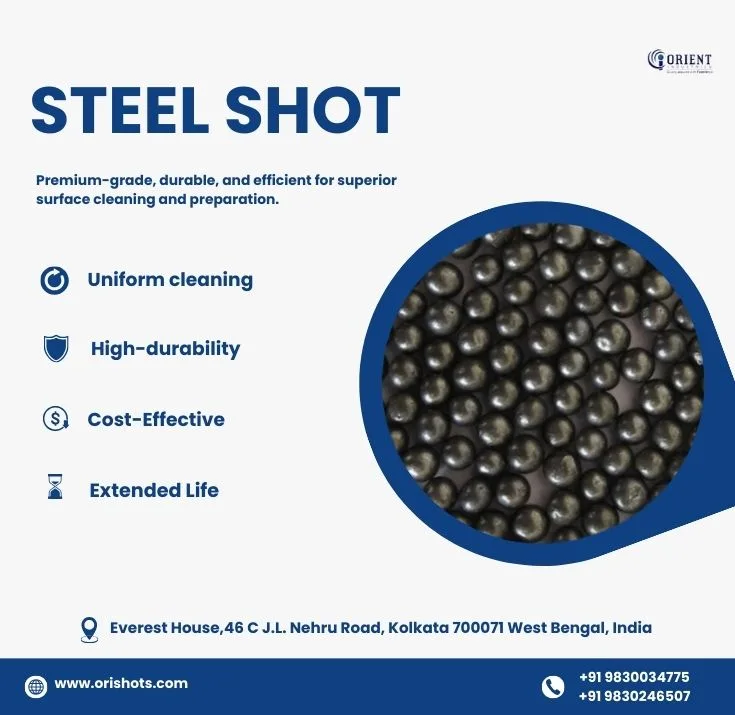
Ask three suppliers for a quote on the same grade of steel shot, and you'll probably get three different numbers back. Not slightly different — sometimes noticeably so, enough to make a buyer wonder if they're even comparing the same product.
This happens more often than people expect, and it's rarely random. There's usually a clear reason behind why steel shot price shifts from one supplier to the next, even when the specification sheet looks identical on paper.
Orient has fielded this question more times than most suppliers probably admit — buyers comparing quotes side by side, confused about why one number is so much higher than another for what looks like the same material. Once you understand what's actually driving that gap, the confusion tends to clear up fast.
What Actually Moves Steel Shot Price From One Supplier to Another?
Steel shot isn't as uniform as some buyers assume. Hardness, size distribution, and durability all vary between suppliers, and every one of those factors feeds directly into steel shot price. A softer, cheaper shot might look identical in a catalogue, but if it wears down faster in actual use, the real cost of blasting goes up even if the price per kilogram looked attractive initially.
Raw steel and scrap prices move constantly too, and manufacturers rarely absorb that volatility quietly. When input costs climb, steel shot price tends to follow within a quarter or two, sometimes faster if the shift is sharp enough. Orient keeps a close watch on these changes because fluctuations in raw material costs can eventually affect what buyers pay.
Raw Material and Manufacturing Behind Cast Steel Shot
Not all steel shot is made the same way, and this is where a lot of the price gap actually starts. Cast steel shot goes through a controlled melting and casting process, with hardness and consistency depending heavily on how carefully that process is managed. That process costs more to run — from the melting equipment and quality checks to the material rejected before it reaches a customer.
● Higher-grade cast steel shot holds its shape and hardness longer under repeated impact
● Poor-quality shot breaks down into dust faster, meaning more frequent reordering
● Consistency between batches matters more than people realise until it's missing
Buyers who've dealt with inconsistent batches of cast steel shot tend to understand fairly quickly why paying a bit more upfront usually works out cheaper over time. Orient treats this consistency as an important part of product quality, particularly for buyers who need predictable performance across repeated blasting jobs.
The difference may seem small on a single job, but it becomes easier to notice over time. If a material wears out faster or requires more frequent replacement, the initial saving starts to lose its value. For businesses using steel shot regularly, that can make a noticeable difference to the overall blasting cost.
Why Steel Shot Blasting Requirements Affect What You Pay?
Not every blasting job needs the same shot, and that's often where confusion creeps in. Heavy-duty steel shot blasting on thick industrial components needs a harder, more durable shot than lighter surface cleaning work. Buying the wrong grade doesn't just waste money — it can actually damage the surface being treated or wear out equipment faster than expected.
● Thick industrial components typically need harder, more impact-resistant shot
● Lighter surface cleaning work can often use a softer, more economical grade
● Choosing the wrong shot grade can increase equipment wear before the extra cost becomes obvious on the invoice
Orient guides buyers toward the right grade for their specific job rather than pushing whatever's easiest to move off the shelf. This can help prevent a mismatch from becoming an expensive mistake.
This is part of why steel shot price isn't something that should be compared purely on a per-kilogram basis. The right shot for a specific steel shot blasting application often lasts noticeably longer, which changes the real cost equation more than the sticker price alone ever tells you.
Order Size and Where You Buy Steel Shot From
Bulk orders often come with better per-unit pricing, but that's not the whole story. Where you buy steel shot from — a direct manufacturer versus a reseller adding a margin on top — can change the final number more than buyers often realise.
Orient works directly with buyers rather than relying on multiple intermediaries, which can make the steel shot price easier to understand and compare. When someone decides to buy steel shot in bulk, that directness usually shows up clearly in the final quote, not buried somewhere in the fine print.
How to Judge Whether a Steel Shot Price Is Fair?
None of this means the lowest quote is automatically the wrong choice, or the highest one is automatically the safest. It just means price alone rarely tells the full story. A fair steel shot price is a good sign of the supplier's reliability, the batch-to-batch consistency of the material and the true quality of the product.
Orient considers these factors when pricing its products rather than focusing only on the lowest number on a spec sheet. A cheaper batch that needs replacing twice as often may ultimately cost more. Buyers who buy steel shot with this in mind may find that a slightly higher upfront cost works out better over time.
Conclusion
Steel shot price varies for several practical reasons: raw material costs, the manufacturing quality behind cast steel shot, the demands of a particular steel shot blasting job, and how the product reaches the buyer.
None of these factors are hidden, but they're easy to overlook when quotes are compared side by side in a hurry, especially when every sheet claims the same grade. Orient has built its approach around transparency in exactly these areas, so buyers understand what they're paying for rather than guessing.
The real goal isn't finding the cheapest number on a page. It's finding a steel shot price that actually holds up once the material is put to work, without creating unexpected costs through frequent replacement or inconsistent performance.