
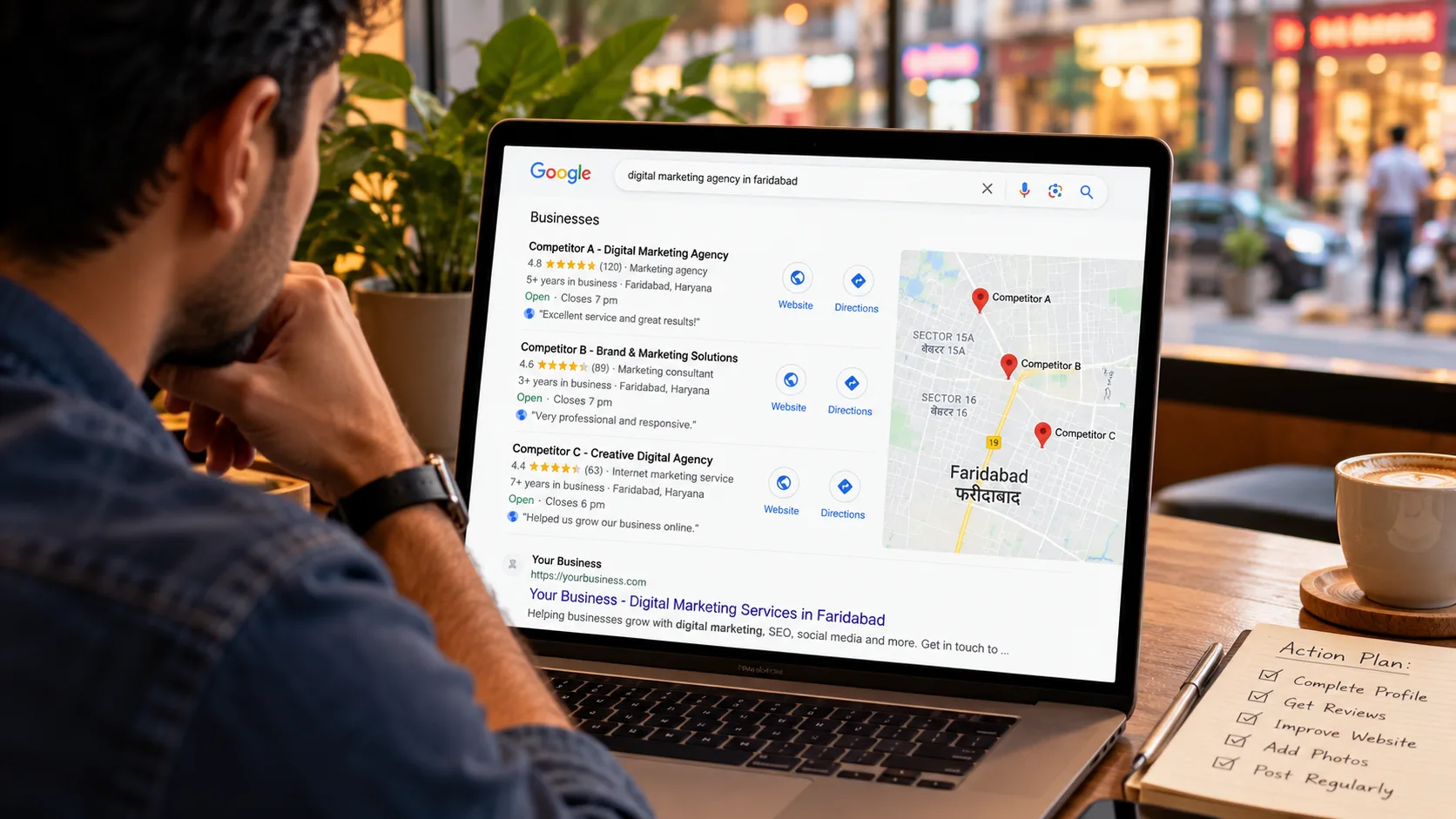
You search for what you sell, in your own city, and there they are: your competitor at the top while your business hides on page two. The instinct is to assume they spend more or know a secret trick. Bauer Bodoni sees this weekly with local businesses, and the truth is calmer: outranking you is rarely luck. It comes from a few visible habits Google rewards. Once you see them, you can match them, then beat them.
Their Business Profile Does the Heavy Lifting
Most local searches end on the results page, where the profile, map, reviews, and photos do the talking. If theirs is complete and yours is half empty, the contest ends before it begins.
Google explains local ranking through three factors: relevance, distance, and prominence . You cannot change your distance from the searcher, but relevance and prominence are yours to win. Relevance comes from a complete profile: the right primary category, accurate services, real photos, correct hours, and a description in customers' own words. Prominence comes from signals of a real, active business: reviews, photos, posts, and mentions across the web.
Put their profile beside yours and compare honestly: photo counts, reviews and replies, posting rhythm. The gap you see is usually the gap in the rankings.
Their Reviews Compound Like Interest
Reviews pull double duty: Google treats count, recency, and owner responses as prominence signals, and when two businesses sit side by side, the warmer, newer set wins the tap, feeding back into visibility.
Businesses outranking you do three things differently: they ask as a habit, so reviews arrive steadily; they reply to every review, signalling an attentive owner; and their reviews mention specific services and areas, reinforcing relevance.
You need a steady rhythm of recent reviews, with replies. Thirty fresh, answered reviews routinely beat two hundred stale, ignored ones.
Their Website Answers the Exact Question Typed
When someone searches "plumber for bathroom fitting in Rohini", Google matches words, intent, and location. Winners have pages mirroring customer phrasing: service pages named for real services, location pages for real areas, one question answered per page.
This is not keyword stuffing. Google's own SEO starter guide returns to one principle: serve the searcher's need in their own language. A page titled "Bathroom Plumbing Repair in Rohini" that explains the service, areas covered, and how to book beats a vague "Our Services" page every time.
Study their top pages: specific headings, the offer and area stated fast, contact easy from every page. Give yours the same clarity. Specificity is the cheapest ranking advantage in local search.
They Show Up Consistently, Not Occasionally
The least glamorous difference matters most: consistency. The business above you likely adds photos monthly, posts around seasons, keeps hours accurate through holidays, and treats its online presence like a shopfront. Prominence rewards sustained activity.
Most do the opposite: set everything up once, then go quiet for a year. Rankings decay when signals go stale, because a quiet profile looks like a quiet business.
The fix is a rhythm, not a project: fresh photos monthly, a post when something is worth announcing, review replies within days. It tells Google what customers sense: this business is alive.
Your Gap-Closing Week
You need one focused week, not a retainer. Complete every Business Profile field and upload ten real photos. Ask five happy customers for reviews personally, then reply. Rewrite your top service page heading to match customer phrasing. Post one profile update. Then check everything on a phone.
Do that and you match most of what the competitor above you does. Keep it monthly, and the order starts to change. Rankings follow behaviour, and behaviour is in your hands.
Frequently Asked Questions
How long does it take to outrank a competitor?
Weeks to see movement, months to change the order. Profile completeness and fresh reviews shift local visibility fast; website authority builds slowly. Treat it as a rhythm, not a race.
Can a new business outrank an established one?
Yes, regularly. Google weighs relevance and proximity heavily, so a new business with a complete profile, strong early reviews, and specific pages can beat an older rival with a neglected presence. Attention beats age.
Should I copy what the top-ranked competitor does?
Learn, do not clone. Copying their categories and consistency is smart, but your edge lives where they are generic: undersold services, ignored areas, unanswered questions.
Conclusion
Competitors rank above you for visible, fixable reasons: a harder-working profile, steadier reviews, pages answering real searches, and the consistency to keep it alive. No outspending needed, only seeing your business through a customer's eyes and doing the unglamorous work monthly.
Tired of watching competitors take the top spot? Let's close the gap together at Bauer Bodoni.